
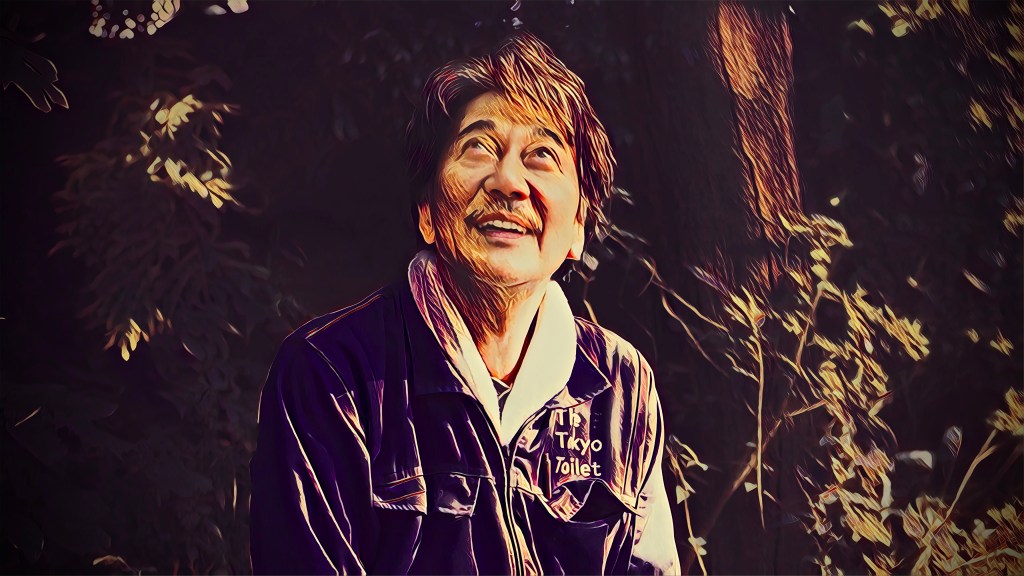
“I am very deeply honoured to receive such a wonderful prize, but I have to ask whether I really deserve it. I’m a little worried because I don’t feel that I understand cinema yet. I really don’t feel that I have yet grasped the essence of cinema.” This is what legendary filmmaker Akira Kurosawa, the man who brought the world Rashomon and Seven Samurai, said in the opening of his speech during the 62nd Academy Awards after being handed the honorary Oscar for his work as a filmmaker by a young George Lucas and Steven Speilberg. Firstly, it’s a crime that Mr. Kurosawa never won an Oscar for his work prior to this event. It goes to show how little The Academy’s opinion on cinema, particularly on a global scale, actually means.
But more to the point. To quote myself in an article I wrote last year praising Martin Scorsese’s continued curiosity for cinema wherein I referenced this speech, “To think that Akira Kurosawa, a man whose body of work has been and continues to be studied in film programs across the globe, and whose techniques have inspired the very fabric of the works of his successors, stood on this stage at the age of eighty and questioned whether or not he truly understood cinema, is bewildering.” And bewildering it most certainly is. Yet, every time I watch a movie, or have dabbled in making some of my own, the more this questioning of film’s purpose trickles into my mind. Not in a dismissive way, of course, but in a curious sense. “What am I experiencing here?” “What does this shot mean?” “What does the use of this colour mean?” are some of the questions I’ll ask myself when watching a movie, all in pursuit of the answer to the question, “What is cinema’s essence?” There are a few times, however, where a film has come along my way and answers, at least in part, this curious question. One such film, is Wim Wenders’ 2023 Palme d’Or nominated slice-of-life drama, Perfect Days.
Capturing The Present
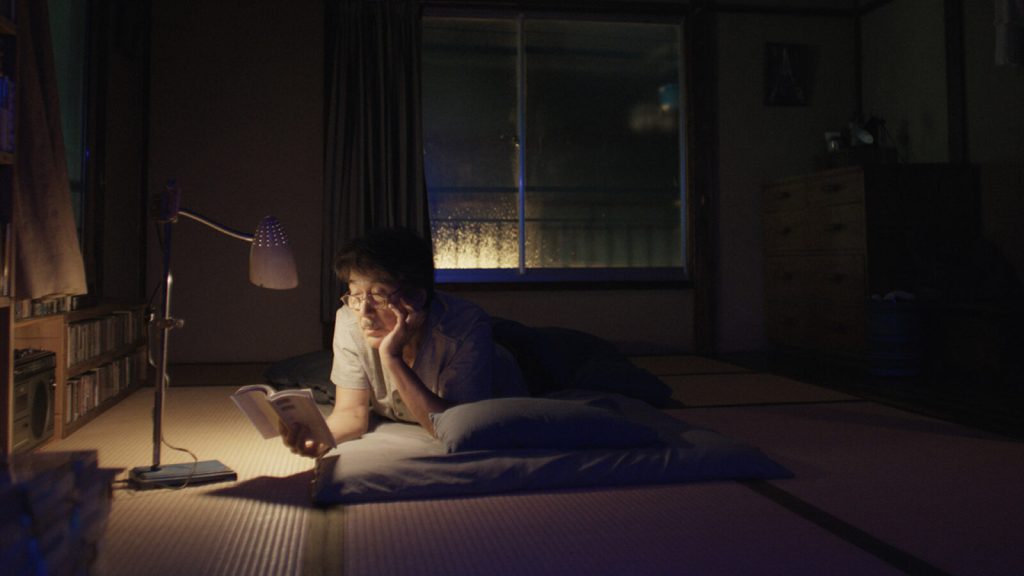
The movie follows the life of Hirayama, played by the incredible Kōji Yakusho, as we witness his daily routine as a toilet cleaner in wealthy Shibuya while living a modest life of solitude in a not-so-wealthy neighbourhood on the outskirts of Tokyo. We watch him wake up, fold his bed, brush his teeth, water his plants, then get ready for his drive to work–though not before grabbing a caffeinated drink at the vending machine on the street. On his drive, he listens to House of the Rising Sun by The Animals on cassette tape. We then move to see him meticulously clean the edges of fancy toilet seats, politely excusing himself when someone needs to use the bathroom, taking a lunch break while joyfully watching the rays of sun peek through the dancing leaves on swaying branches; and then, after showering at a communal bathhouse, finishing his day at a local bar where an overly giddy waiter serves him, no doubt, the same thing he’s ordered countless times. He comes home, readies his bed, and then reads some Faulkner before drifting off to sleep. Rinse and repeat.
For a hundred and twenty-four minutes, this is the film Wenders presents to us. And throughout it all, I couldn’t help but be in awe of how incredibly “present” the film was. There aren’t any flashbacks, no exposition that details Hirayama’s life and who this man is. Everything we need to know, all the story and backstory, is in the present. In each shot of Hirayama’s quaint home, the inconsequential items that surround him, in Kōji Yakusho’s reactions as Hirayama in his small but specific choices as an actor, and in the ambiguous transition shots that dovetail each of the days, whose imagery is left to us the audience to decipher their meaning–if they truly even have one. We are never told why Hirayama seldom speaks to people, save for children or when he absolutely must, but are given hints each day from which we can surmise his backstory. Or, maybe more profoundly, use them to create one for him ourselves.
A Reddit user under the name juicestain_ made a wonderful post a year ago on r/TrueFilm, writing: “Perfect Days is a film about the power of being present. It’s a beautiful and moving depiction of how we can find clarity, acceptance, and joy by embracing the current moment and allowing our lives to unfold one day at a time. Hirayama would probably refer to this as Komorebi, a Japanese word that describes sunlight shining through the leaves of trees, creating overlapping layers of light and dark…The idea of Komorebi serves as [a] powerful metaphor of the core theme of Perfect Days; it is a way for us to recognize and give ourselves over to the invisible, transcendent beauty of the moment that only exists in the here and now.”
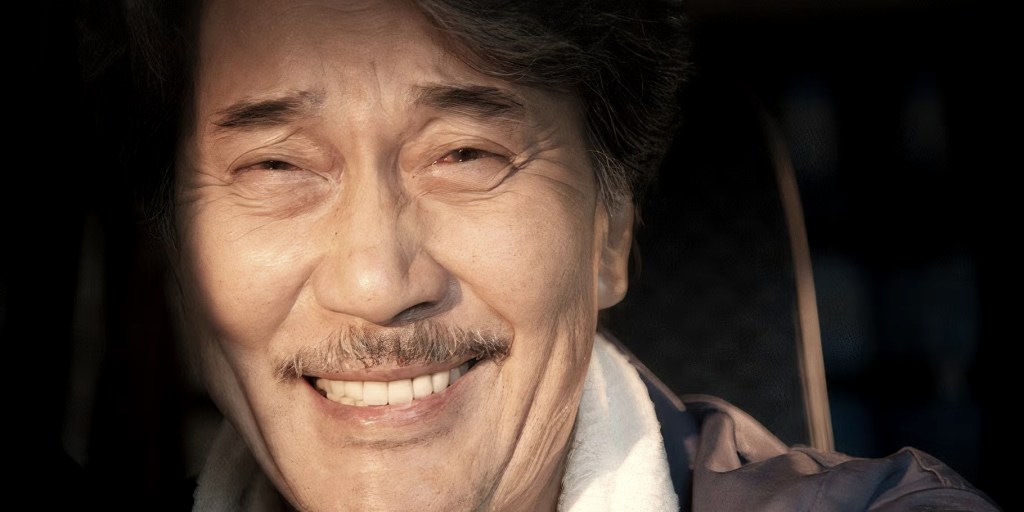
Now, as the user also notes later on in their post, this isn’t to say that Perfect Days showcases a “perfect” life or state of being, romanticizing Hirayama’s days through some cutesy lens as if from the pages of some self-help drivel. Far from it. Actually, the final shot that buttons the film is a close-up of Hirayama driving, and with what I can only describe as some of the best bit of acting I’ve seen in some time, the film shows us the imperfections that hide beyond this man’s “perfect days.” From his joys to his regrets, everything that we need to know about this man, everything that this film had been trying to show us for the two hours prior, is encapsulated in this one two-minute shot. A shot that captures the entirety of a man’s life. A life filled with imperfections. Yet, it’s these very Imperfections that might just be what makes his days – and possibly all of our days – so perfect.
I still don’t know if I fully have the answer to the question, “What is cinema’s essence?” Frankly, much like Mr. Kurosawa himself, I don’t know if I ever will. However, Perfect Days reiterates for me how cinema has the ability to capture one’s innermost life. To quote one of my all-time favourite directors, Satyajit Ray, “Cinema’s characteristic forte is its ability to capture and communicate the intimacies of the human mind.” For as grandiose as films can be, it’s in the quieter, stiller moments between characters that connect with us. And that, at least in part, is what I believe is the purpose of film: connection. Not just with the characters on screen, but the people around us that we’re watching with.
For as much as groan about going to the movie theatre nowadays because of how disrespectful of movies people can be, I cannot deny that there’s something special about a packed theatre watching, with full attention in a darkened room, a story unfolding with fictional people showcasing their innermost lives. Almost as if we’re all looking into a mirror but are both collectively having the same experience and individually seeing something unique to us. It’s why this last shot of Perfect Days is so incredible. Some may see Hirayama as completely content, basking in his joys heading towards another “perfect day,” while others might see it as bittersweet or even melancholic. The only truth is that we’re all seeing something, experiencing something. And that something, whatever it may actually be, is special.
 Pixel Swish
Leave a comment