
Watch the video here.
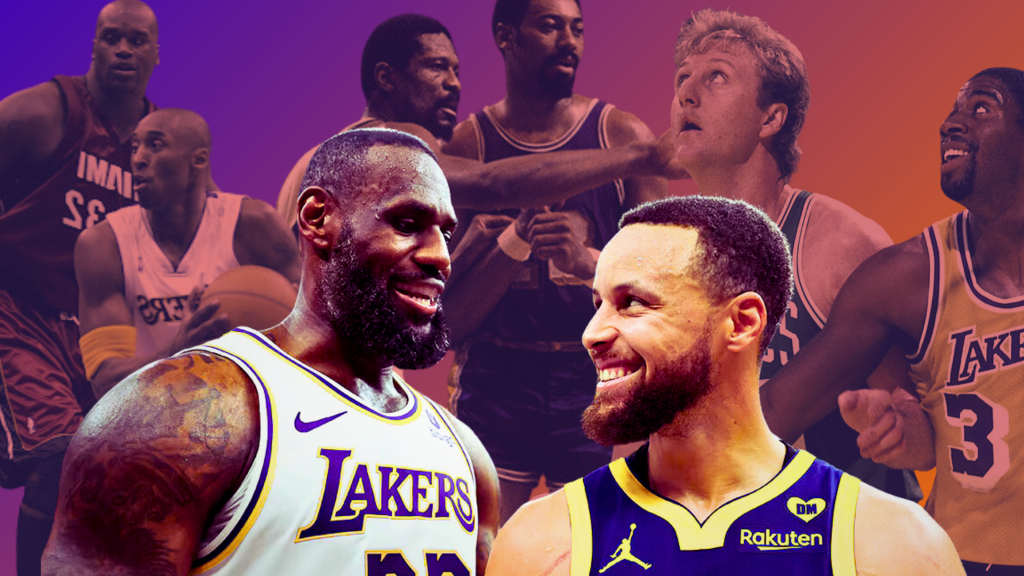
Bill Russell and Wilt Chamberlain; Magic and Bird; Kobe and Shaq; LeBron and Steph. Since the advent of the NBA, rivalries have been as constant in the league as the layup. It’s an entertainment factor that has kept fans coming back for more because, at the end of the day, humans love drama. From watching Bird and Magic trade blows year after year in the 80s to seeing LeBron and Steph dominate the NBA finals for almost half a decade thirty years later, we’ve been lucky to witness some incredible matchups each generation that came with a good dash of tension alongside them throughout the NBA’s lifespan. Unfortunately, when looking at the league over the past few years, I can’t think of one distinct rivalry that’s talked about in the same vein as some of those aforementioned greats.
In a conversation with Travis Kelce on the New Heights podcast, Indiana Fever superstar Caitlin Clark gave some of her thoughts as to why the NBA has been struggling with viewership in recent years–a stark contrast to the WNBA, which has been breaking records of late. She attributed some of the ratings woes to the lack of physicality in the league, saying that the game has changed and, though she personally loves it, the three-point shot may not be what many fans want to see in the excess in which they’ve been taken of late. She’s quite right in that regard, as a fan seeing the Celtics chuck up fifty threes a game simply isn’t an enjoyable watching experience. But she mentioned another factor that fans may want to see more of. An element to the game that’s been missing in recent years: beef.
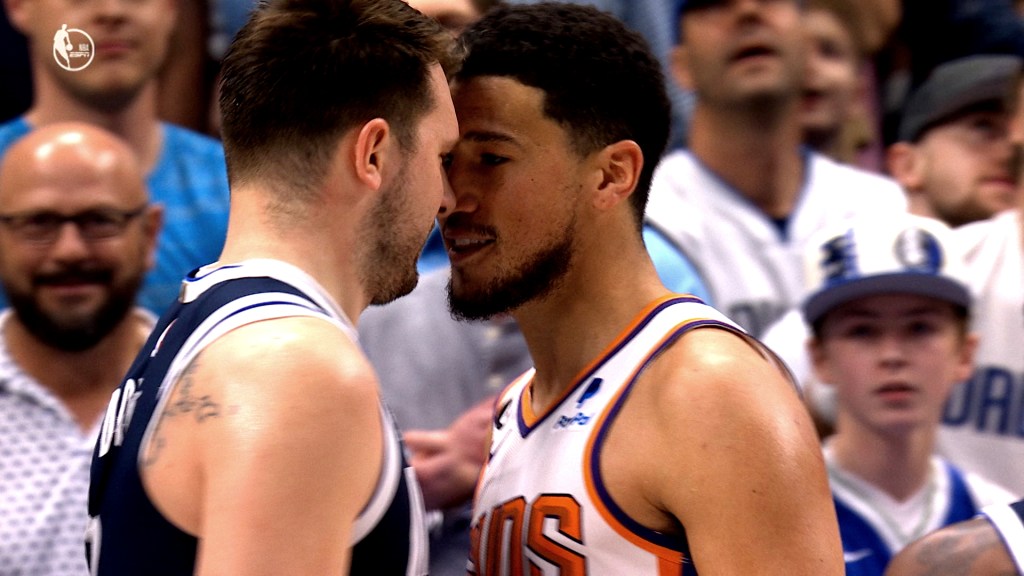
Sure, you have some players that don’t much care for one another. Luka and Booker have had something going on for a couple of years now, which has made for some amusing memes. Draymond choked out Rudy Gobert, but that’s just another Tuesday for Draymond. Jokic and Embiid have been competing for the league’s MVP for the past few years, though that’s been an incredibly one-sided affair. And Trae clearly gets extra prickly whenever he steps onto Madison Square Garden’s hardwood. But, let’s be honest, none of these come anywhere near the realm of the rivalry between two of the league’s oldest players.
31 million. That’s how many people tuned in to Game 7 of the 2016 NBA Finals between the LeBron James-led Cleveland Cavaliers and the Stephen Curry-led Golden State Warriors. One of the most-watched single-game sportscasts in U.S. sports history and the biggest audience draw for an NBA Finals game since Michael Jordan and the 1998 Chicago Bulls. So, why did so many people tune in? Because of the story. The story of LeBron James and the Cleveland Cavaliers down 3-1 and about to lose, for the second year in a row, to Steph Curry and his Warriors; a seemingly indestructible team that had just broken the league’s regular season record with 73 wins and only nine losses. A story that unfolded in an unprecedented way, seeing James and his partner-in-crime Kyrie Irving will the Cavs to back-to-back wins to force a Game 7. Giving LeBron James, a “kid from Akron,” a chance to end Cleveland’s drought and bring home a championship.
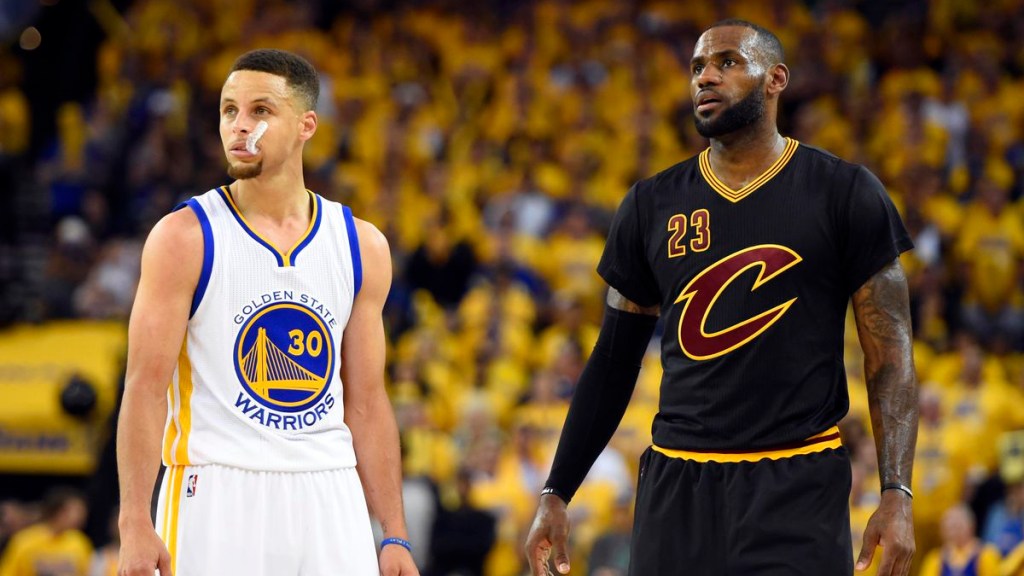
The last five minutes of that Game 7 were some of the most intense minutes I’d ever experienced watching a basketball game. Heck, probably the most watching any sporting event. And it was then and there that the rivalry between LeBron James and Steph Cury was solidified. Even though Kevin Durant would go on to ruin what could have been an incredible back-and-forth between the two teams by making the softest move in NBA history and joining the Warriors, leading them to annihilate the Cavs the following two years, the rivalry between Steph and ‘Bron remained and continues to this day.
Even with Steph being 36 years old and LeBron having just crossed 40, the two know what fans want to see when they both step onto the court–and they deliver every time. As evidenced by the most recent Christmas day game where the two traded buckets and went for a 30-piece each. The broadcast marked the NBA’s most-watched regular season game since 2019, giving further credence to the idea that fierce and storied competition drives viewership.
Note that I wrote “competition” and not “beef.” Because that’s the thing, outside of basketball Steph and LeBron, as far as I can tell, don’t hate each other. They often appear on podcasts and other programs together and seem to have a fairly jolly ‘ol time whenever they get a chance to team up for an All-Star game. On the court, however, when donning their respective team colours, there’s no love lost between them. But this general sense of “hate” towards your competition and vigour to “destroy” them is something very much not a part of today’s game and today’s NBA players. As illustrated by Magic Johnson, who in a 2017 episode of FS1’s Speak, answered former Celtic Paul Pierce’s question about the lack of rivalries in the modern NBA by saying, “They don’t hate each other. I hated Larry and every Celtic. I really don’t like you, but you my little brother. Now I love you because you’re out of that green and white. That’s what it was. The Celtics-Lakers hate each other. Disliked each other, so it made for great TV and people tuning in.” He’d go on to talk about how this sentiment carried forward to the All-Star game, saying, “We hated the East. I’m comin’ to bust you Michael, Isaiah, Dr. J.”
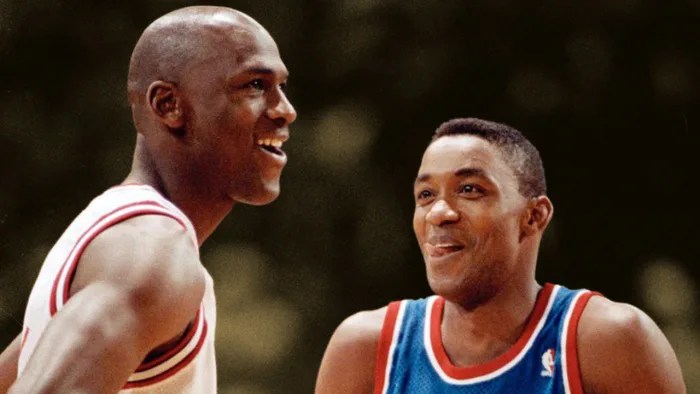
Now, I don’t think we need to have players going at each other’s necks and causing injuries and mayhem. I also don’t think we need much of the machismo toxicity that was prevalent in the earlier decades of the sport (some of which still exist). But there’s clearly a lack of “oomph” in today’s NBA. A spark that’s been dwindling due to players meandering around the court, waiting to chuck up their ninth three of the game, and unwilling to compete with a sense of urgency on either end of the floor. I’m not saying the three-pointer is the only culprit here. Steph is the greatest shooter of all time but he plays with a tenacity most in today’s NBA do not; constantly moving, attacking the rim, making pinpoint passes, diving for loose balls, and incessantly pestering his opponent with flashy handles. There’s an energy that shifts every time he steps on the floor. An energy that’s elevated and is almost palpable whenever he shares the floor with LeBron. We fans feel it, sense it, and want more of it.
There are a few things that could potentially be a factor in causing this loss of rivalries and hate-propelled competition amongst modern NBA players, but there’s one in particular that I feel is worth highlighting. The NBA is and always has been a business. And over the past decade, with the help of LeBron, players – particularly stars – have become more privy to just how much they wield power in the business, in turn becoming more cunning with their contracts, commitments to teams, and extracurricular business endeavours. Erick Jackson had a great write-up on Sportico last year wherein they wrote about the change of culture for NBA players as it pertained to their involvement in building their brand. In the age of social media and entrepreneurship, more and more NBA players (and athletes in general) are building businesses and making money outside of basketball. From tequilas to clothing brands to full-blown media empires, NBA players are using their platforms to create immense wealth and power outside of the hardwood–and they’re working together to do it.
As Jackson mentions in the article, many players share the same agent and financial advisors. As such, information on business opportunities between players from opposing teams is often shared freely. Jackson writes, “[Larry] Nance [Jr., from the Pelicans] and Indiana Pacers guard TJ McConnell, for example, have the same agent in Mark Bartelstein. Nance and McConnell have become not only friends but also business partners. Last year, McConnell, an avid soccer fan, tipped Nance about an opportunity to invest in English Premier League club Leeds United, which is owned by 49ers Enterprises.” Nance shares that locker rooms are often rife with chatter about lucrative investments and potential partnerships with other players. I’d imagine, then, that when you have a night when you’re going up against a team that has two of your most successful business partners in the starting lineup, getting into that “killer mentality” may not be the easiest thing to do; when someone else on that team could also be of benefit for future business endeavours, it makes you think twice before going in for that poster dunk.

The NBA has been struggling with viewership for some time now. Though a lack of rivalries could definitely be one aspect that’s been a cause for the lacklustre ratings, I doubt it’s the biggest one. Firstly, we have to acknowledge that the advent of streaming has affected the numbers, which isn’t unique to the NBA as it’s also the case with other leagues as well as the film industry. However, to add a little context to these numbers, commissioner Adam Silver has noted that the NBA has the largest social media following than any league, saying in Las Vegas before the NBA Cup Finals this season, “We’re at a point where our social media audience is at the highest of any league and continuing to grow exponentially.” Furthermore, it doesn’t seem like these numbers are affecting NBA teams themselves. As Spurs reporter Dusty Garza notes, “TV ratings may be declining, but the value of NBA teams like the Spurs continues to rocket.”
So the NBA may not be in dire straits as it pertains to making money, however, it’s clear that many fans aren’t enjoying the product. We no longer have the LeBron James and Stephen Curry storylines to follow. The storied beefs between two cities like L.A. and Boston feel like tales of the past. Current players don’t seem to have that passion and vivacity for the game like the ones from generations past, rather using their time on the court to bolster their wealth and influence outside of it–with the help of their competition. Then with the game itself having changed with a hundred threes taken each night, because that’s apparently the winning formula according to some statistician in the locker room, you begin to wonder if the game we all love will ever be the same.
 Pixel Swish
Leave a comment