
Watch the YouTube video here.
Until recently, by which I mean the past decade – maybe two if I’m being generous – voice acting was never a focal point for video games. For the first few decades of this medium’s existence, technology constraints made it so voiced characters wouldn’t even be something developers could make possible. But when eventually the feature did become more and more prominent, it was executed more as a gimmick than with an intent to bring proper life to the game’s characters. Interestingly enough, such a transition wasn’t unakin to that of the film industry when they moved from the Silent Era to “talkies.”
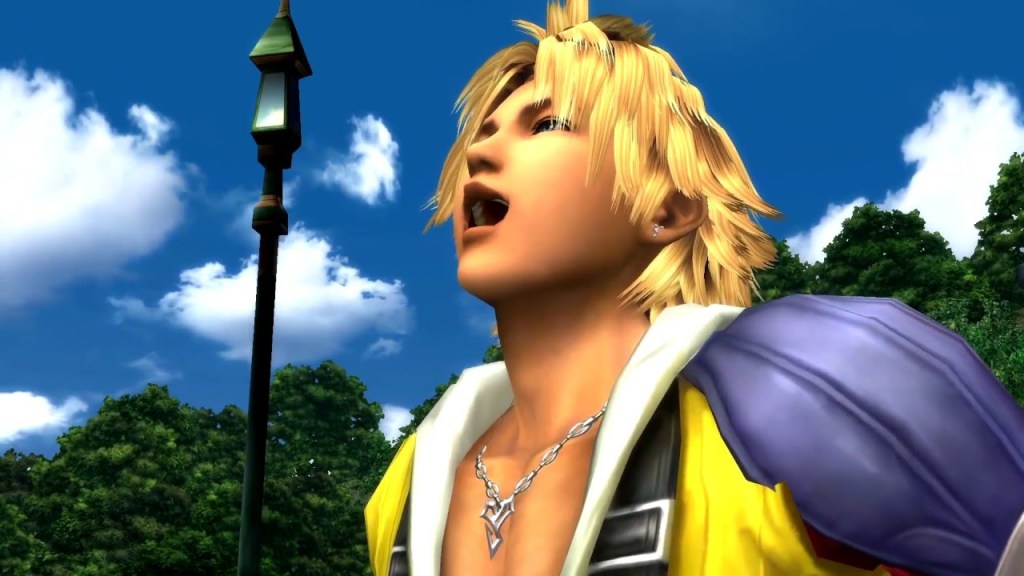
Eventually, though, games like Metal Gear Solid showed the world the potential of not just voice acting, but of the power of utilizing cinematic narrative devices within the medium of video games to tell a compelling story, which in turn can make for a more immersive gaming experience. That’s not to say we didn’t stumble along the way of course (looking at you, James Arnold Taylor, English VA of Tidus from FFX), but as developers matured in their storytelling sensibilities with each passing year, so did their understanding of what good voice acting sounded and felt like. We’ve come a long way in just a few short decades, and now even give out awards to actors for their performances in games; rightfully so.
Nevertheless, as someone who’s classically trained in the craft, spent years in film and theatre schools doing endless impressions of different types of dogs and unearthing childhood traumas, and has a passion for analyzing performances, all in an effort to understand what makes one great, I still feel that acting in video games, when compared to film and theatre, still has a ways to go. Now, there are exceptions, of course. Troy Baker in The Last of Us and Ashley Johnson in The Last of Us Part II are both tremendous; Cherami Leigh who voices Female V in Cyberpunk 2077 is phenomenal and made me cry, as did Roger Clark in Red Dead Redemption II. Indie games like Firewatch also have some beautiful performances and so many of the Japanese VAs in the Yakuza games do spectacular work. But these examples are oftentimes few and far between; they also oftentimes exist as outliers amidst a cast who are otherwise simply passable and tow the “video game NPC performance” line. That being said, there is one series of games that manages to leave me in awe when it comes to their voice acting: Mafia.
The Storytelling of Mafia
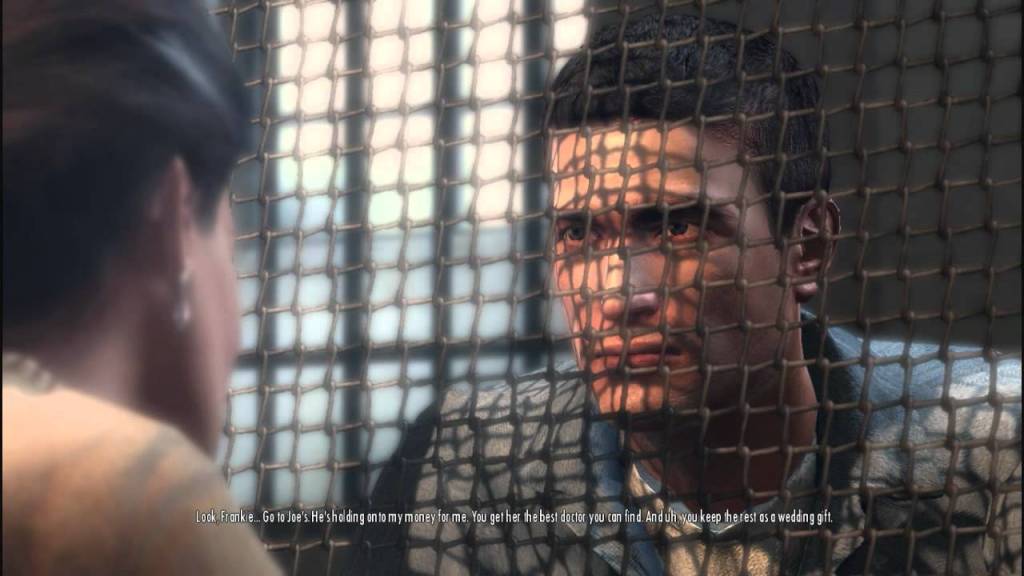
My first experience with a Mafia game would be with Mafia II on the Xbox 360. This was around the time when I felt video game voice acting and cinematic storytelling in games in general was taking a leap in quality. I’d already heard the sultry tones of Ezio Auditore Firenze in Assassin’s Creed II and sobbed while seeing Marcus Fenix cry out toward Dom in Gears of War 2. Yet, from the opening shot that begins with a slow pan down towards a lowly lit apartment, whose window shields a hardened man from a rainy night as he narrates the game’s first line, “My name is Vito Scaletta,” I knew Mafia II was going to be something different; something special.
At the time, I’d never seen anything like Mafia II before. A game whose cutscenes looked like a gangster movie straight out of Scorsese’s back pocket with purposeful shot selection and characters whose performances brought such life and grounded realism. A game that I could show my non-gamer dad and not cringe. A game that I would go on to consider one of my all-time favourites for the years to come. Looking back, though the game doesn’t fully hold up when it comes to its gameplay and overall open-world design, its performances and cutscenes are still incredibly modern.
Six years later, 2K Games would hand off the development for another Mafia game to Hangar 13, a newly formed subsidiary based in California. Unfortunately, the third game in this series would be released to middling reviews. Though most critics complimented the game’s acting and visual presentation, its bland mission design and terrible performance hindered its overall aggregate score.
This was a disappointment for many, myself included as I’d been eagerly awaiting a new Mafia game, and one set in such a culturally rich and politically significant time in a fictional city inspired by the Black American South was something I was really looking forward to. But as a broke twenty-something-year-old, I had to be led by the Metacritic score and hold my wallet. Almost a decade since its release, and I’m now finally getting to walk in the heavy boots of Lincoln Clay across the city of New Bordeaux. A couple of dozen hours in, and I can say that this is one of those examples of how one shouldn’t rely on a simple number on a review score to determine a game’s worth and what it could mean for them.
The inspiration to start playing Mafia III after all these years came after recently having completed Mafia: The Definitive Edition; a remake of the original Mafia game. I wrote an article for GameLuster about how though the game falters on a gameplay level, its narrative presentation and voice acting were absolute triumphs and are the elements that will stick with me for years to come. It seems that subpar gameplay but incredible storytelling and vocal performances are trends for the Mafia series, as playing through the third game right now proves to be a similar experience. The reviews weren’t wrong, Mafia III is repetitive. Its gameplay loop becomes stale very quickly and the lack of certain quality-of-life mechanics makes for a laborious playing experience. The Definitive Edition of the game, which is what I purchased, is still also incredibly buggy on the Series S. Yet, none of that has ruined the experience for me. Because the story, characters, world, and particularly the vocal performances in Mafia III are tremendous.
Voices of a City
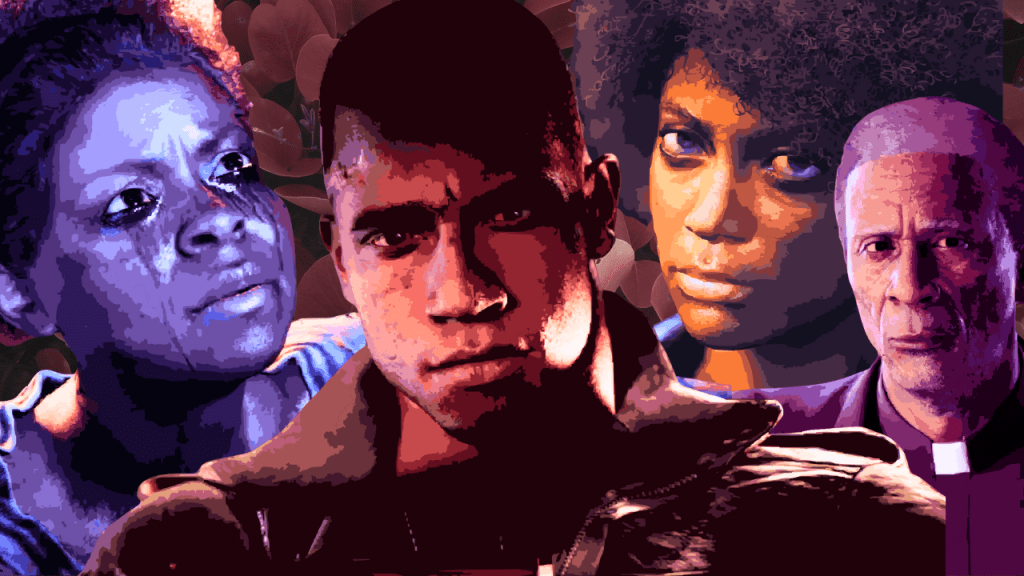
From the get-go, Alex Hernandez brings this incredible power and gravitas to Lincoln Clay. It helps that his voice is deep enough to make the ground rumble, but Clay’s writing and Hernandez’s delivery give the character’s persona this unflinching resolve; an anger that’s never unfettered but rather razer sharp and fierce. Hernandez’s performance demands attention, it demands Clay’s voice to be heard. His words never waver, nor are they ever minced. He knows what he wants and knows exactly how to get it.

This fearless determination is so alluring to watch, and Hernandez delivers Clay’s words with passion and ferocity but also doesn’t shy away from being quiet and subtle when the scene calls for it. For as hardened as Hernandez plays Clay, there’s always a moment here and there where he brings forth the hurt and pain his character is going through; a slight vocal tremor or a curious pause that reveals the deeper emotions of Clay. It’s a brilliantly well-rounded performance, one that deserved more love in the awards circuit as it brought to life one of the most memorable protagonists I’ve played in a while.
But the brilliant voice acting doesn’t stop at Hernandez. The supporting cast more than carry their weight and help bring this vivid world to life. Erica Tazel, who plays the Haitian Mob’s leader Cassandra is first seen in the game as this frantic and desperate character, only for us to find out the mysteriously ruthless woman she is. Tazel’s velvety vocal performance brings forth this unsettling quality to Cassandra that always has me on edge, and her range from when we first see the character to the reveal of her being the “Voodoo Queen” is so well done. Gordon Greene who plays Father James Ballard is much of the heart of Mafia III, and his performance brings this beautiful fatherly quality; a tenderness that when speaking to Clay in particular, softens my view of this protagonist and makes me feel for the man. Then we have Kalilah Harris, who voices the rambunctious Roxy in Mafia III’s DLC, Faster, Baby! Harris’ no-bullshit delivery of Roxy’s dialogue makes for such a fun contrast to Clay and brings to life an overall great piece of additional content.
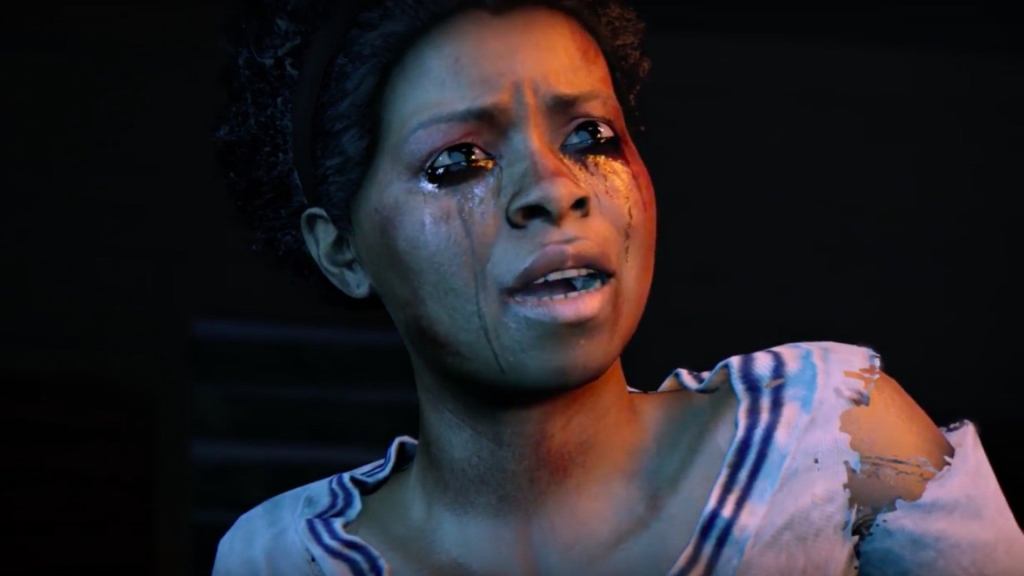
I could go on, but doing so would only be belabouring the same point – which is that Mafia III, just like the other games within this series, has some of the best voice-acting, story-boarding, and overall narrative direction of any video game. A game whose writers and actors understand the world and circumstances their characters are in, and work in tandem to deliver one of the most impeccably realized video game worlds I’ve ever had the pleasure of existing in. If Hangar 13 did away with the tedious and bloated open-world quest design and focused instead on a streamlined, linear narrative experience while also ensuring the game wasn’t a buggy mess upon release, then this game could have easily been the best in the series and be considered an all-time great. Maybe it’s a lesson they can take for Mafia: The Old Country.
 Pixel Swish
Leave a comment