
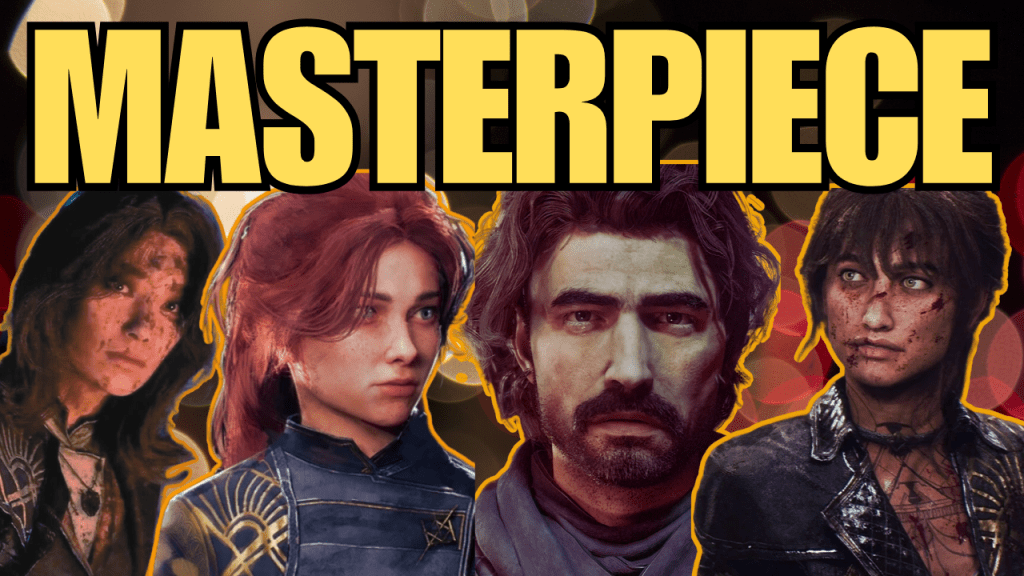
Clair Obscur: Expedition 33 is a special video game. A video game that had me in awe with its beauty from the slow fade-in of its title screen to the slow fade-out of the last line of its end credits. From Lorien Testard’s sensational OST, to its jaw-dropping art design that took my breath away with each pixel, to the flashy and addictive combat system, to the world and characters, Sandfall Interactive have made an astonishingly polished and impeccably realized piece of art. A piece of art that tips its hat to the legacy of JRPGs created by the likes of Final Fantasy and Persona, rubs elbows with Dark Souls, and cheekily canoodles with Nier. Yet, it doesn’t simply flatter those greats with its imitation, but rather writes them a love letter as a thank you for paving the roads on which it can now walk on to course its own journey and keep a distinct sense of self.
Clair Obscur: Expedition 33 is an unbelievable achievement for Sandfall Interactive. How 30 people were able to make a game of this scale and polish, one that rivals (and, in my opinion, exceeds) the quality of even the best of the current triple-A space, is beyond me. Whatever Guillaume Broche and his team in Montpellier come up with next, it’s safe to say that I’ll be there day one.
The Heart
Clair Obscur: Expedition 33 takes place in the fictional city of Lumière, a beautiful city whose visual aesthetic takes inspiration from the Belle Époque era of France, though with some dark fantastical twists. Many of these twists are inspired by the fact that each year for the past 67 years, the citizens of Lumière have suffered through a harrowing event called the Gommage, wherein a towering Godlike being called “The Paintress” writes a number on a monolith beyond the sea, and everyone over that age disappears. And every year, the citizens hold a festival for those departing, after which the city sends a group of Expeditioners to travel across the sea and towards the monolith to find answers and stop The Paintress from painting a new number.
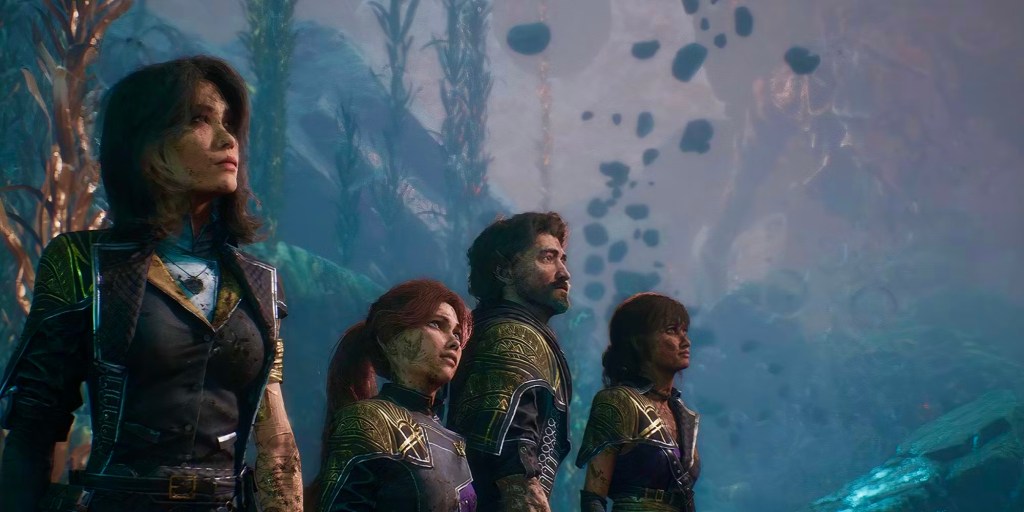
Thus begins your journey with Expedition 33—a group comprised of Lumière’s finest under the age of 33. This group includes our protagonist, Gustave, the scholarly Lune, the strong-willed Sciel, and Gustave’s 16-year-old foster sister, Maelle. As you make your way into the mysterious worlds beyond the sea, you’ll uncover further secrets and learn the truth behind this world and The Paintress, all the while encountering some truly devastating narrative beats that will surely leave you misty-eyed if not outright drenched in tears.
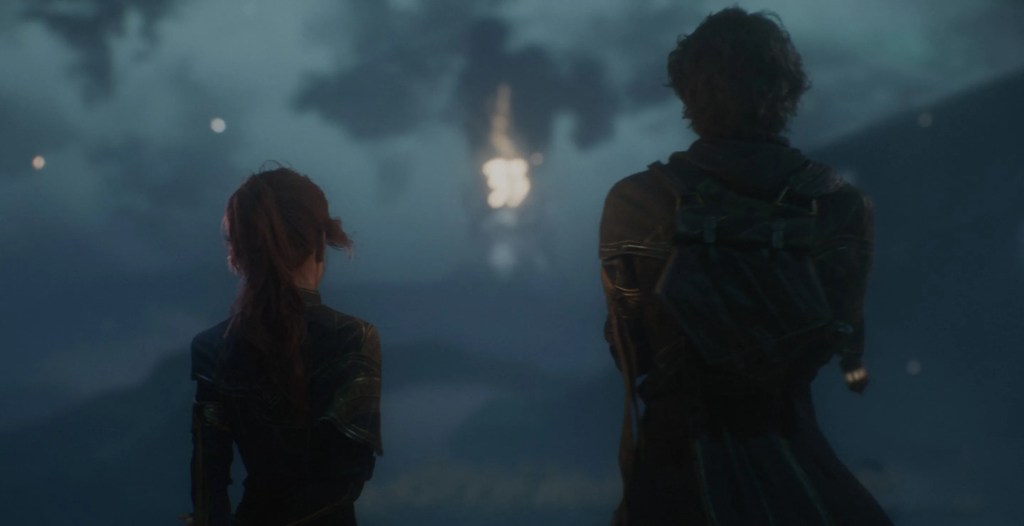
It’s difficult to speak on the narrative of this game as its poignant themes of loss, grief, and letting go require a deeper exploration of its story, which, of course, requires delving into spoiler territory. As such, I will do my best to skirt around direct spoilers and keep things vague. In short, though, Sandfall Interactive have woven a beautiful, albeit imperfect, narrative experience. One that deals with trauma and grief in ways that aren’t simple and doesn’t offer straightforward solutions. Their cinematic sensibilities pertaining to shot selection and storyboarding, character blocking, vocal performances, and music integration are all incredibly well done and provide for a truly filmic experience. There are some genuinely awe-inspiring shots with some wonderful colour work. Unfortunately, for as polished as so many aspects of the cutscenes were, the lip-syncing was not one such aspect; to the point where it became a distraction and at times took me out of otherwise beautifully rendered and executed scenes. It wasn’t enough to take away from the emotions of the story, though, which were a roller coaster, to say the least.
Clair Obscur: Expedition 33 has a heart whose beats will continue to reverberate for long after I’ve put the controller down. These characters made me feel, and this world kept me curious. By the end, I felt incredibly close to each member of this cast, their backstories, and their quirks. The writing, for as fantastical as it was when it came to its world-building and lore, was always grounded when it came to characters—a difficult balance that the writers executed impressively.
However, as the credits rolled, I’m unsure if the game fully explored the breadth of its narrative’s potential. Though I understood the story that was transpiring, and was shocked and intrigued by certain plot beats, there was a bit of a hollowness for me as the curtains closed. I wanted more, as I’m not sure if I fully grasped the mechanics of this world and the key characters that drove it. At least, not in a deeper sense beyond what the game was telling me. Also, the pacing felt a little slow in the middle and a little rushed by the end, without enough historical exposition to make certain plot beats hit as hard as the wonderfully rendered cutscenes were making them out to be. Penultimately, though there are some genuinely great companion quests at the end, the ending itself devalues their existence and makes for some fairly jarring ludo-narrative dissonance, even if it’s conceptually and thematically interesting. And lastly, I was hoping for more straightforward narrative side-quests from other NPCs that fleshed out this world and its peoples a bit more, as the world as is, though incredibly vibrant, felt a tad shallow, narratively speaking.
Nevertheless, it’s clear that Sandfall put a lot of love into this story, characters, and world. And it shows through how well-directed every cutscene, every line of dialogue, and every piece of music is. Director Guillaume Broche’s love for Final Fantasy and the themes and narrative sensibilities surrounding that franchise is showcased here in spades, from the silly to the serious. Persona’s influence is also here through the game’s approach to companion quests and relationships. There are also some stark tonal similarities to the likes of Nier: Automata and Xenoblade Chronicles, as well. And yet – and this is going to be an ongoing sentiment throughout this review – irrespective of these clear inspirations, Expedition 33 stands on its own to create a unique story with poignant themes, in a way that feels distinct.
The Eyes & Ears
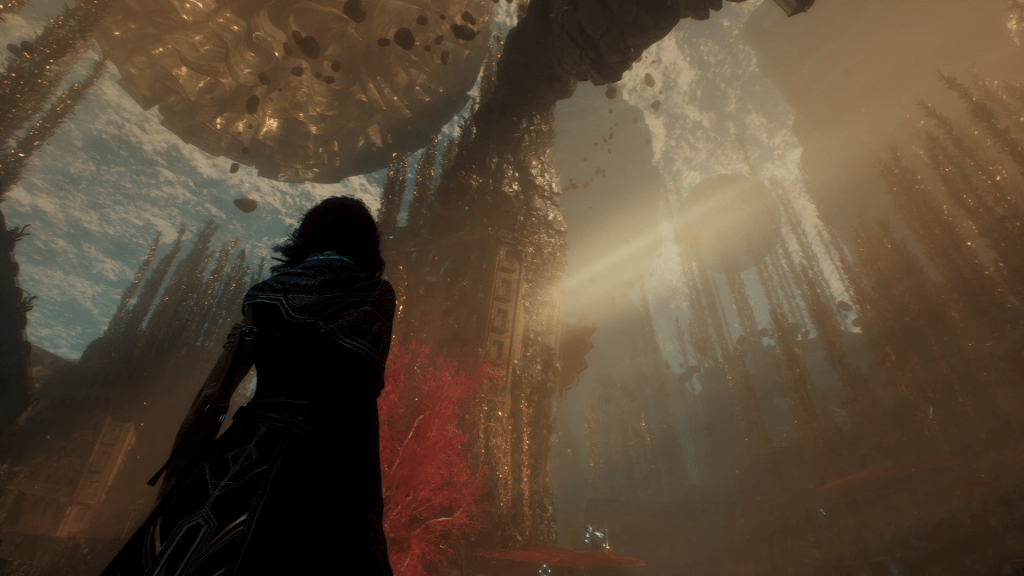
A couple of weeks ago, I said that South of Midnight was one of the best-looking and sounding games I’d played in recent years. I’m going to plagiarize from myself and use that exact same phrasing for Clair Obscur: Expedition 33. This game looks and sounds breathtaking. And it’s not just about how good it looks on a technical level, because, yes, its use of Unreal Engine 5 is very well-implemented, but it’s in the art direction where this game truly shines. The colourwork, interesting architecture, and impressively varied level designs all made for countless classic “slow-pans” throughout my playtime. The variety is something that truly took me aback. You’ll go from a dark and oppressive, almost Dark Souls-like cavern, to a vibrant and mystical underwater paradise that looks like Atlantis, to a field of lush red vegetation like something out of Ghost of Tsushima, all within a few hours. There was one dungeon, in particular, later on in the game, which, in combination with its hauntingly beautiful music, made me tear up with stunted breath because of how incredibly awe-inspiring it was on a visual level. It’s one of the most gorgeous places I’ve ever visited in a video game.
Beyond the world, its wondrously fantastical vistas, and incredibly detailed character models, every inch of this game oozes a style and a flair that feels idiosyncratic. From the menus and UI to the attack animations and the QTE button prompts, it all feels purposeful and adds to a distinct look and feel that is anything but generic. Taking once again from Persona’s playbook, where the fifth entry of that series was well known for its very purposeful approach to its visual aesthetic, Sandfall Interactive made sure that their game gave players that same feeling—a feeling that made their game stand out with its unique visual aesthetic, both on a technical and artistic level.
Visuals are often not enough to evoke the emotions you’re trying to achieve, however, which is where music comes into play. And boy, does it play here. Frankly, I’m unsure as to what I’m more flabbergasted by—the fact that this entire game was made by a core team of around 30 people, or that this eight-hour-long (!) original soundtrack was composer Lorien Testard’s first ever piece of work professionally. It’s not just that it’s almost as long as the entire extended cut of The Lord of the Rings trilogy, but that its quality is up there with some of gaming’s all-time greats. And that, fellow reader, is not hyperbole. As someone who loves video game music and puts composers like Nobuo Uematsu, Yoko Shimomura, and Keiichi Okabe on the highest of pedestals, trust me when I say that I would not write such a thing if I didn’t truly believe that Testard’s work here in Clair Obscur: Expedition 33 deserves to stand alongside those behemoths; it’s that good.
Testard’s compositions are mature. They’re rich, layered, and utilize so many different sounds. From melancholic operatic choirs to traditional orchestral strings to ethereal nautical soundscapes. His profile on Sandfall’s website notes that one of his favourite games is Nier: Automata, a game composed by the great Keiichi Okabe, and one that I consider to be the greatest OST in gaming history. It’s easy to hear those Nier inspirations in Testard’s work, though, once again, just like the rest of the game, he’s managed to ensure that every piece of music here stands uniquely on its own, with those inspired sounds only being used to elevate the overall listening experience. I can’t imagine Testard not winning Best Music at this year’s Game Awards—if he doesn’t, then know that I’ll be riding at dawn heading straight for Keighley’s house.
The Controller
From the moment you enter your first combat encounter, you’ll realize that this is not your standard JRPG affair. It has all the trimmings of one, sure; combat works on a turn-based system, with each character having a regular attack and a slew of abilities specific to them. The more you level up, the more you can buff up your base stats and learn more abilities through character-specific skill trees. Weapons and abilities also have elemental considerations, with those elements being fire, ice, earth, lightning, light, dark, and void.
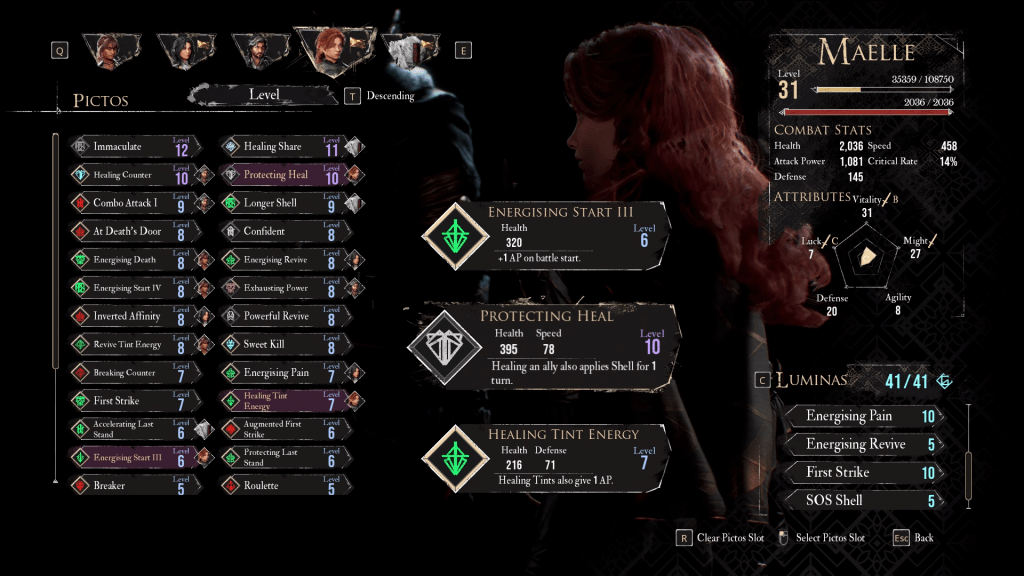
More uniquely, however, is Clair Obscur’s Pictos and Lumina system. This one is going to be a little trickier to explain, so bear with me. Essentially, as you traverse through the world and defeat enemies, you can find and obtain these equipable items called Pictos. These serve as small buffs for your characters. From adding an additional hit to your base attack to increasing your critical rate percentage, there are many – and I mean many – Pictos you can find throughout your playthrough. Each of them also has passive buffs that are given to the equipped character’s base stats, like increased speed or defence. However, each character can only equip three Pictos at a time, yet there are dozens upon dozens of Pictos to be found. How do you utilize all these different buffs if you only have three slots? Well, this is where Lumina comes in.
Essentially, after you’ve fought a handful of battles with a new Pictos equipped to one character, that Pictos then becomes “learnt.” Learnt Pictos can have their active buffs, their Lumina, equipped to every other character, just without the passive buffs to base stats, which only the character with that equipped Pictos gains. It may sound a little confusing and overwhelming at first, but you get the hang of it fairly quickly, and these items and their Lumina buffs become an invaluable system as you progress further into the game.
All of this may sound like tame twists to classic JRPG systems, and they are; however, it’s in the actual moment-to-moment combat where Clair Obscur: Expedition 33 takes some clear inspirations from another game franchise: Dark Souls. More specifically, Sekiro: Shadows Die Twice. That’s because there’s a lot of real-time gameplay going on here within this turn-based system. Almost every attack you receive from an enemy in this game, including bosses, can be dodged or parried. And much like From Software’s classics, enemies have “tells” and “fake outs” which you’ll have to memorize to hit that dodge or parry button timely. This isn’t the first time a turn-based game introduced an active dodge/parry system; Sea of Stars did a couple of years ago. However, where the mechanic was a little more forgiving and optional in that game, Expedition 33 almost requires you to be proficient with the mechanic, even on the normal difficulty.
The implementation and animations surrounding the dodge/parry mechanic are all very well done and feel incredibly satisfying…when it works, which is 95% of the time. Unfortunately, that last five percent, where the game failed to register my input, made things quite frustrating at times. This has been a reported issue on PC and even on consoles, where you’re sure you hit either the dodge or parry button on time, but the game fails to register the input. Even so, this was infrequent enough that it didn’t take away from my playing experience as I was having an absolute blast with each and every encounter. I’m also not a battle-hardened Souls gamer, so some of those missed inputs may very well be a skill issue that I, like any true gamer, will happily blame on the game.
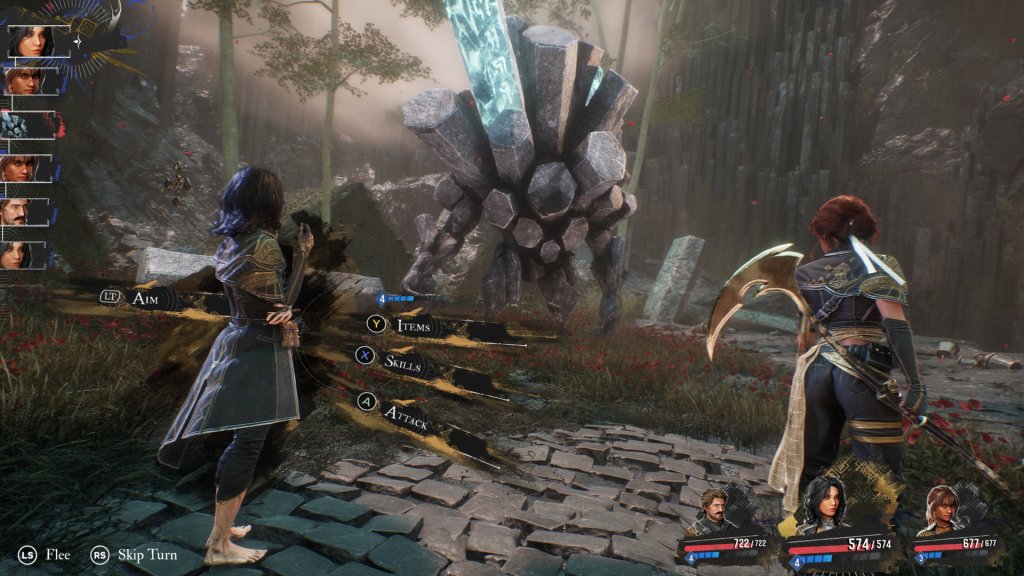
There are other real-time mechanics beyond the dodge/parry. Each of the cast members can do ranged Free Aim hits at the cost of one Ability Point per shot; these play almost like a third-person shooter, though their purpose serves to find weak spots on enemies. Each ability also comes with a QTE, which, if pressed at the right time, does additional damage and increases critical hits. You can turn these off in the game’s settings, but I found them easy enough and fun to leave on for my playthrough.
There’s a rhythmically addictive quality to the gameplay loop of Clair Obscur: Expedition 33. The flow of battle with the incredibly fun character-specific abilities, in conjunction with the slightly-sweaty-but-satisfying dodge/parry mechanics, and the puzzle-like quality of figuring out the best course of action to exploit enemy weaknesses, all wrapped up in the frenetic and vibrant animations and particle effects, makes for a combat system that I’d put up there with the likes of Persona 5 and the recent Final Fantasy VII remakes.
Verdict: 9.5/10: “It’s Essential“
Clair Obscur: Expedition 33 is a triumphant achievement for Sandfall Interactive and a love letter to gaming’s past greats. It’s a mesmerizing tour de force in audiovisuals with a heartfelt narrative that delicately weaves a gut-wrenching tale of grief and loss, with characters that will stick with me for some time. While I would have liked the third act to have fleshed out some of the game’s deeper lore a bit further, and the world to have more side-stories within it, there’s no denying the lasting impact this narrative as a whole will leave. Mechanically, Expedition 33 wears its inspirations from the likes of Persona and Soulsborne on its sleeve, though doing more than enough to be unique in its own right. The infrequent hitches in its dodge/parry mechanics, though frustrating, weren’t enough to take away from an otherwise incredibly fun experience. Wherever Sandfall Interactive choose to go from here, rest assured that I’ll be there day one.
Shaz played Clair Obscur: Expedition 33 on PC via Game Pass.
 Pixel Swish
Leave a comment