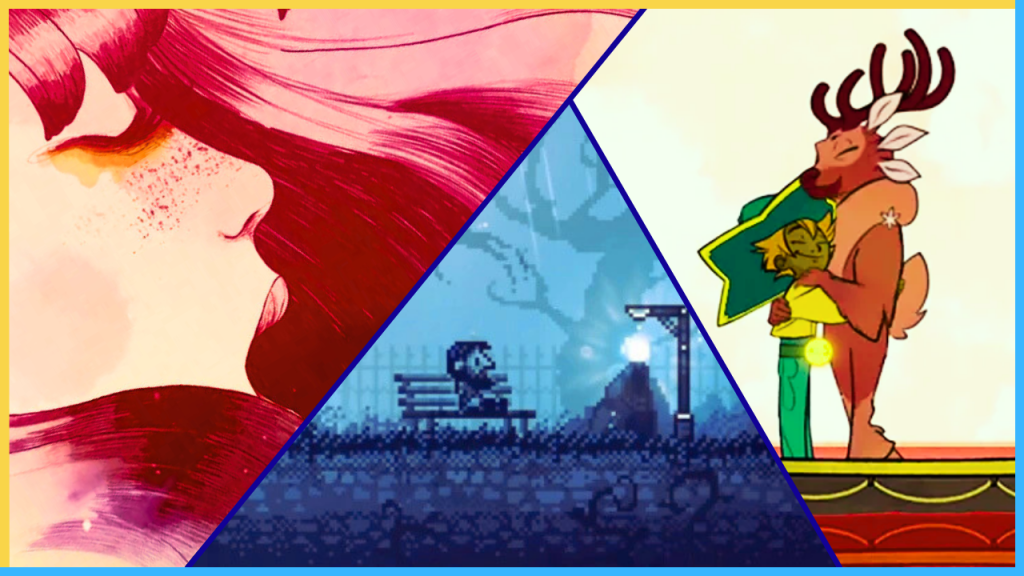
As a writer with a film and theatre background, story, for me, is king. I don’t care how beautifully a film is shot, if its characters aren’t written and performed well and its themes are shallow, you best believe my Letterboxd review won’t be too kind. In a similar vein, for as much as I can appreciate a video game’s polished mechanics, at a certain point, I need a narrative to drive me to its end credits.
There are exceptions to this, of course. I’m more than willing to go and save the Mushroom Kingdom for the umpteenth time as our beloved mustachioed plumber with nary a nuanced plot in sight, just because I want to galavant across Nintendo’s wondrous worlds. For the most part, though, whether it’s a narrative that’s told atmospherically like in a Dark Souls, or through a more traditional cinematic sense like in The Last of Us—I need a story. And I don’t think it’s a reach to say that some of the best stories in video games, especially in recent years, have come from the indie space.
Now, that’s not to say triple-A titles haven’t had great stories, of course. Games like Red Dead Redemption 2, The Witcher 3, and The Last of Us are often heralded as tremendous achievements in narrative design within the triple-A space, and for good reason. Yet, for as much as I enjoyed those titles and their stories—heck, I even consider The Witcher 3 to be in my top five games of all-time—I still can’t say that they come near the impact that many indie and double-A titles have had on me. Stories whose characters, atmosphere, and themes resonated on a deeper level that’s difficult to articulate.
Much of this is because of how triple-A game development, much like Hollywood’s blockbuster movies, for the most part, feels as if they must abide by certain narrative sensibilities and within certain parameters. There’s an aversion to risk, whether that be in terms of characterization, plot, or a nuanced exploration of interesting, maybe even taboo or unconventional themes. Thankfully, I don’t think the triple-A space within the games industry is anywhere near the insipid, focus-tested blockbusters that come out of Hollywood every summer—at least not yet—but there’s still this feeling whenever I play through a recent triple-A title wherein I’m left unbothered. And that, to me, is far worse than a bad video game. I would much rather something be bad than banal.

It’s why I’ve been more drawn to indie games over the past decade, because some of the stories in these games have stuck with me for years, with some I would even go as far as to say have genuinely changed my life. So, I wanted to take a moment to reflect on a few of these games and give praise to their stories, worlds, themes, and characters. I think video games have the potential to be a vessel to tell the most incredible stories because of the interactive element of the medium. Whenever a developer can see that and design their narratives to utilize that element best, the result is often something truly special. These are a few titles that I believe do exactly that and are prime examples of the impact games can have through their stories.
Inmost
Inmost, developed by Lithuanian studio Hidden Layer Games, was originally released on iOS via Apple Arcade in 2019. It was a game that I downloaded on a whim after receiving a three-month free trial to the service after I’d made the switch over to Tim Cook’s ecosystem of overpriced slabs of aluminum. I wasn’t expecting much, if I’m honest, as I downloaded it primarily due to the pretty art style. What transpired in the next four hours, however, was something unlike anything I’d ever experienced in a video game. Inmost shook me to my core, and it’s a game I think about often. It’s a game about grief, about sorrow. About dealing with the heaviness of loss. This heaviness is present not only in the dark, gothic tones of the game’s visual aesthetic but also in its gameplay.
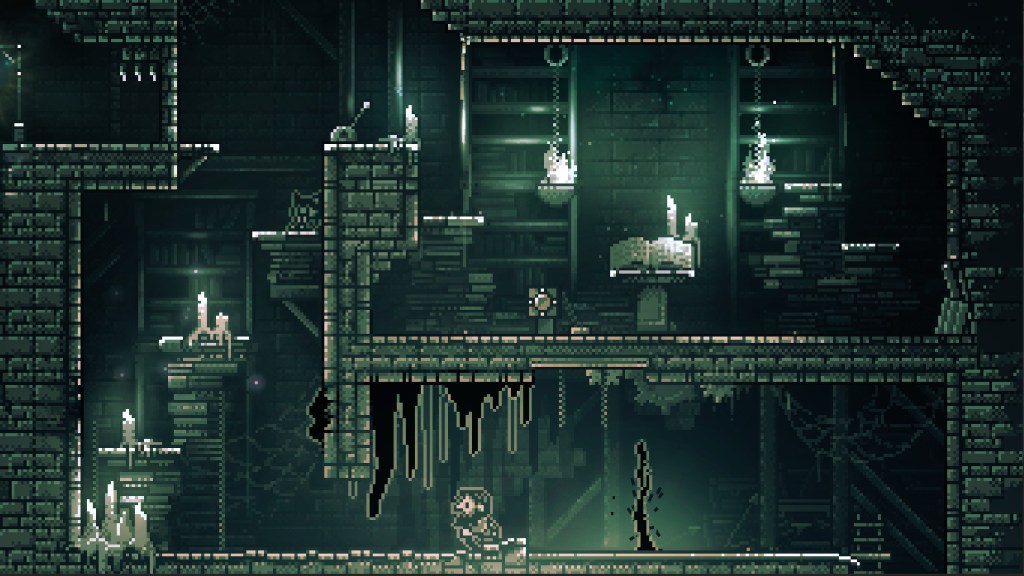
Mechanically, the game can be seen as a simple puzzle-platformer where you jump between the shoes of three characters—a father, a young girl, and a knight. Each of whom has a specific play style. Yet, reducing this game to just being another 2D platformer with pretty pixel art would be doing Inmost a massive disservice. Because every detail in Inmost, every game mechanic and animation, every piece of music and all the moments of silence, intertwine harmoniously to beautifully serve this harrowingly gut-wrenching narrative. There’s a poetic sensibility to how Hidden Layer Games has crafted this game. From the weight of each character as you move as them to the specific design choices, both artistically and mechanically, of their levels, it’s all done with purpose and subtlety to add to the game’s themes of guilt and pain.
Spiritfarer
Last year, when I was still a writer for GameLuster, we did a list of our Top 100 Indie Games of All Time. A difficult list to do for any outlet, but knowing the staff at GameLuster and our tastes, I was confident we’d end up with a banger list. And a banger it most certainly was, with Spiritfarer getting our number one spot. Deservedly so, in my opinion. Though, in fairness, I may be a little biased because Spiritfarer is one of my favourite games of all time. It’s a game that, like every other title that I mention here, means more to me than I can explain.
The little things we do every day and the connections we make along the way. That is the core of Spiritfarer, a 2D resource management game where you play as Stella, a ferrymaster who takes over the role of “Spiritfarer” and must sail across the lands to find spirits, help grant their last wishes, and finally take them to the Everdoor, a gateway to the afterlife. For a game about death and the afterlife, there’s a wondrous levity and vibrance to the game’s aesthetic and tone. This is a game that, though it will leave you weeping puddles of tears, celebrates life and all the little moments that encompass it. A game that brilliantly uses the innate repetitive nature of video games to serve its themes of slowing down and cherishing the warm little moments that make up our day-to-day, whether that’s in menial tasks or a small conversation with an acquaintance.
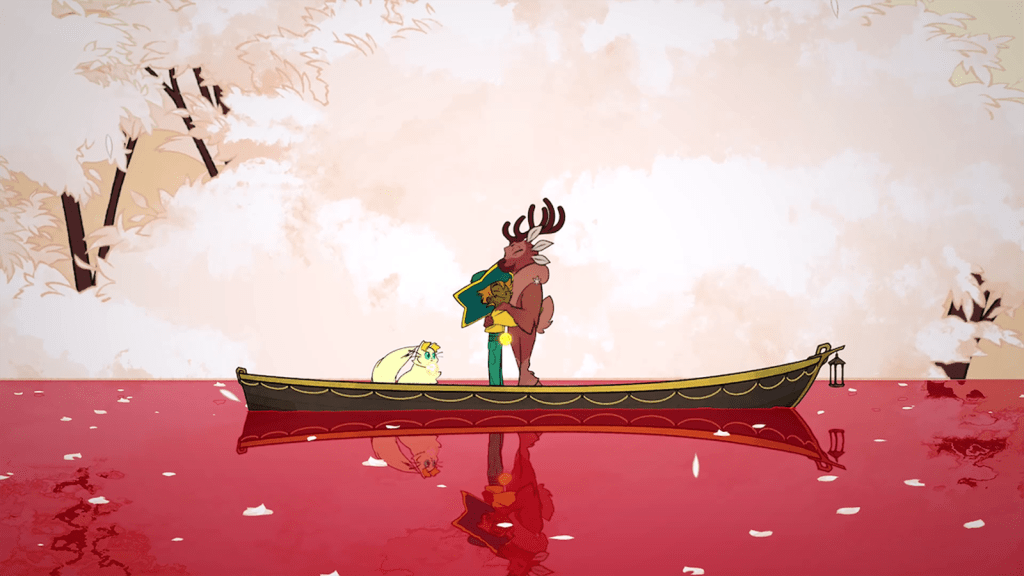
These special moments are brought to life by a cast of some of the most memorable characters I’ve ever encountered in a video game. Each of these characters has interesting backstories, personas, desires, and follies. And, much like life itself, the more you learn about them, the more attached you get, and the harder it is to let them go. Yet, their goodbyes, for as sad as they are, never feel final, as their memories are sprinkled all around you in ways that are both melancholic and joyous.
Citizen Sleeper
“…when you watch the ship pull away, you feel a sense of longing. A longing to be carried. Not by the systems that spin the suns, or the corporations that run the colonies. But by love, towards an uncertain future.”
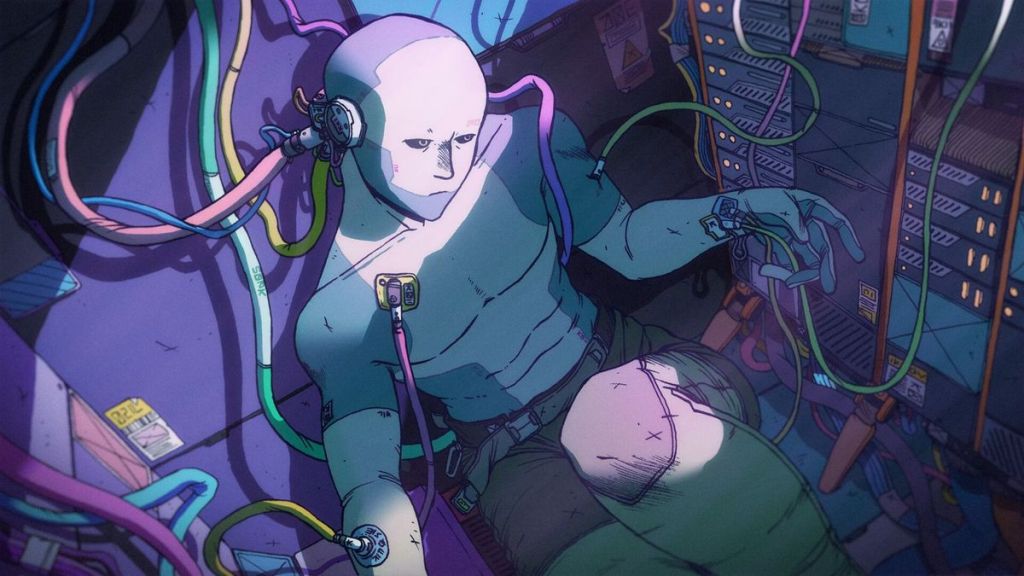
This was one of the final lines during one of the many endings in the original Citizen Sleeper, a tabletop-inspired, narrative-driven RPG developed by Jump Over The Age. Science Fiction has always been my favourite genre of storytelling, mainly because of the thematic opportunities the genre allows one to explore in regards to the possible futures of humankind. Unfortunately, whether it’s in film, books, or video games, sci-fi creators often tend to focus more on the spectacle and technology of the genre rather than the human stories within the worlds they’ve created.
Which is why I have so much love for writer and creator Gareth Damian Martin, whose story in Citizen Sleeper is one that’s intimate and introspective. Even though political strife, corporate greed, and overall instability are unwinding beyond the cosmos, in these moments that your character exists through your playtime, it’s about surviving and enduring to see another tomorrow. To have another warm bowl of Emphis’ famous stew and banter with Tala at her bar. Especially considering how your character is a synthetic being who’s escaped indentured servitude from the big corporation that owns them, this need for survival and understanding what it means to be human is all the more imperative.
Both Citizen Sleeper and its sequel, Starward Vector, are impressively written video games. Though I think the sequel loses some of the poignant introspection that made the original so special, these are games that showcase the power of science fiction and the themes that can be explored within the genre when focusing on the humanity of their narratives. And everything about Citizen Sleeper, from its music to its character designs, feels authentically human.
I could go on to list a dozen more indie games that I feel have incredibly beautiful stories with memorable characters and impactful themes. I could talk about how What Remains of Edith Finch explores generational trauma. How South of the Circle brilliantly weaves a romance story with global espionage and tackles themes of men and their incessant lust for power. Or how Dot’s Home teaches us the history of redlining and predatory lending through gameplay. But alas, there are only so many hours in the day. And it all will boil down to the same conclusion, which is that indie games are special and indie developers have been consistently telling interesting, thought-provoking, and nuanced stories within this medium we all love for years now, and we need to be championing their works more often.
If you enjoyed this article and would like to read more of my deep dives into other indie games, please let me know in the comments below and consider subscribing to keep updated.
 Pixel Swish
Leave a comment