
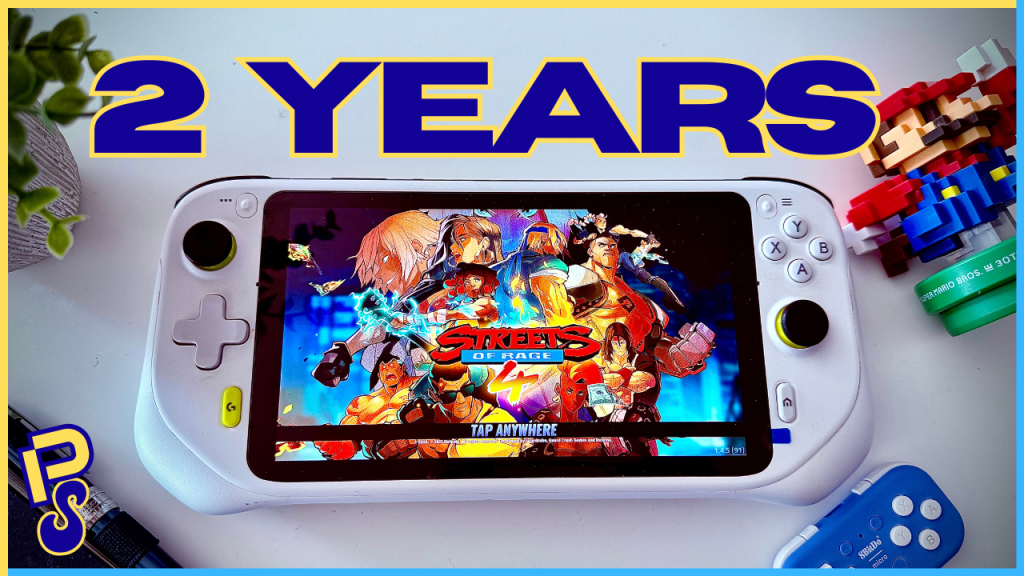
The Logitech G Cloud was released on October 17th, 2022. However, it would be close to a year after that when I would hesitantly click the “Proceed to checkout” button on Amazon, biting the bullet to pick up a unit of my very own. I say hesitantly because, well, when this handheld was released, it didn’t get the best of reviews. YouTube was littered with videos of people bashing the device for its mediocre power and inability to play games locally (which is a bit of a falsehood that I’ll touch upon in a bit), needing instead to rely on the cloud. As such, I was swayed away from the device.
Yet, I couldn’t get it out of my head. At this time point in time, cloud gaming was ostensibly in its infancy, and most people didn’t think it was a viable way to play “real” games. I was not most people. I was one of the early beta testers of Xbox Cloud Gaming; I was doing long-distance remote play on my PS4 with my PS Vita all the way back in 2014. To the annoyance of my college professor, who probably would’ve preferred that I wasn’t slaying orcs in Shadow of Mordor during his lectures. Sorry, professor, but Olgoth the Bleeder needed his comeuppance.
Game streaming and playing off the cloud were technologies I understood and was curious to delve deeper into. And so, I gave the finger to all of those YouTubers and got myself the Logitech G Cloud—A device that would become my primary way of gaming throughout 2024, and one that I still consider to be a great overall package in 2025.
The Outside
When it comes to the build quality, Logitech absolutely nailed it. This device, still to this day, may very well be the most comfortable handheld I’ve ever owned. My medium-to-large hands wrap perfectly around its curved edges, with the indentations on its corners fitting snuggly into my palms. The ridges on its curves add a nice grip, too. Being only 463 grams also means that you don’t have to worry about hand fatigue, something that I’ve come to appreciate, especially now after having been using the MSI Claw 8AI+ over the past few months, which weighs nearly double. Also, though everything is plastic here, it doesn’t feel cheap. This is a sturdy device that has a rigidity which makes it feel solid and premium.
When it comes to the screen, there’s nothing fancy here, but what you do get is very solid. It’s a 7”, 1080p, 60Hz LCD. Now, that may not be the premium display specs we’ve gotten used to in 2025, but the quality of this LCD is very good. In terms of colours, black levels, and overall sharpness, this is definitely one of the better displays I’ve come across in the handheld market, and I’m always impressed with how good games look on it.
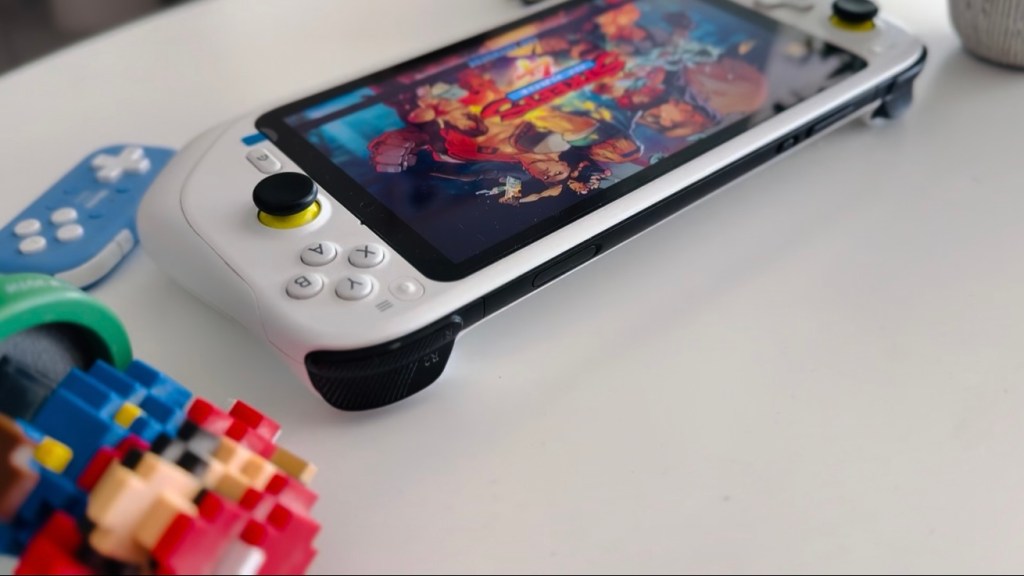
As for the buttons and joysticks, things are mostly good, but with some shortcomings. The face buttons are in your classic ABXY format, and have a smooth finish and soft press to them. Though they’re a little on the smaller side, they feel tactile, and I’ve personally never found their size to be an issue (that’s what…I’ll leave it alone). As for the joysticks: they’re okay. They aren’t Hall-Effect, and are on the smaller side as well, with a little less travel than I’d like. Still, once in a game, you quickly get used to them. And thankfully, the deadzone issue, which was a big deal when this first came out, has long been fixed. And, as is increasingly the norm with modern handhelds, the d-pad kinda sucks. It’s not the worst, but it’s mushy, also has little travel, and just isn’t the most satisfying to use. But again, far from the worst I’ve used.
Both the triggers and shoulder buttons are decent, though I’m not a fan of the loud clickiness of the shoulder buttons and would’ve liked the triggers to be a tad bigger. But these are minor gripes. Frankly, what’s impressed me the most is just how well the buttons and triggers — the device as a whole, honestly — have held up over the past couple of years. With a little spit and polish, you’d be hard-pressed to distinguish my unit from a brand new one.
The Inside
The Logitech G Cloud is powered by the Snapdragon 720G processor. This is a mid-range, octa-core processor from 2020 meant to power budget Android devices. Because that’s ostensibly what the G Cloud is: A budget Android tablet. One that, as mentioned, is built very well with great ergonomics and a solid screen, but in terms of its power, is very much in line with other budget tablets from its time. But that’s okay, because this is a streaming-first device. This isn’t a Steam Deck or another handheld PC.
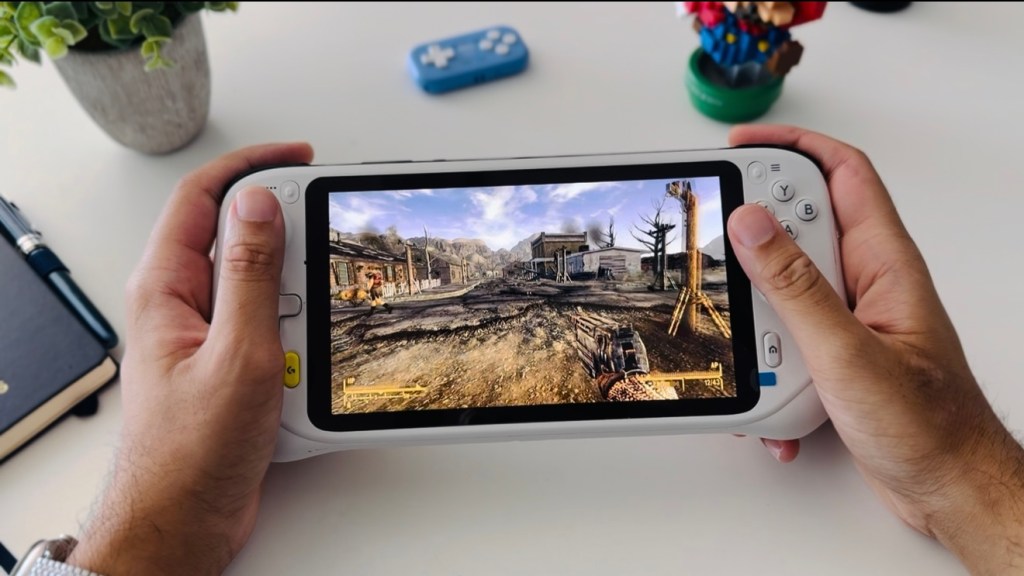
That being said, that doesn’t mean you can’t play some games locally. Premium indie games like Streets of Rage 4, Dead Cells, and Blaphemous run flawlessly with no issues. The chip is also powerful enough to run some decent emulation. From SNES and GBA, all the way up to the PSP and even some PS2 and Gamecube. The G Cloud is surprisingly capable if you’re patient enough to mess around with settings and keep your expectations in check. Sure, you’re not going to be able to play Kingdom Come: Deliverance II without accessing the cloud, but you’re still able to do some solid local gaming. And, honestly, even my $1300 Claw 8 has trouble running KCD2 without some concessions.
The Experience
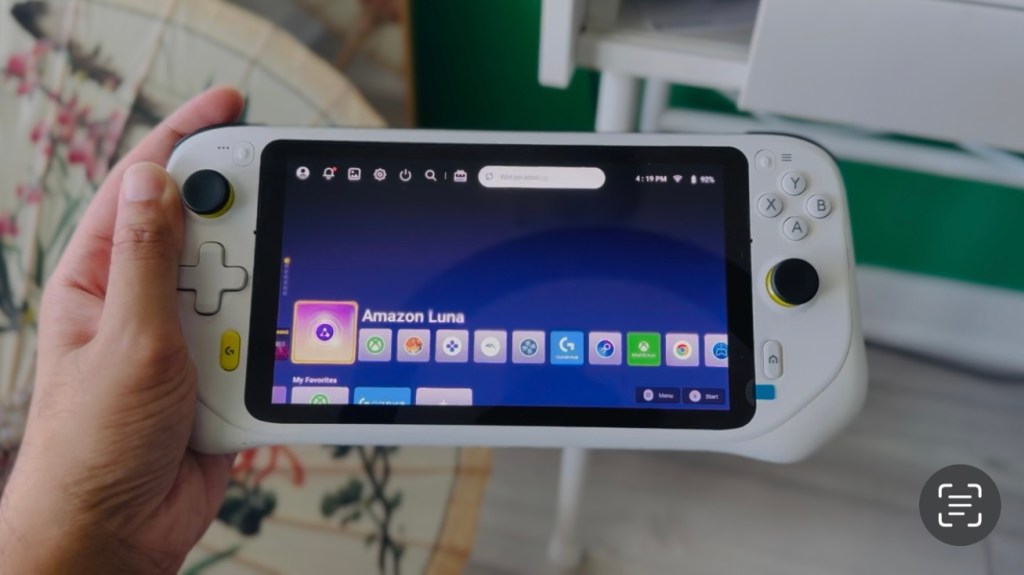
Ever since I got my Claw 8, I’ll admit that my G Cloud has been collecting dust for the past few months. When I randomly picked it up a few weeks ago, I was instantly reminded of just how much I enjoyed playing games on this device. And that’s exactly what I’ve been doing over the past couple of weeks. Playing a lot of games, both locally and via the cloud. And even after two years, the experience is terrific. Firstly, Logitech have made a ton of wonderful updates over the course of three years that improved the software experience. The newer custom UI not only looks great, but is very easy to navigate and has a lot of helpful widgets and folders.
When it comes to the playing experience, cloud gaming has come a very long way since the early beta years of Xcloud. Nvidia’s GeForce NOW is still the king in terms of visual quality and latency; their newest update to the 50-series chips and newly added visual features make for an experience that most closely rivals that of playing PC games locally. Other services like Boosteroid are also decent.
However, because I live in a city that doesn’t have one of their many servers, my experience isn’t as smooth or visually consistent compared to GFN. And therein lies the rub—the quality of cloud gaming is highly dependent on your location and home network setup. If you live somewhere that doesn’t have one of your cloud gaming providers’ servers, or if your internet is either slow or spotty, the experience is going to be bad, irrespective of the device. But, if you are lucky enough to have both of those things covered, playing triple-A games at ultra settings and with full ray-tracing on a handheld while not having to worry about heat or battery life still feels like witchcraft.
One thing that I also want to note is just how well cloud gaming works on this device. Now, I know you might be thinking, “Shaz, it’s cloud gaming, it works the same everywhere.” Uhm, no, my friend, it doesn’t. As someone who’s tried cloud gaming on a number of devices, from my laptop to my phone to my Claw 8, let me tell you, every time I’ve gone back to playing games off the cloud on my G Cloud, the experience has been smoother. Don’t ask me why, it’s not like the device has a better WiFi card or anything, but it’s been the case every time. Whether it’s streaming from my PS5 or playing directly from something like Amazon Luna, the G Cloud has been the overall better experience when it comes to anything streaming-related.
The Steam Deck & Other Options
Now, a lot of people ask the question: “Why not just get a Steam Deck?” And that’s fair. The Steam Deck is an amazing device that can do everything the G Cloud can in terms of cloud gaming and emulation, while also being able to play PC games locally. With the baseline LCD Deck often going on sale for a little over $300 U.S, which is about the same price as the G Cloud, it may be the better option at that price point. However, there are a couple of things to consider. Firstly, the Deck is larger and heavier, so you’ll be sacrificing a little bit of portability. Secondly, the battery life is nowhere near as long-lasting compared to the G Cloud, even if you’re just cloud gaming on the Deck. And thirdly, the display on the LCD deck is far inferior to that of the G Cloud; not only in terms of resolution, but also in terms of black levels and colour reproduction.
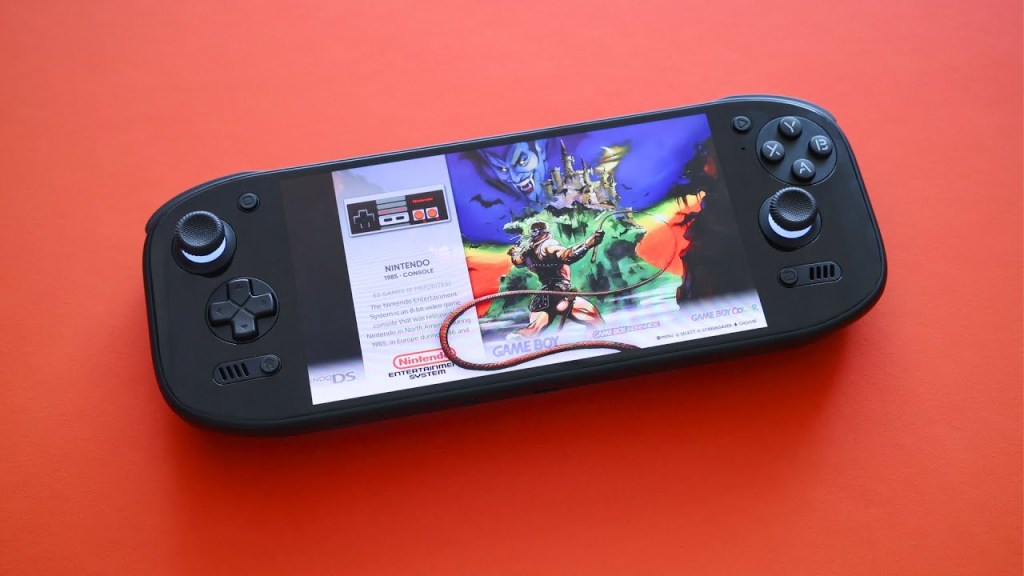
Now, for as much as I love the G Cloud, if you are looking for a device for cloud, Android, and emulation gaming, I actually don’t think this is the best device anymore at this price point. The AYN Odin 2 Portal, which came out at the beginning of this year, has a 7”, 1080p, 120Hz OLED, a much faster chip with the Snapdragon 8 Gen 2, and is just an overall beast for a little over $300. It’s pretty much what an upgraded G Cloud would’ve looked like if Logitech were looking to do a refresh. Nevertheless, if you are able to get the G Cloud on sale for, say $200, then it’s still the king in this space.
The Verdict: 7.5/10 – “It’s Solid”
Two years later, the Logitech G Cloud still feels like an overall solid package. Both its hardware and software have aged gracefully, making for a smooth gaming experience all around, whether that be through the ever-improving cloud or locally with some premium indie titles and older emulators. Though better devices have since been released over the past three years, if you’re able to snag this handheld on sale for a couple of Benjamins, you’ll be more than satisfied.
 Pixel Swish
Leave a comment