
Spoilers for season one of Pluribus ahead.
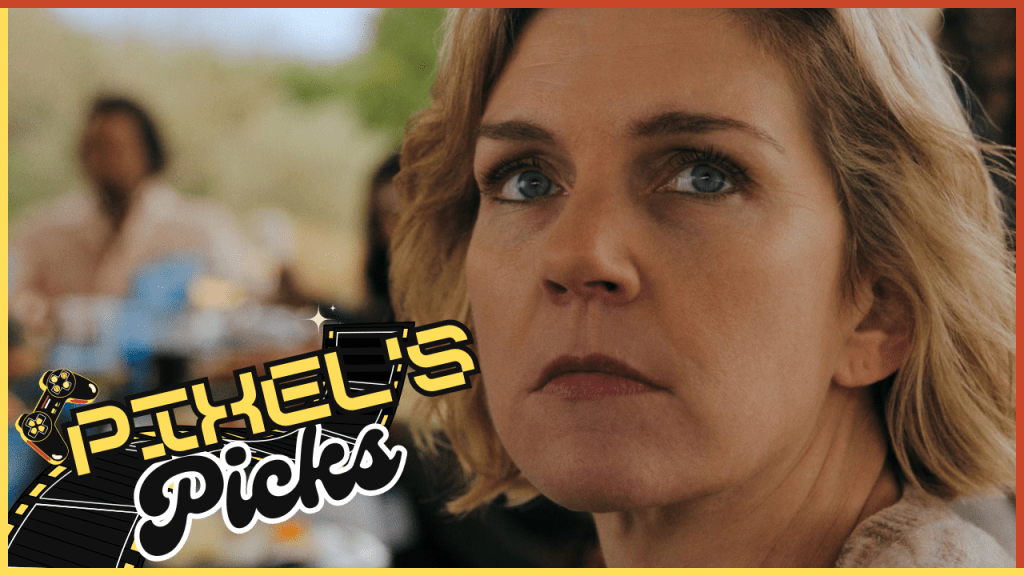
There’s been a lot of discussion about Apple TV’s Pluribus. Some say this is a story about communism versus capitalism, while others say it’s a white saviour story. Firstly, anyone saying the former simply doesn’t understand communism, and I’m going to leave it at that. Go read some Engels (and maybe some Angela Davis, while you’re at it). As for the latter? Listen, I’m all for calling out white saviour stories in media (Far Cry 3 can go f*ck itself), however, at no point during my watching of this first season did I think Karen—I mean Carol—was presented as a “saviour” or a “hero.”
If you’re familiar with Vince Gilligan’s past works, you’ll know that he doesn’t write heroes. What Carol is presented as is a selfish, pompous, individualistic, bratty, hypocritical, somewhat racist, and frustratingly stubborn character who refuses to get off her high horse. This isn’t to say she isn’t a well-written and performed character with nuance—she is. What her character presents is themes of loneliness and the fear of being happy.
What she also presents is America. There is some clear imagery sprinkled throughout the show that suggests Carol represents a satirical portrayal of the United States; from the U.S.’s colonial history, propagating individualism and “America First,” demeaning those of other countries and cultures, to, of course, being the poster child for capitalism and privatization.
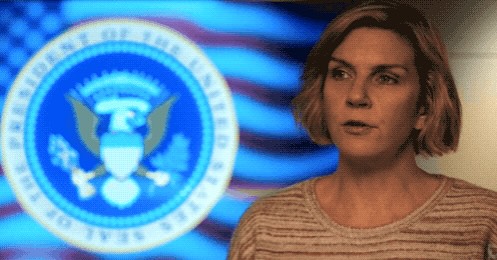
It’s not a coincidence that she’s the only American who is immune. It’s not a coincidence that when she speaks to the other ten immune individuals for the first time on a plane—almost all of whom are from non-white, non-English-speaking countries—there’s a damn American flag on the television screen behind her. Not to mention, she speaks to them in a manner that’s beyond condescending and very “White Man’s Burden”-y. That being said, we still don’t know how Carol’s character will evolve and how this satirization of America (if it is indeed intended) will evolve with her.
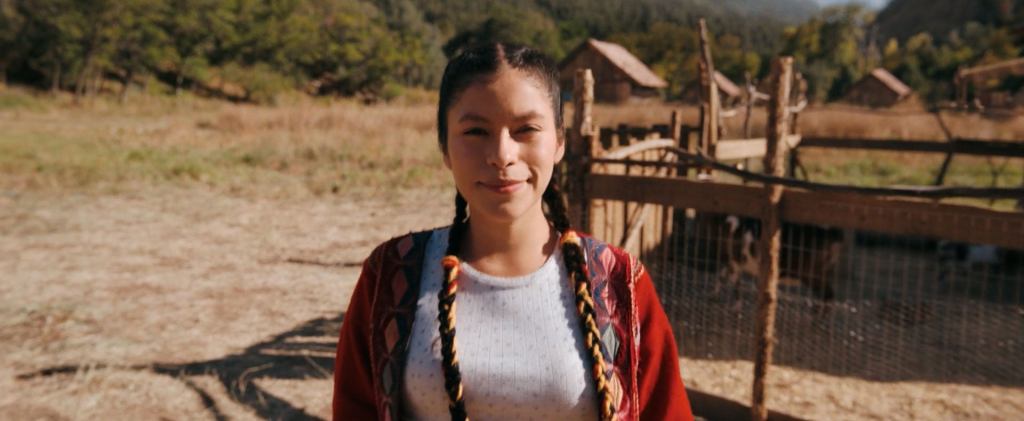
To speak on the show as a whole, Pluribus does raise some interesting questions. There’s a scene in the season one finale that shows Kusimayu, the immune girl from a small village in Peru, willingly “joining” the rest of her town as one of The Others. After she joins, she, alongside the rest of her village, with their unnervingly hollow smiles of contentment in tow, leave their home—abandoning it, their belongings, their pets, and, effectively, their identities. This scene, more than most, drives home the points the show had been trying to question this entire time: What does it mean to be human? What makes us, us? When all of us become “one,” what do we lose in the process?
Our culture, language, religion, history, art, the fabrics we wear and the food we eat; our individual ways of life and all of the beautiful “division” that creates our identities—are we truly human if we lose all of that? And is that loss worth it considering all those things have, historically, been the source of so much hatred, death, division, and destruction? Or is that itself a far too cynical, patriarchal, and Westernized way of looking at things?
These questions can also be related to A.I. and how our current landscape/hellhole has been developing around it, directly impacting our livelihoods, the creation of art, and our basic humanity.
Pluribus asks a lot of questions, and I’m curious to see what answers it’ll provide in season two.
 Pixel Swish
Leave a comment