
I’ve spent the past week playing my old Game Boy Advance SP, reliving my preteen years, going through Dragon Ball Z: Buu’s Fury. So, how does Nintendo’s classic handheld hold up after all this time, and should you, amidst the ever-expanding sea of retro handhelds, pick one up? Well, the answer, like most things, is a bit nuanced. But, spoiler alert, it’s still pretty damn great.
Me and My SP
If you’ve been watching my videos for a while, you’ll know that I sometimes have my old Game Boy Advance SP tucked away in the corner, used as set dressing to ensure that you know that I am, indeed, a gamer. This little guy has been with me since middle school, which is now almost two decades ago (f*ck, I’m old). I have so many fond memories of playing this tiny clamshell during recess, beating down bandits in Dragon Ball Z: Buu’s Fury with my friends huddled around me, trying to see the action unfolding on this tiny, 2.9-inch screen.
Alas, this handheld would eventually be replaced by newer, shinier ones like the PSP and Nintendo DS, relegated to the dark corners of my then-high school drawer. It wouldn’t be until 2015 when I’d visit back home and see that my parents had, thankfully, preserved many of my childhood toys and trinkets, including my SP. Unfortunately, though, they didn’t think to keep the charger (it’s okay, guys, you moved like a dozen times after I left for college—honestly, I’m surprised you two even kept this thing). The crazy part, though, was that even after years of being stuck in storage, my SP still turned on. I was able to boot up Buu’s Fury and play for a solid hour before the handheld’s battery finally said, “Okay, bro, that’s enough of your childhood.”
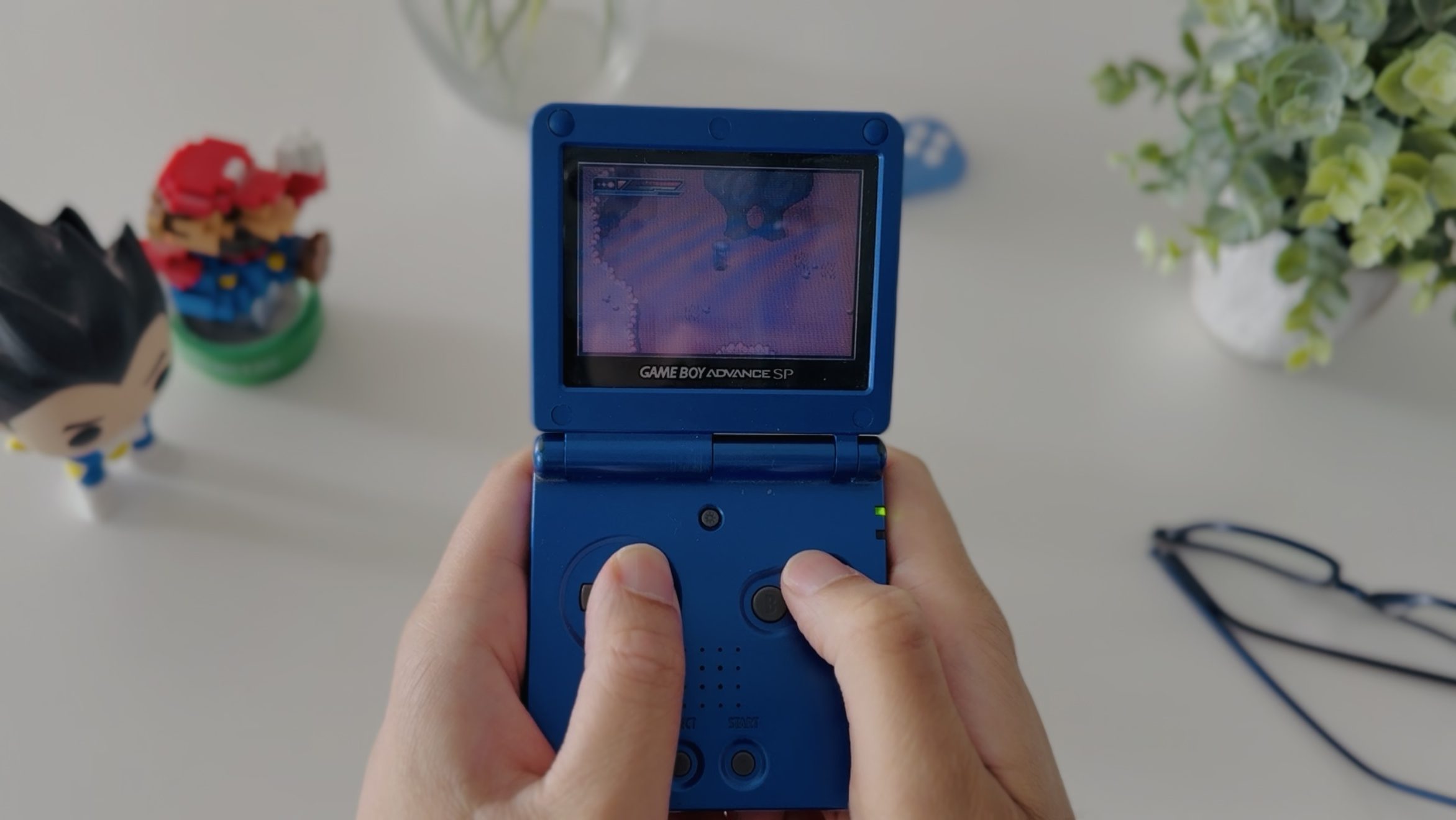
That hour, however, was a reminder of just how amazing the SP was as a handheld. From its design to the feel of its buttons, it’s no wonder that so many retro handheld manufacturers today are trying to emulate its design, even twenty years later. Each time I pick it up, even today, I am in awe of just how amazing it feels in my hands. It eventually came to the point where I needed to play it again. To see how this 20+ year old clamshell actually plays in 2026. And so, I made a quick trek to my local retro game store and picked up their last remaining GBA charger. Half expecting the battery to be borked, I plugged the charger in and was greeted by that wonderful orange light.
A Timeless Design
The thing that most people talk about when they talk about the SP is its design. Rightfully so, because even now, this is such an amazing device to hold in the hands. It feels sturdy and premium; there’s zero flex in the plastic, and the hinge is smooth, satisfying, with no creaks—even after all this time. Honestly, even compared to the 3DS—a device I also really like—I find the SP’s overall build quality to be superior.
It’s such a wonderfully pocketable thing, too. In a time where beefy Windows-based handhelds are a few pounds shy of needing to be checked in at the airport, it’s refreshing to play something that fits in any pocket and doesn’t cause hand fatigue.
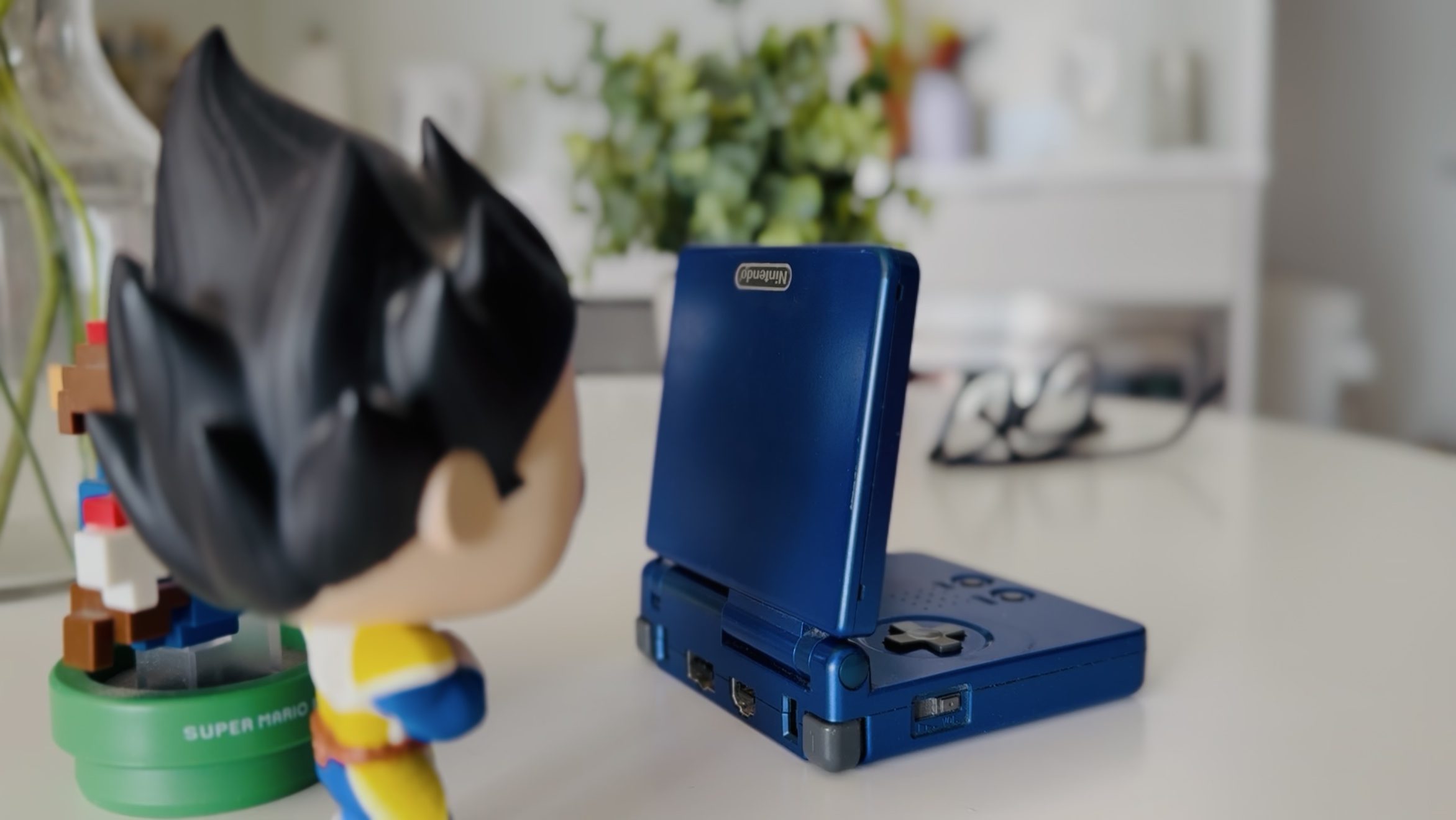
On that note, I’m quite a bit larger than when I played my SP as a twelve-year-old, and as such, I was concerned about whether my hands would cramp during longer play sessions. Surprisingly, that wasn’t an issue. I’m not sure whether that’s due to how lightweight the SP is, how my fingers crisscrossed while holding the device, or a combination of both, but I didn’t find the holding experience too bad at all.
Some Solid Buttons
When it comes to the buttons, the greatness continues. The D-Pad on the Game Boy Advance SP may very well be in my top three D-Pads of all time—right up there with the likes of the PS Vita. After decades of fiddling with subpar D-Pads on modern controllers, I’m reminded of just how good we had it back in the day. Seriously, I haven’t been able to hit diagonals this well in a very, very long time. The face buttons are just as good, maybe too shallow a travel for some, but good for me, with a soft clickiness that feels and sounds just right. The shoulder buttons are definitely puny, and I’m not a big fan of how they sound, but far from terrible.
A Dated Screen
Now, let’s get to the biggest factor that keeps the SP from continuing to be one of the best handhelds in 2026—the screen. When booting up the device for the first time in more than a decade, I was expecting to be met with a screen that doesn’t dazzle like modern-day OLEDs and LCDs. Even with those expectations, however, I was still taken aback by just how bad the screen on the SP is. This is a 2.9-inch TFT colour LCD with a resolution of 240×160; that’s a PPI of 99. That’s right, folks, we’re in double-digit territory here—yikes.
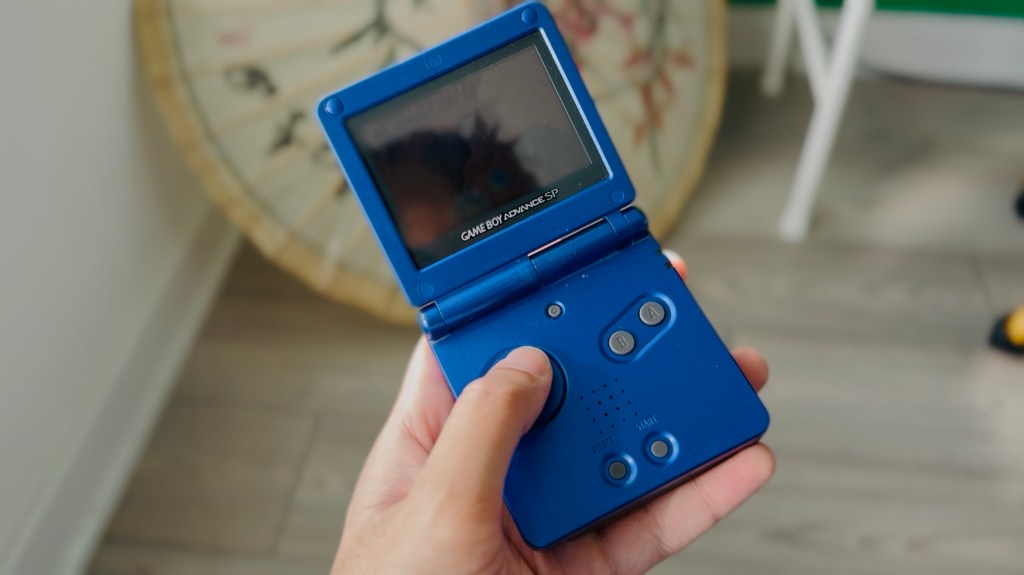
The screen on my model does have a front light, thankfully (I cannot fathom having to fight Majin Buu without it), but it’s not a very eye-strain-friendly one, and my eyes definitely felt a little fatigued after an hour-long play session at night. With all of that said, after a few sessions, I got used to the paltry resolution and less-than-stellar front light.
Also, and this has nothing to do with the screen, but I thought I should mention it, the speakers aren’t the best on this thing, either. They’re sharp and tinny, and though I’m not sure if time has made them worse, they sound a bit muddled when at full volume. And they’re the only way for you to enjoy the audio of your game, as there isn’t a headphone jack anywhere to be found, unless you use some kind of weird adapter.
Still A Great Buy (?)
So, does a Game Boy Advance SP still make a decent purchase today? Honestly? Not really. With the sheer number of retro handhelds available on the market, a few of which have a similar form-factor with better screens and more features, cost under a hundred bucks, and are capable of playing many more systems, I can’t say that the GBA SP, for as much as I do love it, is worth getting—save for a couple of reasons.
Reason one: You already have or want to have a library of GBA games and want to play them on an original SP. I won’t lie, there’s still something special about having a dedicated device that was designed specifically to play its unique games. No worries about scaling issues or borked ROMs, just jam in that cartridge (maybe blow on it a couple of times for safety) and off you go. And if you can find a reliable seller online that’s selling a unit for $50 or less, then I think that’s more than worth it to add to your handheld collections. Speaking of collections:
Reason two: You’re a collector. If you’re one of those folks whose basement is lined end-to-end with video game memorabilia—first of all, you have my envy—and you don’t have an SP in your collection, then yes, of course, go ahead and splurge on one. Heck, you probably already have and are watching this to justify your purchase.
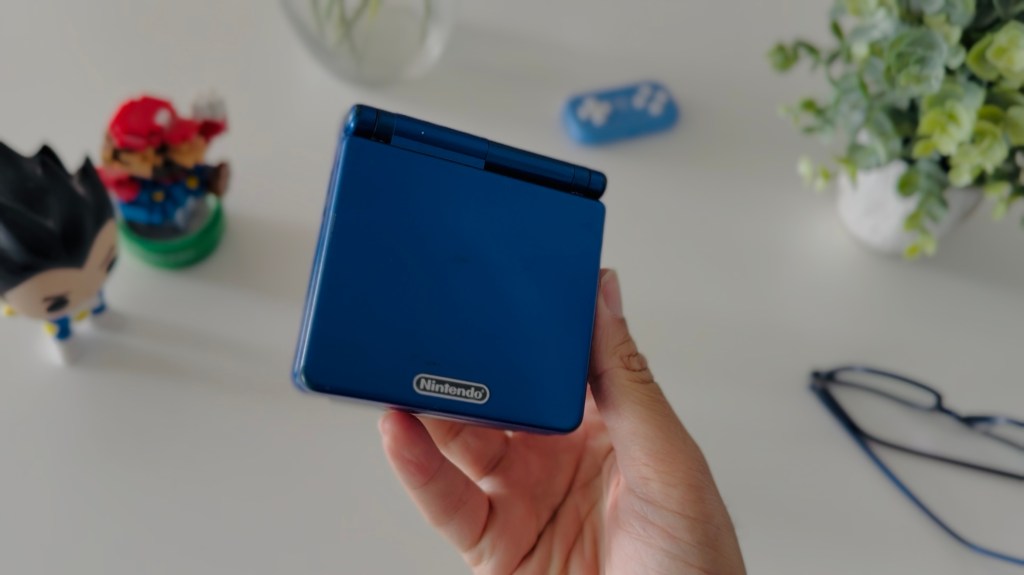
The Game Boy Advance SP will always be one of my favourite handhelds to ever exist, with some of my favourite games to ever exist, and it’s surprising how well its design—crappy screen notwithstanding—has held up all these years later. Sure, for the price you’ll likely pay for one of these things on eBay, you could just get a Miyoo Mini Flip, but there is still something special about having one of Nintendo’s greatest relics from the mid-2000s.
 Pixel Swish
Leave a comment