
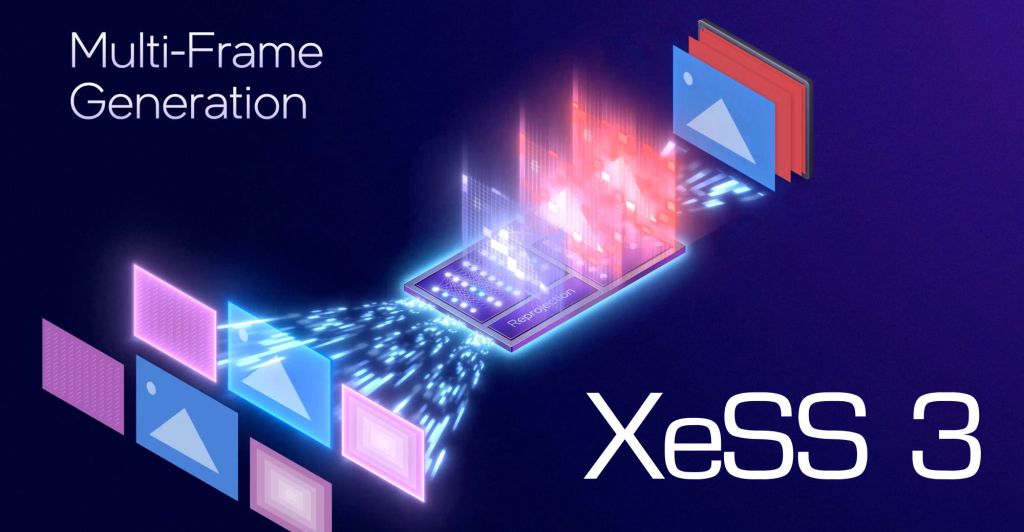
Intel’s new XeSS 3 Multi-Frame Generation is absolutely wild. At 30 Watts, I’m able to run Cyberpunk 2077 on my MSI Claw 8 at 1080p and high settings with ray tracing, while getting north of 60 fps. Let me repeat that because I don’t think you read that properly. 1080p; high settings; ray-traced lighting and reflections; 60fps. A combination of words we would have thought impossible for a handheld device just a couple of years ago.
Upscaling and frame-gen tech have come a tremendous way in just a few years. Intel, though have been slower to keep pace with these technologies relative to AMD and especially Nvidia, has done an incredible job with their iterations of upscaling via XeSS. And now, their driver-level frame-gen is, in my opinion, almost just as good as what Nvidia offer on their end.
One of the biggest drawbacks to any frame-gen tech is latency. Even a popular third-party application like Lossless Scaling, something that I often use (and love) on my Claw 8, still introduces a decent bit of latency that makes fast-paced games—especially those that are first-person—pretty much unplayable, and that’s even when keeping things just at 2x. With XESS 3, at 3x, I was shocked at how playable the experience was in Cyberpunk 2077. Of course, your sensitivity may vary, but for casual play, I think it’s more than fine.
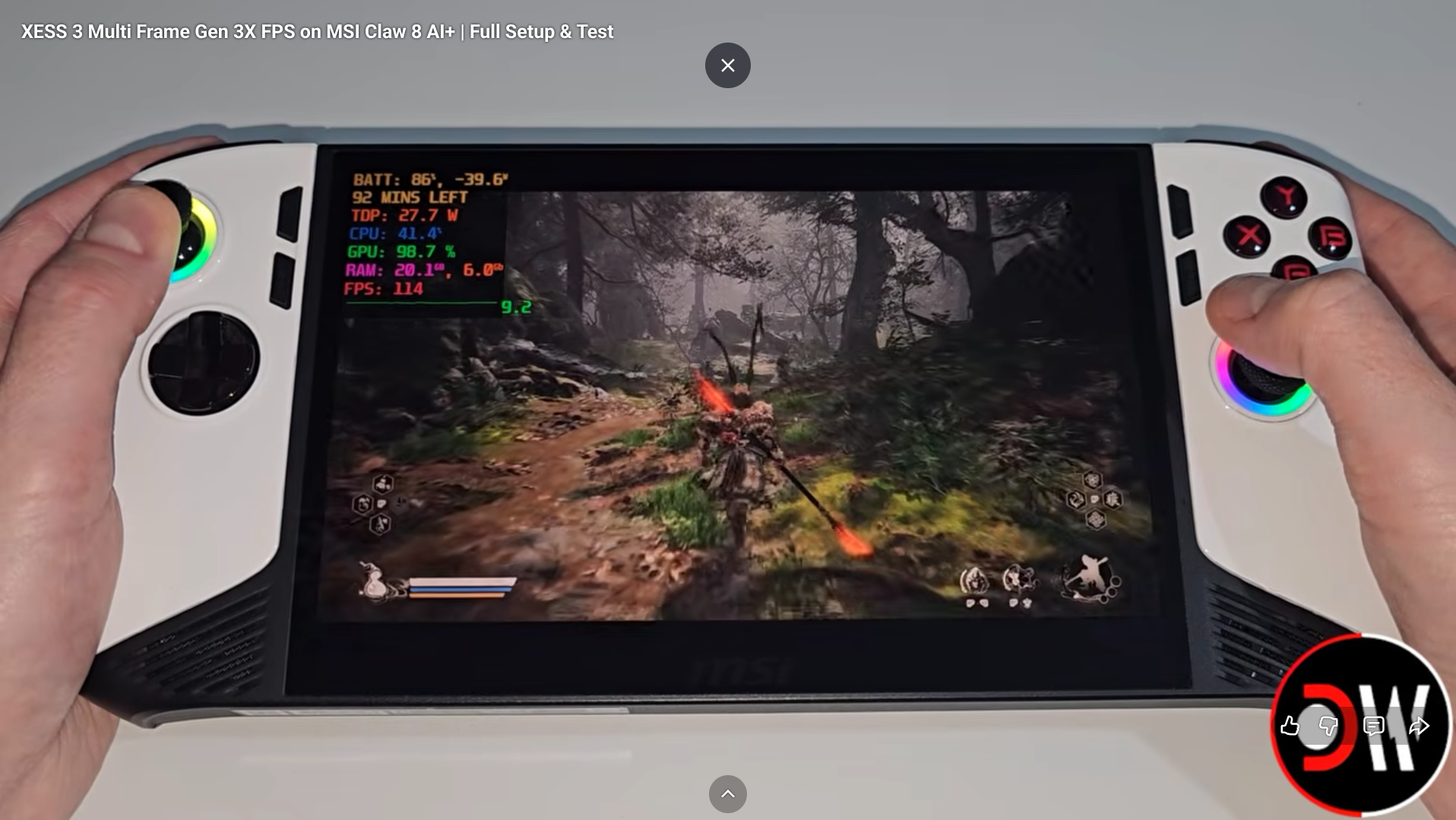
Now, I’m not saying it’s a perfect experience. When adding “XeSS Performance” upscaling on top of driver-level frame generation, you’re definitely going to see some artifacting and motion smearing. That being said, compared to the visual mess I’ve often seen caused by AMD’s technologies, it’s a more than fine visual experience here on Intel’s side. When on a small 8-inch screen like the Claw’s, those visual quirks are even less noticeable.
It should be noted that these technologies should not be an excuse for developers to create unoptimized games (even though that’s already happening, I feel). Rather, it should be a tool that benefits users with handhelds and/or older hardware (which, with current PC component costs, will be more the norm). I’m incredibly impressed with what Intel have been able to accomplish here and look forward to more games supporting XeSS 3.
 Pixel Swish
Leave a comment