
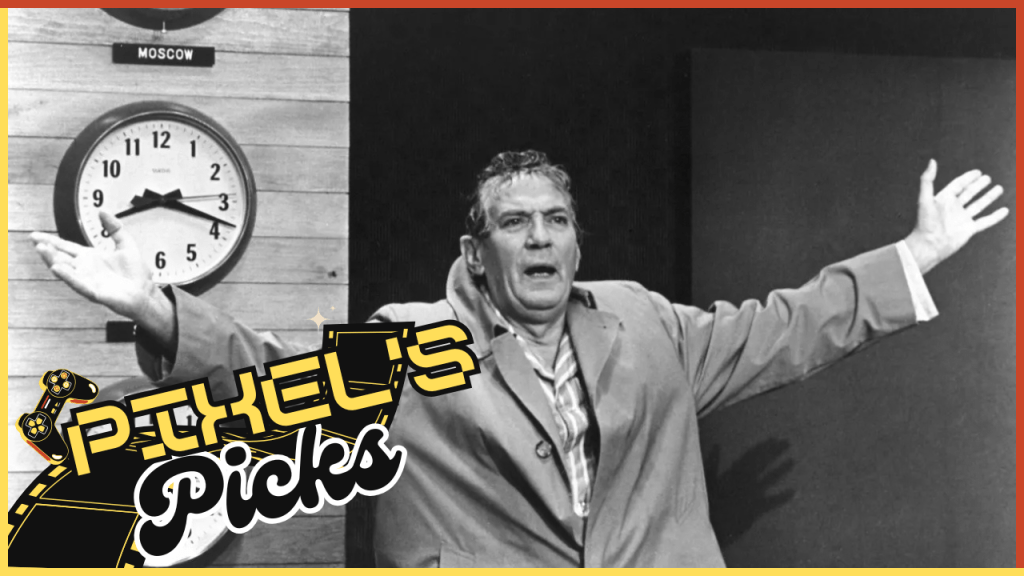
Let me show you what I think is one of the greatest and most relevant monologues ever written and performed in cinema:
This is from the film Network, a satirical dark comedy directed by the great Sydney Lumet and released in 1976. It tells the story of Howard Beale (Peter Finch), a news anchor for the struggling UBS network. One evening, Beale has a breakdown on live television, telling audiences he is going to unalive himself. UBS, furious, tells Beale to apologize for the outburst on the following show. Instead, during the airing of said “apology,” Beale goes into a rant about life being, as he puts it, “bullsh*t.” In a twist of events, his breakdown resonates with audiences, and the network gets a massive spike in viewership.
Being the good capitalists they are, UBS gives Beale a show of his own. Soon enough, Beale is heralded as “the mad prophet” as his rants electrify the nation. That is, until he makes a crucial error—saying something one night that hurts the network’s stock price, particularly calling out UBS and their merger with a Saudi conglomerate. It is then that Beale is brought in to talk with Chairman Arthur Jenson (Ned Beatty), who goes on to give that chilling speech.
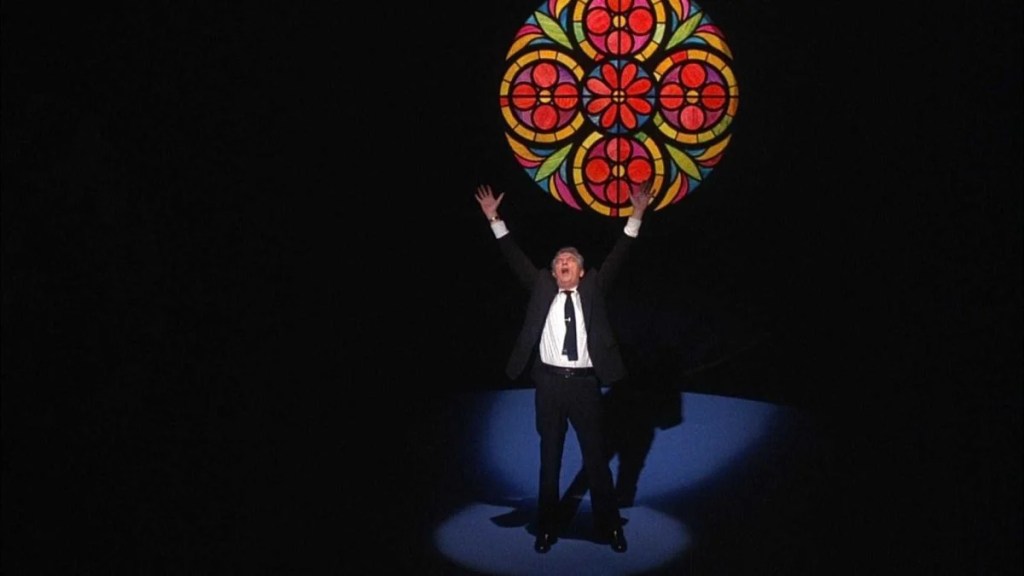
And chilling it most certainly is. Not only because it is written sharply and performed passionately by Beatty, but because it is so remarkably relevant. With everything that’s going on (and has been going on) around the world, it’s difficult not to see the horrid interwovenness of capital existent within our actual geopolitics. The corrupt money trails, globally, that fund all this political theatre. Political theatre that’s produced thanks to the machinations of capitalism, and whose audience are the millions that suffer and die, all for the profits of the elites.
What’s funny is that Roger Ebert, in his review of this movie, said, “It attempts to suggest that multinational corporations are the only true contemporary government, but does so in a scene that slips too broadly into satire.” Oh, Mr. Ebert, if you only knew what was to come. I wish this monologue were satire. I wish so much of this film were satire. Unfortunately, much of it is not. Now, this isn’t to say it’s a perfect film, but it has tremendous performances, great direction by Lumet, and a fantastic script written by Paddy Chayefsky.
Unfortunately, and maybe even ironically, Chayefsky’s politics throughout his career leaned a little too pro-Israel for my tastes. Frankly, I wouldn’t think it unfair to call him a Zionist. Does that taint my feelings towards his work on this film? Well, it’s hard for it not to. Sure, you can separate the art from the artist. But when said art is so politically-driven and a commentary on so much of the politics and propaganda of the U.S., it’s tough not to be critical of the person behind the words, for as good as those words may be.
Potential Zionist writer aside, his writing is great, and Faye Dunaway is always a treat to watch perform.
 Pixel Swish
Leave a comment