
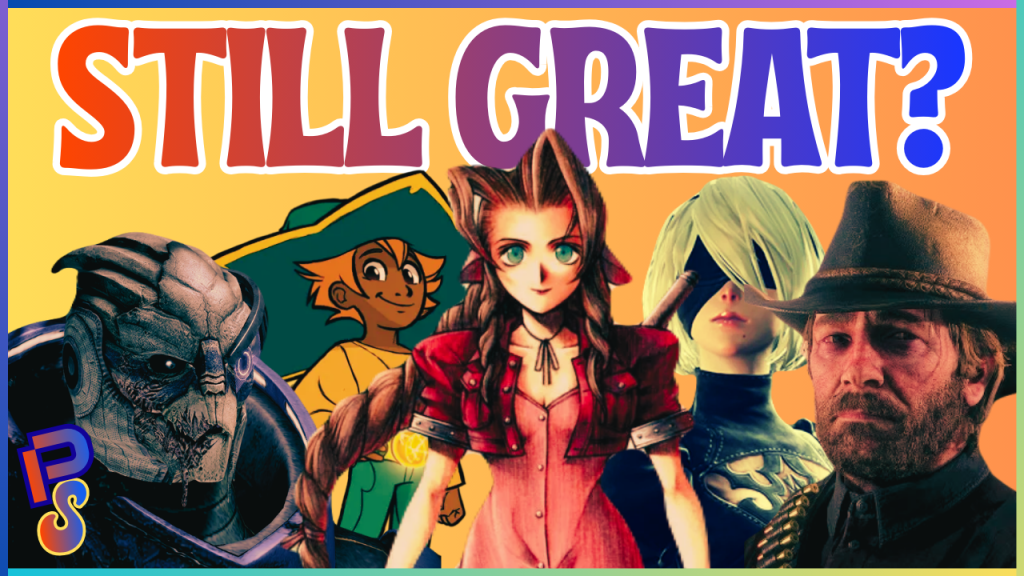
NieR Automata is possibly my favourite video game of all time. It’s a game that not only does everything I look for in a video game—fast-paced third-person action RPG with a moody sci-fi aesthetic and a poignant character-driven story—but goes beyond that checklist to present its narrative themes in a way I never thought possible through the medium of video games. Not to mention, sprinkled atop it is one of the greatest original soundtracks across all narrative-driven media, composed by the great Keiichi Okabe. It’s a game that, when I reached the end credits of its true ending, left me in visible awe. One where I did nothing but simply sit back in my chair, pondering melancholically at the experience I’d just had. And yet, it’s a video game that I, up until recently, had only played once.
This has always been a stubborn tendency of mine. The refusal to revisit pieces of media and art, especially those that have a significant impact on me, and particularly when it comes to video games. I used to have the same kind of tendency for movies and T.V. shows. But as I slowly got more into the world of media criticism and began writing critically about movies on a professional level, I realized it was important to rewatch films, especially those that I held in high regard. To see if my thoughts had changed over the years, or if I would notice something new that maybe I hadn’t upon my initial viewing.
Even though I had also delved into the world of professional games journalism and knew the importance of revisiting classics and old favourites, I remained hesitant to do so. A part of this was because of how much I love video games. I love film and television as well, immensely so, as I do literature and so many other forms of art. But I love video games. And there are a lot of video games. The fact that I won’t be able to play all of these video games in this lifetime saddens me to no end. It’s why when I see a game to its end credits, I quickly and unflinchingly jump to whatever’s next on my backlog.
“There’s not enough time!” I often exclaim when considering going back to a title I love. Because going back would mean I’d be taking time away from chipping away at that incessant backlog. One that is so massive in part because I started my gaming journey a little later than I would have liked, which, if you’ve watched or read my video/article here, you’ll understand.
This is technically also true for movies and books, but a movie doesn’t take dozens of hours to complete, and though I love a good book, I’m not as pressed about the notion that I’ll likely never finish all of the words Dostoevsky or Baldwin have ever penned…Okay, thinking about the latter does indeed fill me with a tremendous amount of sadness. Apologies, Jimmy, I retract my statement—I most certainly will finish all of your books. Can’t say the same for you, Fyodor. It took me almost a year to finish The Brothers Karamazov; I’m not sure how many more thousand-page novels about pathetic men I can take in this lifetime.
That said, this neurotic need to get through my backlog is a mostly superficial reason as to why I haven’t gone back to replay my favourite games. The other reason is a bit of a deeper, more emotional one. This idea that if I did go back to replay one of my favourite games, they’d no longer be one of my favourite games.
Those initial experiences of my first playthroughs that led me to resonate so deeply with these games, to hold them so near and dear, would not and could not be recreated. Again, the same can be said for a film. However, for whatever reason, I’m able to lock in to the more analytical side of my brain upon a second or third viewing of a movie I love. Even if doing so means I judge certain aspects of it more harshly, it still doesn’t take away my love for it—if anything, it makes my feelings towards the movie more nuanced and interesting. Or even if it does take away some of my love for it and knocks it off my pedestal of favourites, so be it.
I can’t do that with NieR Automata. I can’t do that with Spiritfarer, Metal Gear Solid, Final Fantasy VII (the original, not the sh*tty remakes), Inmost, Shadow of the Colossus, Mass Effect, Journey, or The Witcher 3. Or, rather, I don’t want to. These games mean so much to me; some of them were even life-changing experiences. I don’t want a second playthrough to possibly taint my feelings towards them. It’s odd because the Apu Trilogy, written and directed by the great Satyajit Ray, is also equally important to me. But the thought of rewatching those films at some point excites me. My relationship with them doesn’t come from the same place, emotionally. I wonder if it isn’t because video games are, inherently, an interactive, kinetic medium of art. And that interactivity creates a stronger bond between me and a game I love, compared to the relatively passive experience that is watching a film.
Nevertheless, I wanted to push myself to revisit some of these games I held in such high regard. It’s a practice that I’ve found invaluable when it came to movies, especially as a writer and my abilities as a critic. One that I knew could provide the same insights and help me as someone who loves writing and making videos about video games. And so, I did. The five games I picked out of my all-time favourites to be a part of this endeavour were: NieR Automata, Spiritfarer, The Witcher 3, Cyberpunk 2077, and the Mass Effect Trilogy. Now, just to note, this journey of replaying these games only started a few weeks ago. As such, I haven’t seen them to their end credits. Still, I have played each enough to feel comfortable sharing my renewed thoughts, and ask the question: Should you replay your favourite games? Or should your memories of them and the magic they carried from that initial playthrough be preserved and untainted?
Cyberpunk 2077 & The Witcher 3
Let’s start with the duo of RPGs by CD Projekt RED. The Witcher 3 was a game I very much enjoyed when I first played it way back in 2015 on the PS4. However, it wasn’t an instant favourite. It was a game that took me a while to realize just how much I loved; a game I revisited through its two DLCs, Heart of Stone and Blood and Wine, years later with the Complete Edition on Switch. It was during this revisit that I realized just how much I had thought about this game throughout the years.
Its characters, environmental storytelling, brilliant side quests, enthralling open-world, and mesmerizing music were aspects that would pop in and out of my mind, even years after that initial playthrough. Which, with how many games I had played between that initial playthrough and the DLCs, for it to resonate and be on my mind persistently, says a lot. It wasn’t without its issues; the combat left much to be desired, and some of the traversal clunkiness was at times frustrating. But the more I thought about The Witcher 3 and all of those aforementioned aspects, especially on the narrative front and after playing through those two DLCs, I knew this was one of the best gaming experiences of my life.
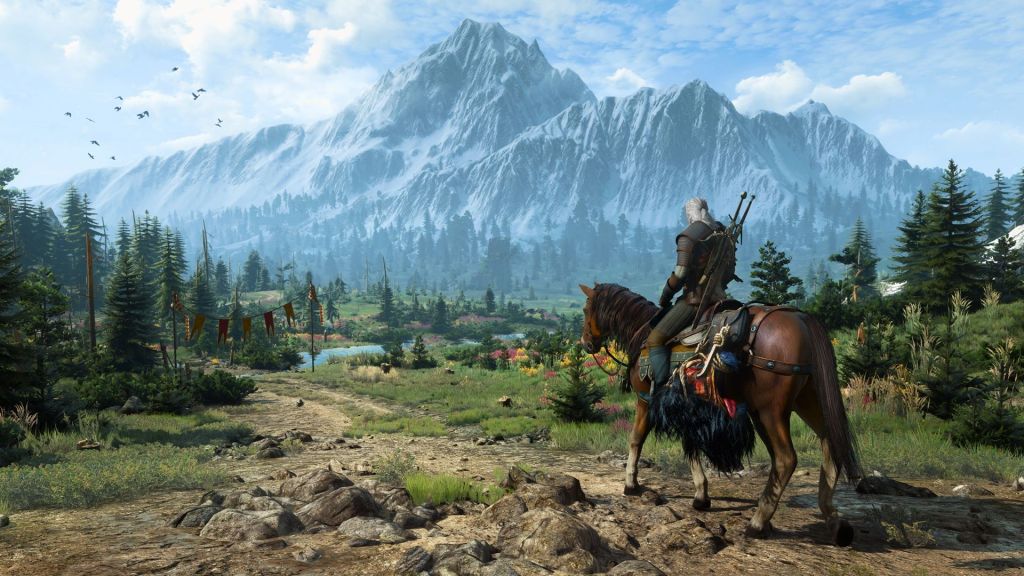
In 2026, the game holds up mostly well. A dozen or so hours into this second playthrough, and I am just as impacted by Geralt, his motley crew, and the world and stories around him as I was the first go around. There’s something about the tone of the game and the way in which Geralt interacts with the people and monsters around him that’s captivating. The way the world comes in contact with him, with you, in such a natural way as if it were by happenstance rather than a preprogrammed one, is enchanting—making me always want to go off the beaten path to see what interesting musings and stories could be around the corner.
With that said, I say “mostly” because there is one glaring flaw with the game. A flaw that was an issue even in 2015—the combat. The combat is woefully clunky and feels worse a decade later. Having played dozens of third-person action games since my first playthrough, it’s hard not to look past just how unsatisfying this combat system is. It’s clumsy; Geralt’s sword rarely registers hits either audibly or through animations (or does so awkwardly), the camera is often wonky, blocking is useless, enemies are damage sponges on greater difficulties, and the lock-on mechanic has a mind of its own. And for all of the cool Sign abilities you have at your disposal, I often just relegated myself to using Igni and dodge-rolled to infinity until I saw an opening for a sword hit. I remember not enjoying the combat during my first playthrough, but boy, do things feel far worse this time around.
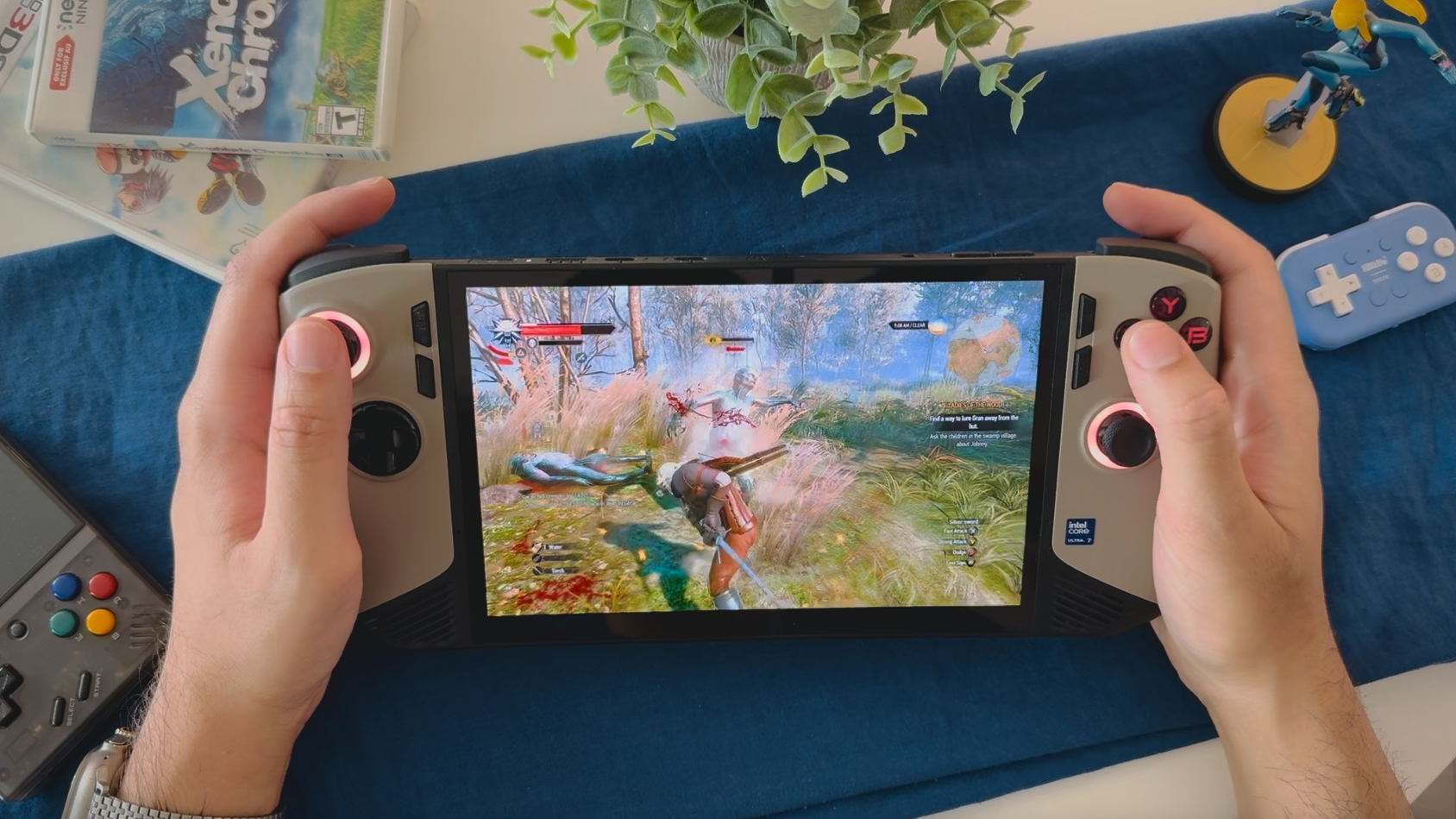
It’s definitely bad enough to take away my enjoyment and immersion. It’s interesting, I played through The Witcher 2 just last month and was very taken aback by how piss-poor the combat and traversal mechanics were; thinking to myself, “Man, I’m so glad they ironed things out in 3.” Now, going back to the third game, I’m surprised at how much of the second game’s DNA still exists in the foundation of the third’s gameplay. Don’t get me wrong, it’s a far better experience, but not a fundamentally different one.
For as much as I want to say that my thoughts on this game are unchanged, I can’t. I guess after a decade of playing a lot more games, especially third-person action ones (and a lot of Soulsbornes), I’ve come to realize that good gameplay is more important to me now than maybe it was in 2015. I still consider “Story is king” to be my mantra for single-player games, but said story now needs to be complemented by engaging and well-executed gameplay. The Wild Hunt is still a phenomenal game, from its world and characters to its music. I still consider it a generational title; an experience that I’ll continue to hold very near and dear. But I will, unfortunately, be reconsidering its place on my all-time list.
Now, let’s talk about CD Projekt RED’s more contentious title—Cyberpunk 2077. Firstly, I didn’t play this game at launch. Because…well, you know why. No, the first time I played it was via the Ultimate Edition that came bundled with the Phantom Liberty expansion at the end of 2023. And, I played it via Nvidia GeForce NOW, on the “Ultimate” tier, allowing me to play the game with full path-tracing and all the bells and whistles turned on. And the experience I had…was stunning.
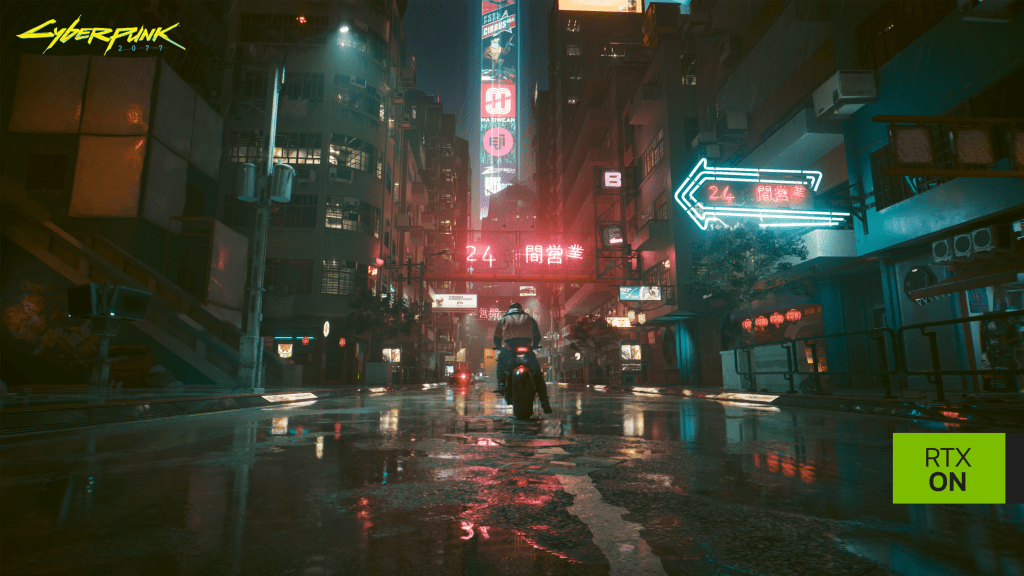
To this day, no game has come close to the immersive visual experience that is Cyberpunk 2077 on “RT Overdrive.” When playing on a big OLED screen, with everything maxed out, Night City becomes a living, breathing entity; a video game world that gave me literal chills because of how attached to it I became. It was a visual experience that swept me off my feet. A visual experience that distracted me from any flaws the game may have otherwise had.
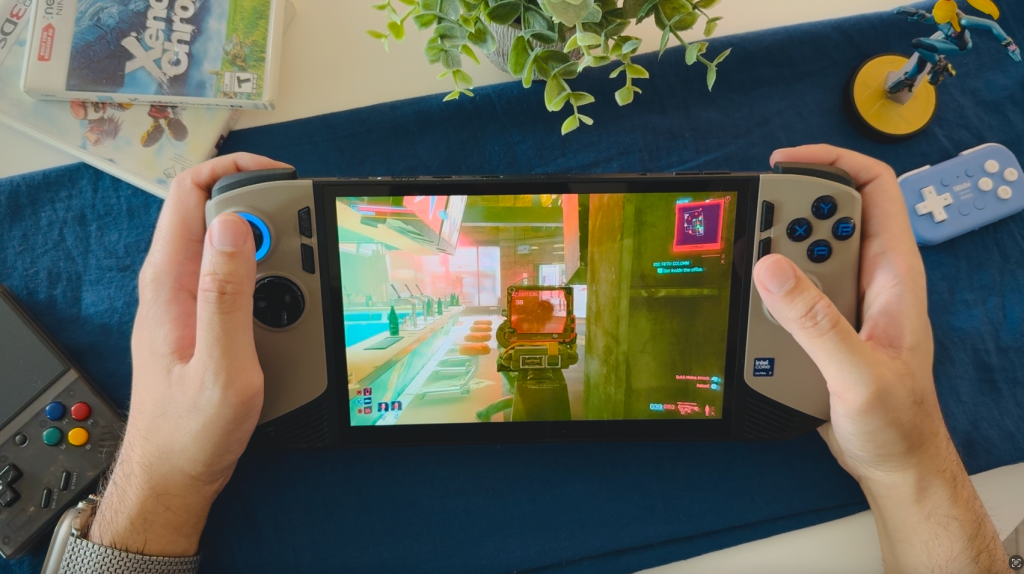
In 2026, having now replayed the first two dozen hours of Cyberpunk 2077 with far fewer bells and whistles turned on because of the limitations of my local pc, which is a handheld, with no such beautiful distractions coming in between me and the game, the shortcomings of CD Projekt RED’s new IP are now more noticeable. Don’t get me wrong, it’s still a pretty game, and Night City still feels immense and chaotic, but I was able to see some of the cracks in its design more clearly now. Like how each of the districts didn’t feel all that different from one another.
Heywood felt very similar to Westbrook, which felt kinda same-y to Watson, which wasn’t all that dissimilar to Santo Domingo. Sure, each might have a couple of unique architectural elements, but from the similar-looking NPCs that felt like set dressing to every vendor offering the same items to the same scripted open-world gameplay sequences that didn’t feel particularly emergent, it all just blends into a mish-mash of general Cyberpunkness.
During my first playthrough, I was so taken by the story, characters, and lore within Night City. I even wrote an article about some of the smaller stories sprinkled throughout the game; stories that were written with care and nuance you wouldn’t normally see in most other open-world RPGs. This, thankfully, still holds true. At least as far as the side-quests are concerned. Every side quest, every gig, for the most part, has a story worth experiencing. Whether it’s a short backstory on a sleazy club owner or a multi-part side quest about a malfunctioning vending machine that has become sentient, narrative oozes throughout Night City and remains one of the best examples of how to do open-world storytelling.
Unfortunately, I can’t say the same for the main storyline and some of the world-building narrative elements. Where I was so enamoured by the plot, characters, and world during my first playthrough, I now see more of its blemishes this second time around. For as much as I love Cherami Leigh as Female V and thought she brought so much life to the character, the backstory of V isn’t fleshed out as much as you’d think, considering this is an RPG that has you choose between three classes. No matter what you choose, V still ends up being the same character, with a few additional dialogue choices that don’t really affect her as a person. I also hate that V’s entire time with Jackie at the beginning of the game, a time that should have been used to establish her as a character, is instead completely montaged away.
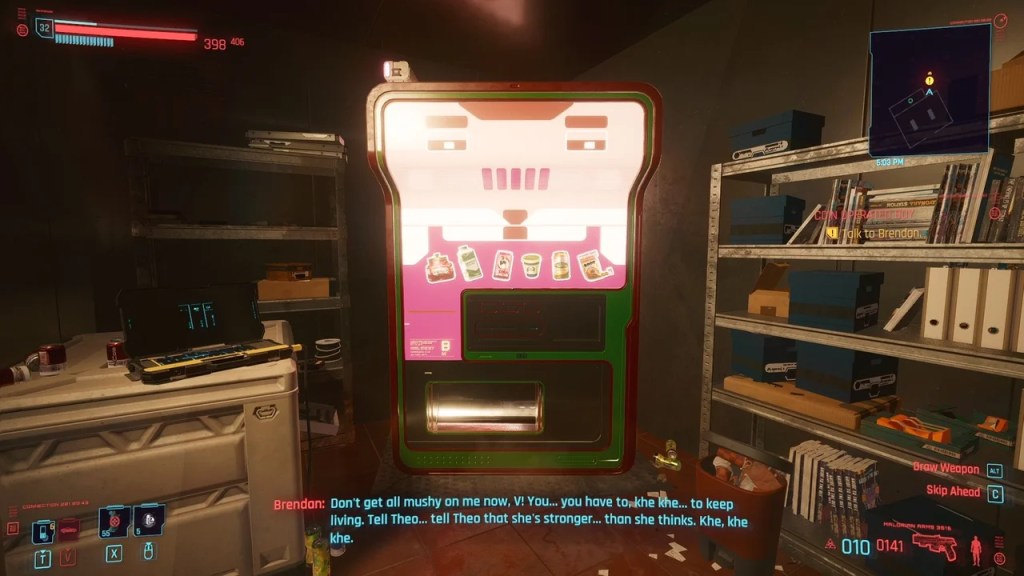
Furthermore, for as much as the game tries to establish the history of and the different factions within Night City, none of them ever really feel a part of the story in a meaningful way. And the main storyline of Arasaka and Johnny Silverhand, in my opinion and especially now that I’m playing through it a second time, is just okay. I don’t think it delves into the deeper aspects of the Cyberpunk genre or presents the politics of said genre with the necessary nuance; instead, it veers into the more satirical and surface-level aspects of anger and chaos. Overall, the connection that I’d felt with this world, story, and characters was somewhat lacking this time around. I still enjoyed the quieter moments with characters like Judy, and loved the side-quests and gigs, but that emotional connection, that magic, I’d had from the get-go just wasn’t there this time around.
Also, I hate Keanu Reeves’ performance as Johnny Silverhand. Don’t come at me, I love me some Keanu and actually find the man to be a good actor, as his work is often understated. But give him a character where he needs to wear his emotions on his sleeve, and the man crumbles. Silverhand has some golden lines of dialogue, some genuinely great moments with V, but Reeves’ flat delivery fails to encapsulate any of that harsh edge, that cynicism, that anger, and the sadness that the character is supposed to embody.
Now, I remember the narrative truly clicking with me once I’d started the Phantom Liberty expansion, which dovetails seamlessly with the main game. The character arcs, themes, and plot beats felt far more engaging and well-written; V’s character got some much-needed depth, as well. I’ve only just started the expansion in this second playthrough, so maybe my thoughts on the narrative as a whole will come around once I’ve finished the entire story, including Phantom Liberty.
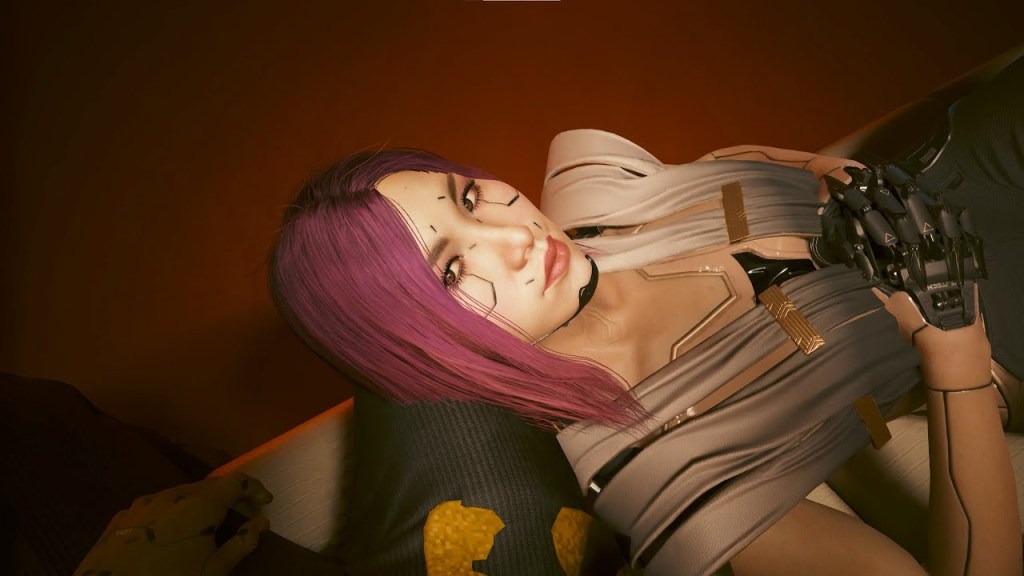
When it comes to gameplay, my opinion hasn’t really changed all that much this second time around. The gunplay still feels fine; the skill progression is done decently, and the myriad of cyberware make for diverse and fun combat options. That being said, I am more aware of some of the enemy AI’s shortcomings this time around, which frequently lead to immersion-breaking and frankly hilarious moments. These moments are also littered throughout the game outside of combat, which is helped in large part due to the game still having some lingering bugs and glitches. Don’t worry, it’s nothing like the horrors I saw from videos back during the game’s launch, but little things like NPCs clipping through walls and sudden eight-car pileups randomly taking place on the freeway are still fairly frequent.
All in all, I still think there’s room for Cyberpunk 2077 to continue being one of my all-time favourites. I’d put in close to 120 hours in my first playthrough, compared to the 25 that I’ve put in thus far now in my second. Maybe I need more time to get settled into Night City again. Maybe I simply need more time with Judy, Panam, So Mi, and the many smaller players that exist within this chaotic world. Maybe more time with Reeves’ performance as Silverhand will—nope, no, sorry, that’s just not gonna happen.
NieR Automata and Spiritfarer
This is the section I was most afraid to write. Because, as mentioned, NieR Automata is often the game I name when asked, “What’s your favourite game of all time?” Spiritfarer is the game I say soon after as an honourable mention because it’s most likely second on that list. The notion that a second playthrough of my number one and number two could potentially knock them off their spots was terrifying. Thankfully, I don’t think that’s going to be happening—at least for one of these titles.
Booting up both of these games, and I’m instantly reminded as to why I hold them in such high regard. Automata flings you into the action straight away into the shoes of an android named 2B, greeting you with that classic high-octane action Platinum Games is known for. But this time you’re ping-ponging between third-person hack-n-slash to 2.5D hack-n-slash to top-down bullet hell, all in the matter of minutes. Soon enough, though, things get quieter, and the game slows down as it introduces you to some of the other characters and the world around you. All of these moments, from the frenzied action to the intimate character vignettes, are enwrapped with gorgeous music by Okabe, which sets the melancholic tone for this game perfectly.
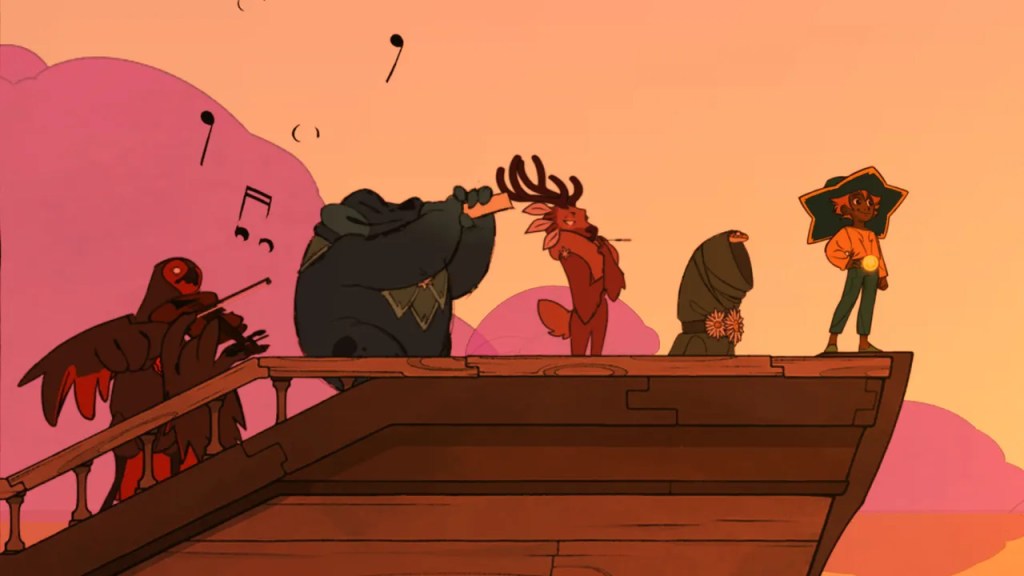
Spiritfarer begins by putting you in the shoes of Stella, a young girl who is now to become the new spiritfarer, helping guide spirits through the Everdoor. From the first frame, I was reminded just how gorgeous this game is. Its animations, colours, and artwork are breathtaking. The soundtrack is a banger, too. If you’re unfamiliar, Spiritfarer is a resource management game by Thunder Lotus Games. As you gather spirits throughout the world and bring them aboard your ship, you must do your best to keep them happy and fulfill their wishes, from building them a place to stay to cooking up their favourite meals. Throughout this time, you’ll learn more about them, their past, and their relationship with you.
I cried 11 times during my first playthrough of this game. I wasn’t expecting to shed a tear this second time around, but such was not the case. As soon as I took that first character to the Everdoor and that music hit, I was done. Spiritfarers’ writing is tremendous. Each character is given interesting backstories that you slowly get snippets of throughout your time with them aboard the ship; little insights like what they like to eat or what they like to do go far in establishing their past and character traits. You don’t realize how much their presence on the ship means to you until their time to get to the Everdoor approaches. And it’s such a wonderful allegory to life; we’re so fixated on the frenzy of our day-to-day that we forget to slow down and hug our loved ones. This is a game that taught me just that—to slow down, take pleasure in the small things every day, the work you do, and the people you meet.
Spiritfarer is just as special as the first time I played it—maybe even more so. It’s a game whose mechanics, artwork, music, and writing all coalesce to make for one of the finest experiences, gaming or otherwise, I’ve ever had the pleasure of experiencing.
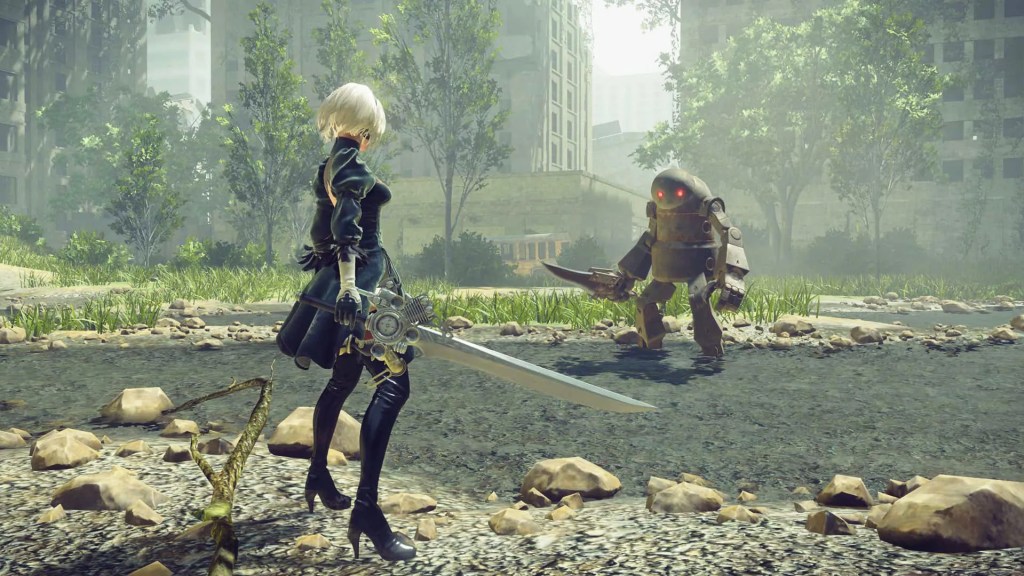
Unfortunately, I’m not sure I can say the same about NieR Automata. About twelve hours in, I can say that I’m enjoying my time with it, but that special something is missing. I’m loving the gameplay, the music is tremendous, but the writing has yet to fully bring me in. I was in my early twenties when I first played this game. I wasn’t much of a reader back then, nor did I have as much knowledge about film or, well, anything, really, as I do now. As such, some of Automata’s jabs at philosophical ideas are a tad on the nose. Knowing what happens in all five of the game’s endings, I can appreciate how it uses its gameplay and systems to touch upon some deeper humanistic themes from the get-go, but thus far, the writing hasn’t hit me the same way as it did the first go around.
Also, for as fun as the gameplay is, it is incredibly repetitive. Not just the moment-to-moment combat, but having to repeatedly backtrack and repeat the same areas, over and over again, can be fatiguing. Especially when the game isn’t the prettiest to look at, emulating the puke greens and drab browns of the PS3-era. Some of the traversal can be frustrating as well, with map markers often being unreliable and environmental designs not doing the best job of signposting the clear path forward.
Still, I am only just starting route B, and I remember the game not hitting me fully until I’d reached midway through route C. Maybe by the time I do so this time around, NieR Automata will continue being the game I say when asked what my favourite game is. That is, unless a little trilogy doesn’t reclaim that spot.
The Mass Effect Trilogy
Mass Effect 2 was the first Mass Effect game I played. I played it in high school back when it was released, and it quickly became one of my favourite games of all time. A couple of years later, I would go and play through the original and the third game, completing the trilogy. It was then that I’d decided that this was my favourite trilogy of all time and that 2 was my favourite game of all time. From its incredible sci-fi aesthetic to its punchy and tactical third-person gameplay to the amazing story and cast of charming characters, Mass Effect had it all.
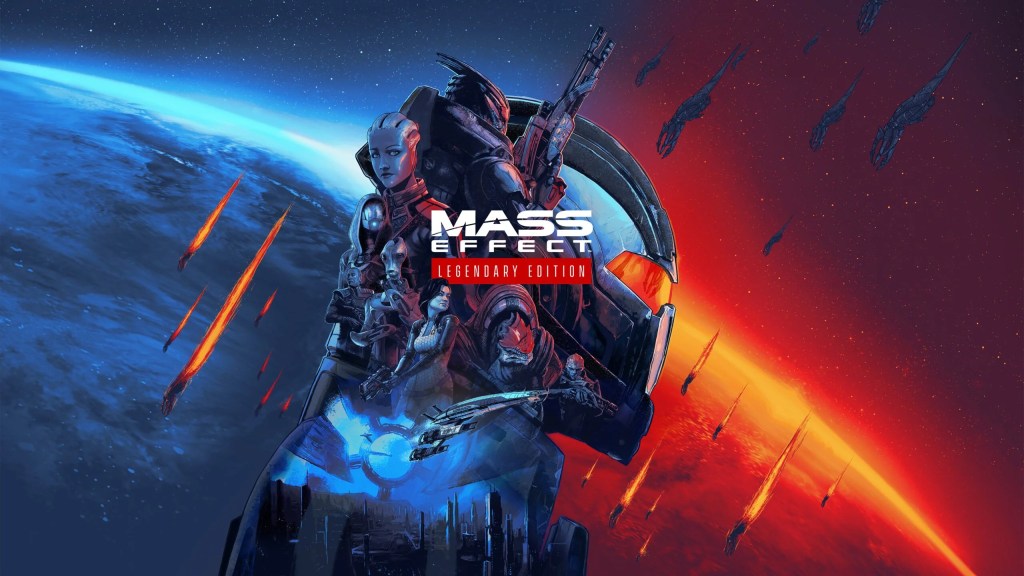
I haven’t touched the games since the early 2010s, and have played many games since then, including the aforementioned ones, which would go on to replace this trilogy on my list of all-time favourites. I wasn’t sure how I’d feel going back to BioWare’s magnum opus after a decade and a half. Well, getting back into the shoes of my FemShep, and all I can say is, it’s f*cking great to be back.
The cinematic storytelling, the characters, the world, the distinct art style, everything about Mass Effect simply hits, and hits hard. Even the gameplay holds up thanks to some quality-of-life changes made via the Legendary Edition. It’s simple but effective, and the RPG elements are nicely implemented as well. Some of the sound design of the guns, especially in the first game, is a little cheap-sounding—frankly, a lot of the elements from the first game are a little dated, but not so much that it takes away from the experience. Also, playing as a Renegade FemShep with Jennifer Hale on the mic is an absolute blast.
Now, being older, wiser, and much firmer in my political beliefs, I must admit that I now see how Mass Effect, for as bold and revolutionary as it was back in the day, plays things a little safe in its writing, particularly regarding its politics, in 2026. There’s a great article by Cian Maher from 2021 on The Gamer titled, “Ideologically And Politically, Mass Effect Is Stuck In The Past.” In it, they write:
“At the time it originally launched, [Mass Effect] was brave. Despite being largely conformist to heteronormativity, it allowed you to experiment with sexual orientation in ways that were unheard of before…But Mass Effect’s courage stopped there. Sure, you can go Renegade, but it never quite reaches F*ck The Police…The entire dynamic between Shepard and the Council is one born of perceived power held, and so it is at odds with any idea of unity – whether you act in tandem with the Council or alone, there is never any bona fide challenging of a broken status quo, let alone a means of actually implementing a new system.”
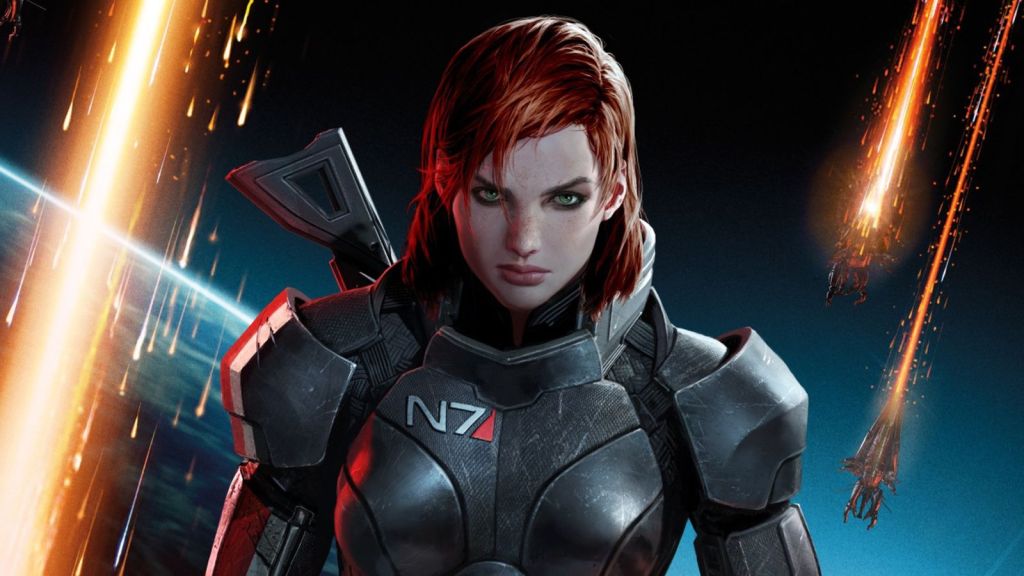
And I see this even as I get through the first game. I want to play as a renegade, not just to be an asshole (even though that is, admittedly, very fun), but to actually instill change. To challenge, question, and alter the Alliance and the entire military industrial complex that’s plaguing the systems. But I can’t do that, because BioWare believes in being a “hero” in just one particular way. Nevertheless, the story BioWare does tell, and the worlds and characters they’ve built, and the commendable depth to which it does handle its politics—even if some of it doesn’t go as far or as nuanced as I’d like—is deserving of praise, especially considering the time these games were released.
I wouldn’t be surprised if, by the time I roll credits on Mass Effect 3, this trilogy reclaims its spot as my favourite of all time. Though Atul may have something to say about that, we’ll see.
So, the question remains: Should you replay your favourite games?
Simply put—yes. It’s a shame that going back to The Witcher 3, Cyberpunk 2077, and NieR Automata proved somewhat disappointing for me in some respects, at least for the time being. But it gave me new insights as to why I loved them so much when I’d first played them; why they resonated with me so deeply at those specific times at which I’d played them in my life. It made me realize how I’ve evolved, not only in my tastes and what I value in games, but also as a person. Art and their meaning to the individual experiencing it is ever-changing, and there’s beauty in that.
It also allowed me to see these games without the rose-tinted glasses with which I’d viewed them for so long. Seeing them through a more critical lens allowed me to see things, for better and for worse, on a more holistic level. Which is important, especially for someone like me who can jump to the emotional impact a piece of art has on me, leading me to prop them up in ways that may not fully encapsulate my true feelings about them. I’m glad I pushed myself to take on this practice of replaying games. Clearly, I had a lot to say given the word count on this piece. So, here’s to replaying old favourites—Budokai Tenkaichi 3, you’re next.
 Pixel Swish
Leave a comment