
Remember a time when not every game was made in Unreal Engine and actually had distinctive art styles? Remember mid-budget, narrative-driven, linear action-adventure games that kept you hooked for about 15-20 hours and then went on their merry way instead of being padded out for 36 Scorsese movies with a whole bunch of nothing? Remember scripted climbing sequences in video games? Remember, Remember Me? No, not the 2010 drama where Robert Pattinson’s character dies on 9/11 (spoilers, sorry), I’m talking about the video game. You probably don’t, ironically enough, but that’s exactly what this game is and having just rolled credits on it, I was reminded of how much I missed games like this and why I wish more developers would make titles like it today.
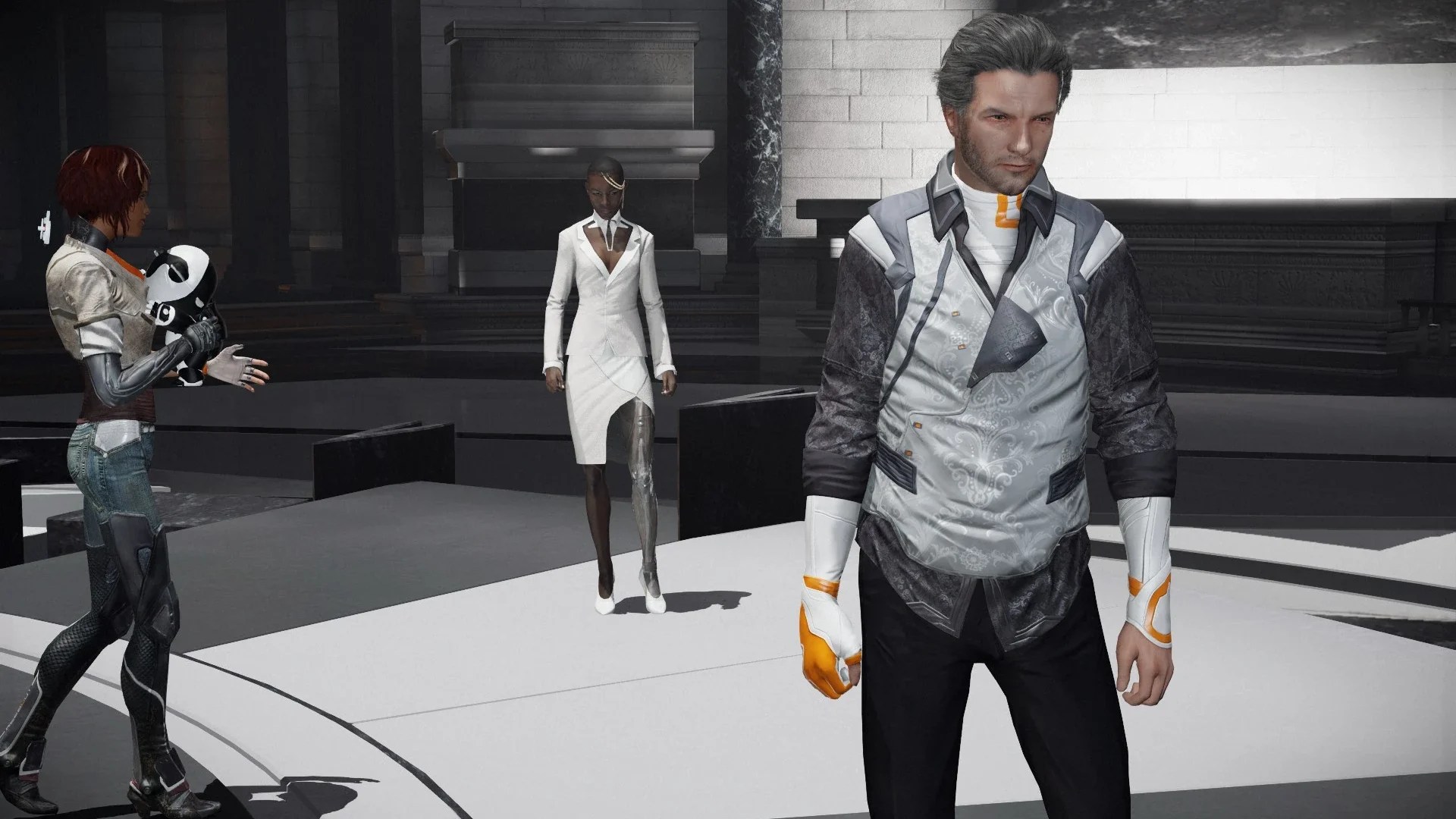
If you’re unfamiliar, Remember Me is a 2013 sci-fi action-adventure game developed by Don’t Nod and published by Capcom. You play as Nilin, a memory hunter working for a resistance group called the Errorists, who want to take down Memorize, a multi-billion dollar corporation responsible for distributing Sensen, a technology capable of digitizing and trading memories. Memorize has a monopoly on this technology, and its omnipresence has created wealth divisions, funded wars, and has been used in police surveillance and military operations. So, basically, Memorize is a tech oligarch’s wet dream and its founder, Antoine Cartier-Wells, is Satan incarnate.
Now, narratively, this game is far less “down with the tech capitalists!” and far more dealing with inter-family trauma and realizing that men will do literally anything else but go to therapy. I didn’t mind following Nilin’s story, as she tries to figure out her past and the bigger part she plays in the world Memorize has created. I just wish the story’s politics had gone a little deeper and didn’t try so hard to make us sympathize with the main villain—there are ways to do that without neglecting the atrocities the man is responsible for. Don’t Nod simply didn’t tackle this character with that nuanced lens.
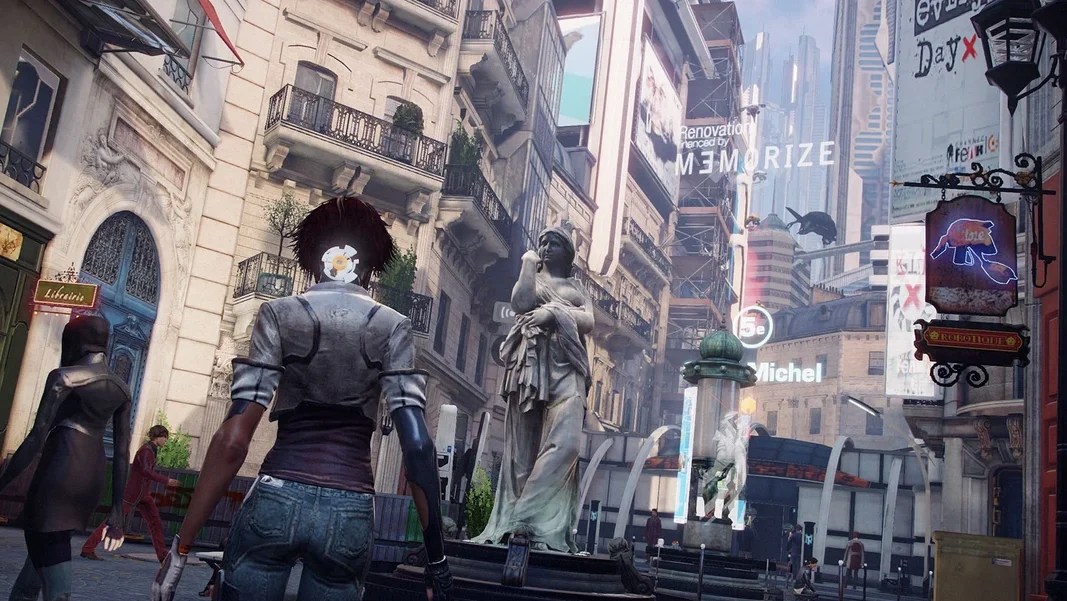
Still, this game isn’t Disco Elysium; it’s a fun, 15-hour campy action romp through an amazingly crafted world. Seriously, Neo Paris is strikingly gorgeous. It’s one of those games that had me do the thing where I have my character slow-walk as I slowly pan the camera around to take in the scenery. Even 13 years later, Remember Me still holds up on the visual front. Where it doesn’t hold up as well, however, is in its gameplay. It’s not bad, just not great. Coming out during the height of the Batman: Arkham frenzy, DontNod tried to implement their own version of a free-flowing combat system, except here you’re trying to string together specific combos.
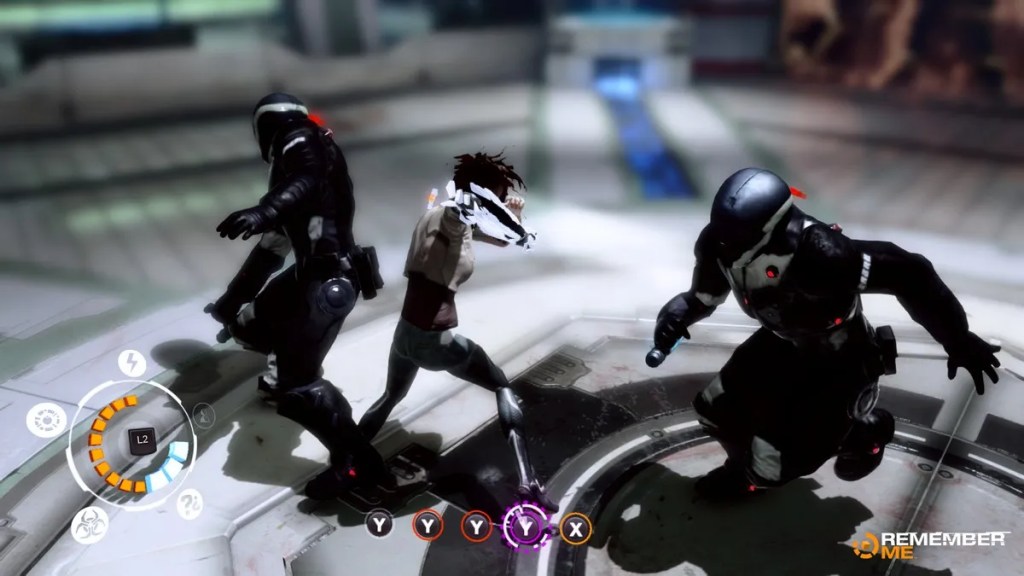
If executed correctly, these combos will give you certain buffs like health or cut down on your Sensen gauge, which is used to perform special abilities. These combos are fully customizable, too. So, if you want, you can have one combo that focuses each hit on maximizing health regeneration and another to do the same for Sensen regeneration. Or, you can mix-and-match and have combos do a little bit of everything. It’s a neat idea. Unfortunately, the actual combat isn’t anywhere near as satisfying or “crunchy” as the Arkham games it’s trying to emulate. It’s sometimes frustrating and can get quite tedious by the end.
Beyond the combat, gameplay is spliced into linear platforming sections, small environmental puzzles, and scripted “memory remix” puzzles. All of these sections are fine and feel very late-2000s third-person game design, which is positively nostalgic for someone who grew up with these types of games. The platforming sections are reminiscent of the Uncharted games and were nice pace-breakers to take in the scenery. And though the “memory remix” sections were some of my favourite moments in the game, they felt very underused and undercooked. These sections have you ostensibly rewrite a key character’s memories, changing their actions in real life.
It’s a pretty grim and shocking thing to do when you think about it. It’s narratively poignant, yet Don’t Nod never go further with this mechanic as much as I would’ve hoped. I wish it were implemented more in the moment-to-moment gameplay, maybe even the combat (something like 9S’ hacking ability in Nier: Automata comes to mind), but it isn’t. It’s relegated to these scripted moments, which, although interesting, aren’t mechanically or narratively as robust as I would’ve hoped, considering how much the theme of memories plays a part in the game.
Remember Me is a game that’s been forgotten. A sentence that, no doubt, every other critic cheekily wrote, in some fashion or another, as a headline for their coverage of the game back in 2013. Understandably so, because when you had games like Batman: Arkham City doing better free-flowing third-person combat, Uncharted doing better third-person action set-pieces, Mirror’s Edge doing cool traversal in a futuristic city in the shoes of a badass female protagonist, and Mass Effect telling incredibly deep sci-fi stories, all within five years of each other, a game like this is not going to be remembered.
But now, all of these years later, it should be. Because now we live in a time where it feels like every other game is either an uninspired open-world RPG or a free-to-play, micro-transaction-riddled, slop-fest. Though tremendous things are happening in the indie space—and we have, admittedly, gotten a few genuinely great titles in the triple-A space as well—mid-budget, shorter experiences with a unique aesthetic and fresh ideas made by experienced developers are not something we often see. Which is why I recommend you take some time this coming weekend to go back in time and remember Remember Me.
 Pixel Swish
Leave a comment