
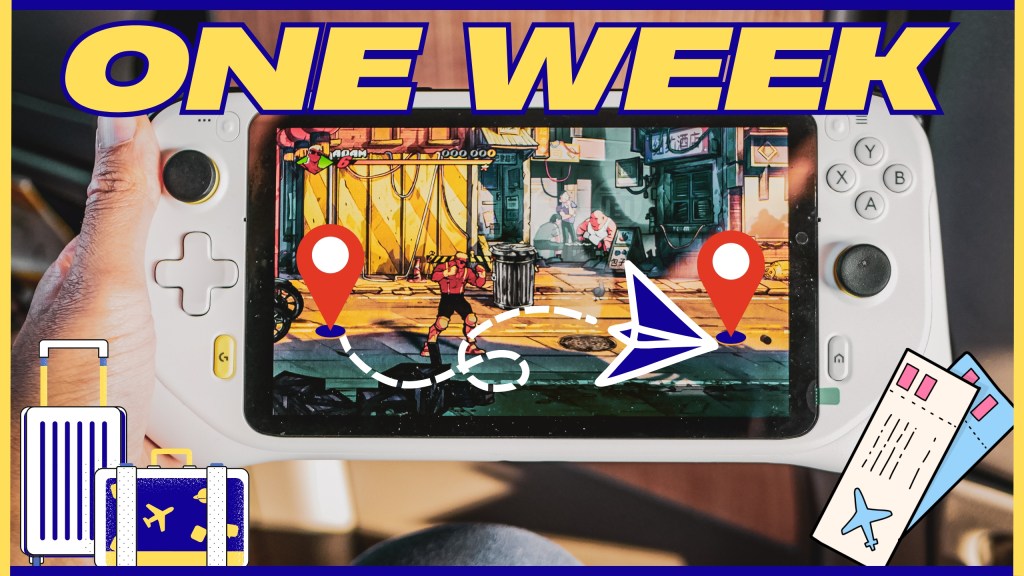
Watch the full video here
Anyone who’s followed my work back when I wrote for Gameluster.com will know how much I love handhelds. From the GameBoy Advance SP to the PSP to the 3DS to the Switch, my dream has always been – and continues to be – the ability to play my home console games on the go; whenever, wherever, and without any compromises. That dream came close to coming to fruition in almost every generation. I say “close to” because nearly every time one of these handheld consoles was released, a compromise would turn its ugly head. As amazing as the PSP and PS Vita were, they didn’t share the same library as their home console brothers in the PS2 or PS3. And although the Switch came the closest to having this dream become a reality, the AAA games that made it over to the hybrid console were oftentimes gimped ports that looked far worse when compared to their PlayStation or Xbox counterparts.
So when companies like Nvidia, Microsoft, and Amazon began launching their cloud gaming services back in the late 2010s, allowing players to get access to hundreds of titles at the press of a button on any of their mobile devices as long as they were connected to the internet, the 10-year-old inside me couldn’t be more excited. Of course, that excitement quickly waned as I saw these services weren’t exactly ready for primetime. Riddled with latency issues, visual and audio hiccups, and an overall lack of stability meant that playing a game, AAA or otherwise, via the cloud wasn’t a viable option–not yet, at least.
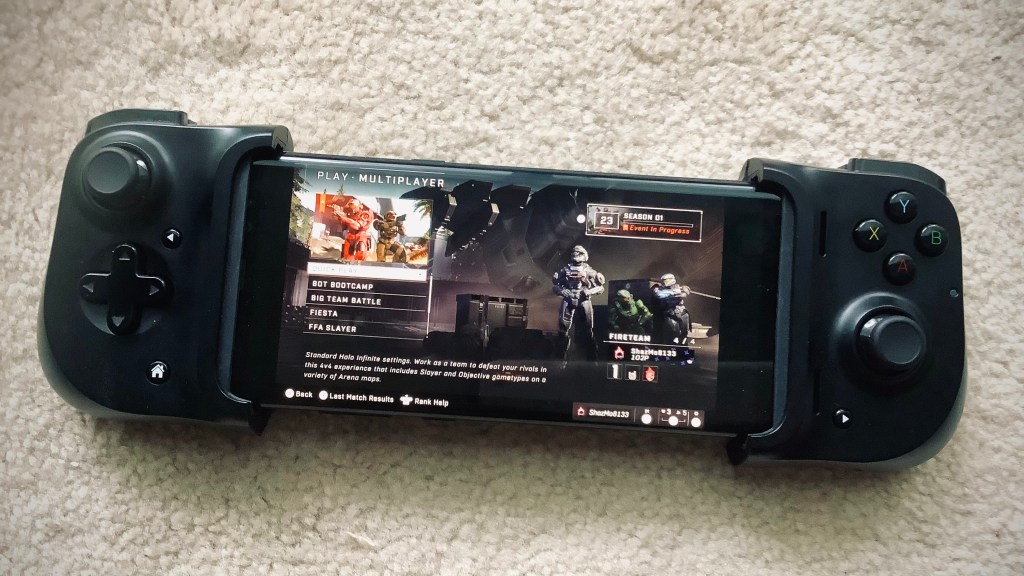
Fast-forward a few years and we’re now at a place where cloud gaming is in a genuinely great place. Well, a great place for anyone like myself who is centrally located and lives literally blocks away from Nvidia and Xbox server centres and has access to gigabit internet. Nevertheless, I couldn’t believe that I could play through the entirety of a game like Gears 5 on my phone through the cloud with little to no issues. That experience led me to pull the trigger on buying the Logitech G Cloud–the console that almost every gaming YouTuber hates, for some reason. Well, in fairness, they are reasons that I can somewhat understand. The idea of having a device that has to rely on the internet and a monthly subscription service (or several) to play games isn’t exactly enticing and makes my aforementioned dream of playing home console games on-the-go null and void. However, after having spent the holidays travelling out of town and only having the G Cloud to fulfill my gaming needs, I realized that this device is far more versatile than many give it credit for.
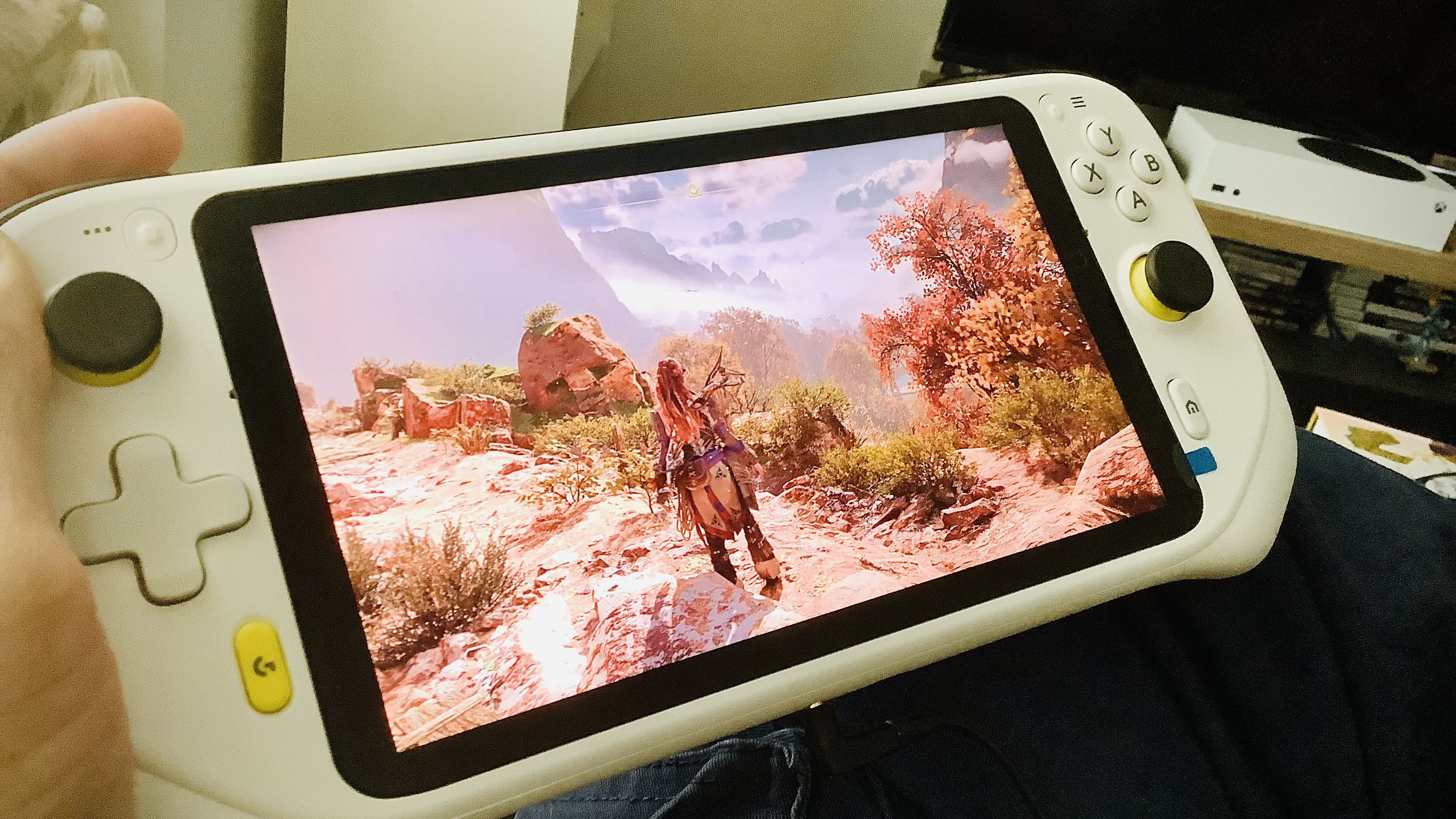
I’ve owned the Logitech G Cloud for over a year now and it’s been my go-to gaming device throughout this time. I’ve played through dozens of AAA games on their highest graphical settings thanks to Nvidia GeForce NOW’s Ultimate Tier; settings that I couldn’t dream of playing at on my Xbox Series S. Seriously, playing through Cyberpunk 2077, Alan Wake II, and Black Myth: Wukong on “Ultra” settings with path-tracing set to full were experiences I won’t soon forget. But I played all these games at home, with great internet where I didn’t have to worry about an unstable connection or packet losses. As such, I wasn’t sure how my experience with the G Cloud would fare when taking it on the road–but I was curious to find out.
The G Cloud is essentially a 7-inch Android tablet slapped into a traditional gamepad with an Xbox controller layout. As such, you can play Android games and emulators when you don’t have access to the internet, which is exactly what I did when on the train heading to our destination to start our trip. Now, the G Cloud comes fitted with a mid-tier and now slightly dated Snapdragon 720G processor, so I knew I couldn’t play high-end Android games or emulators. That didn’t bother me as there were some great titles I was excited to try out on the Play Store that I knew weren’t going to be too demanding. Games like Streets of Rage 4 and Blasphemous played great on the device.
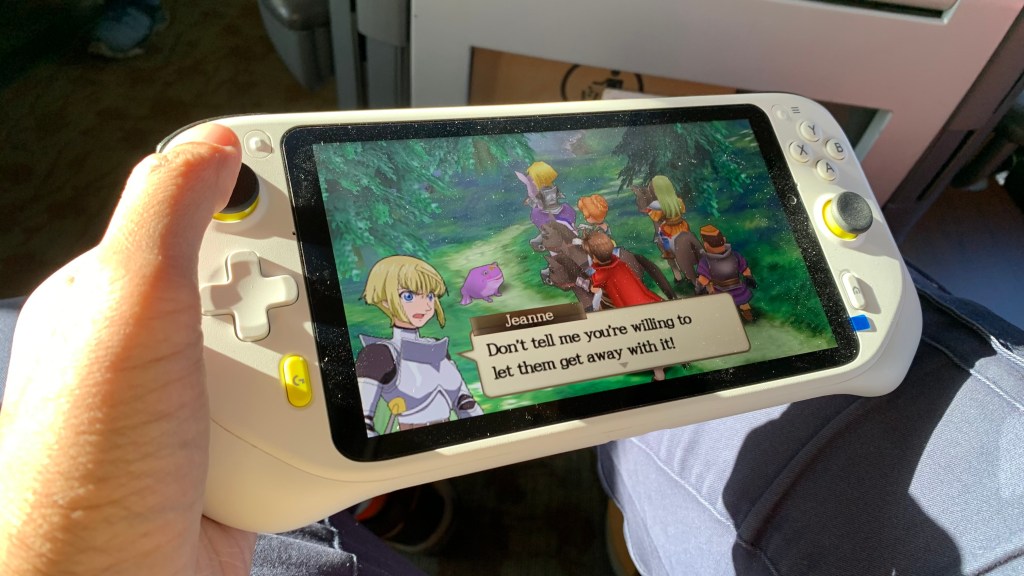
In terms of emulators, I played a ton of the classic PSP title Jeanne d’Arc, which ran flawlessly. After that, I tried to push the device a little with Wind Waker running via the Dolphin emulator, which after some Reddit-ing ran passably albeit with noticeable concessions. All these games looked great on the G Cloud’s 1080p LCD, which had great colours and viewing angles, and enough brightness to combat the sun peering through the window. Its ergonomic and incredibly lightweight design never left my hands feeling fatigued and I also didn’t plug the device in once during the six-hour train ride and had plenty of juice left over once we got to our hotel.
At the hotel, it was time to test out some Remote Play. Having become the new owner of a PlayStation 5, which at this point was sitting by its lonesome in our media cabinet at home hundreds of kilometres away, I was excited to see how well the feature worked considering it was something I’d often do with my PS Vita and PS4 nearly a decade ago. Happy to report that the experience with the G Cloud and PS5 was absolutely flawless. I had some hope that my PS5 being hardwired to my router would give me a leg up in terms of stability but wasn’t too sure how well our quite mediocre hotel Wi-Fi would serve. Thankfully, it didn’t come in the way. Playing a little bit of Astro’s Playroom proved almost perfect in regards to latency. The game also looked impeccable with hardly any noticeable artifacting or audio hiccups.
Moving on, I was very curious to see if I’d be able to pull off any true cloud gaming. Though companies like Nvidia and Microsoft tout that you only require speeds of 15-20 Mbps to play via their cloud services, it’s been my experience that those speeds simply won’t cut it. Imagine my worry, then, after conducting a speed test for our hotel’s Wi-Fi and being shown the number 18.1 next to the “download” speed. I tried and failed a couple of times to start Black Myth: Wukong via GeForce NOW, getting an error message letting me know my internet sucked. But when I did manage to get into the game, I was pleasantly surprised at how smooth it ran. There was some noticeable latency and the visual artifacting was a bit of a nuisance, but overall it played fairly well–though how long it would be able to remain in the game without booting me out I wasn’t sure.
After that, I tried out some Xbox Cloud Gaming, which to my surprise ran quite well. Playing some Indiana Jones and the Great Circle proved more than playable and considering it’s a first-person game where any latency would severely impact the experience, that’s high praise. I should mention, however, that Microsoft refuses to update their servers so the visual quality of Xbox Cloud Gaming is far inferior to that of Nvidia’s due to an almost laughably low bit-rate. However, that does provide a more stable performance, which when travelling and having to rely on hotel Wi-Fi is a positive concession–just not one I’d want when playing at home.
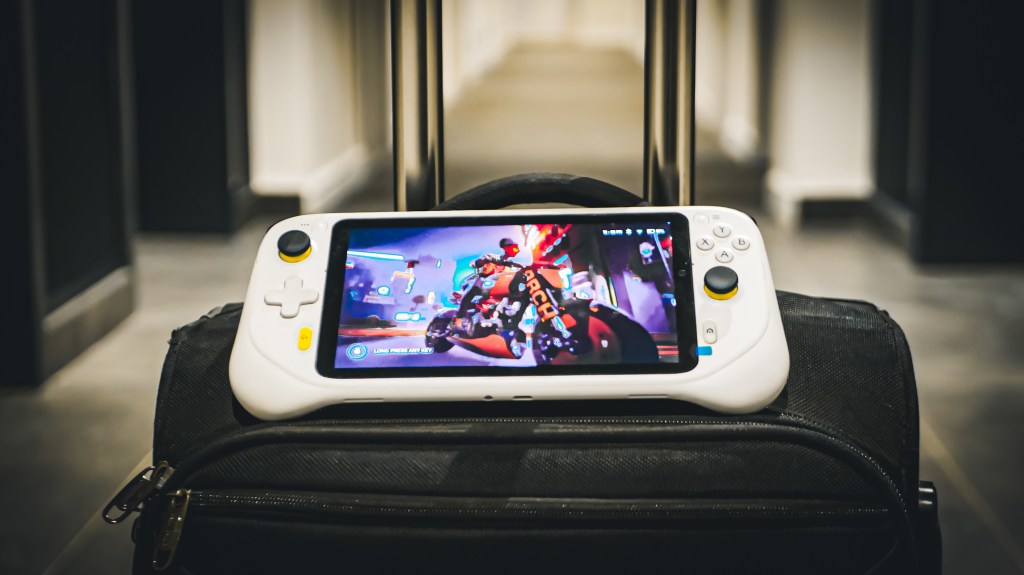
Overall, I was pleasantly pleased with the cloud gaming performance on the G Cloud while on less-than-stellar Wi-Fi and further away from both Nvidia and Microsoft’s server centres. I definitely wouldn’t be comfortable playing GeForce NOW for extended periods unless your connection is at least a consistent 30-40 Mbps, but both Xbox Cloud Gaming and PlayStation Remote play worked great. However, to be honest, I didn’t even spend much time playing via the cloud apart from capturing the footage for this video as I was having way too much fun playing Blasphemous and Streets of Rage 4, both of which play beautifully on the G Cloud.
2025 is going to be the “year of the handhelds.” With the Switch 2 having just been unveiled, a slew of PC handhelds being shown at CES, and Xbox reportedly working on a Series S-like handheld, the market’s going to be full. And though I’ll likely pull the trigger on the Lenovo Legion GO 2, because that thing looks like an absolute beast, I’m still going to be more than happy with my G Cloud until then. And now that it’s proven to be a genuinely solid travel companion, I honestly might even think twice before jumping into a PC handheld. As long as you set your expectations and plan ahead, understand how cloud gaming might work for you both at home and on the road, and don’t mind delving into older emulators and indie Android games, the Logitech G Cloud is a great handheld device that has come the closest to fulfilling my dream.


 Pixel Swish
Leave a reply to I Tried Gaming On A Chromebook – Pixel Swish Cancel reply