
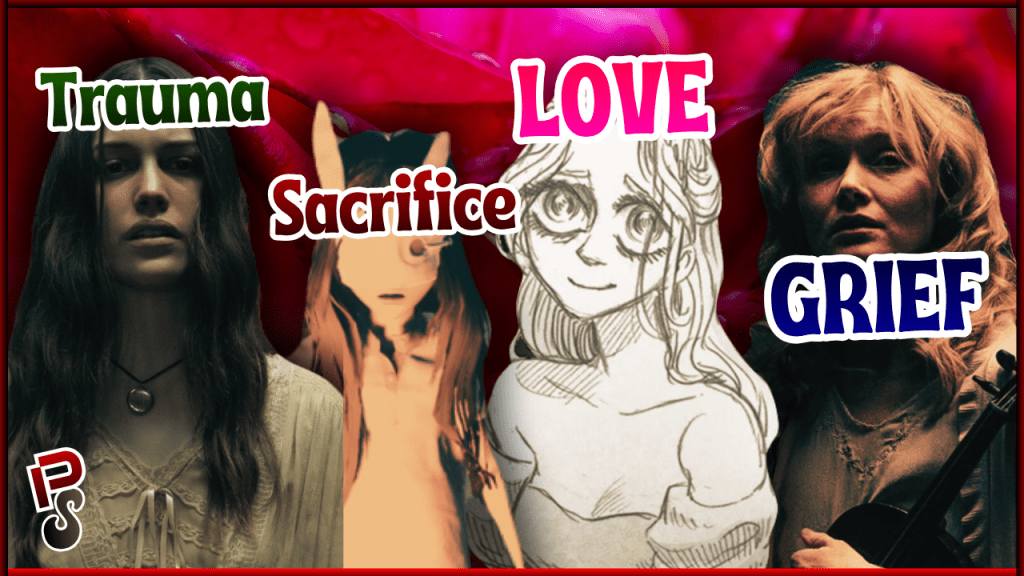
Slay the Princess is a story about love; Reanimal is a story about sacrifice, war, and the cruelty of adults; The Haunting of Hill House is about shared trauma, and The Babadook is about grief and motherhood. Two games, a film, and a mini-series that showed me that the genre of horror can be more than just jump-scares and gore. Now, you may be a horror connoisseur and could have told me that, emphasizing the “duh!” in the process. I, on the other hand, am a little b*tch. As such, horror was never a genre I engaged with growing up, in any medium. Partly because, being a 90s kid, I never understood the allure of seeing a bunch of white teenagers making dumb decisions that lead to their gory demise by some as*hole in a mask. But mostly because I watched The Ring as a nine-year-old with a couple of friends in the attic at midnight and have never recovered.
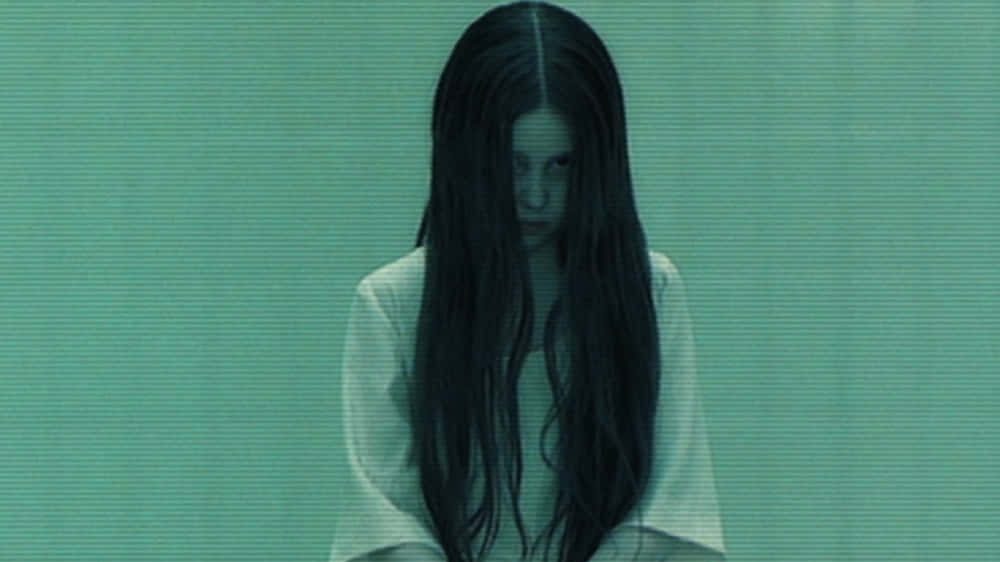
Samara Morgan traumatized me to the point where I wouldn’t even go near the genre, convincing myself it wasn’t because of my aforementioned little b*tch-ness, but because the genre had nothing to offer on a deeper narrative and thematic level. This was obviously a lie I told myself and is flat-out untrue. Horror has a long history, globally, of telling stories that tackle human follies and fears in a manner other genres could not. It’s also a genre that’s been unjustly neglected by Hollywood, evidenced by the fact that we rarely ever see a horror film be nominated for an Oscar. That being said, considering the time period in which I was raised, and seeing what was around me in mainstream (western) media during my adolescence, I understand why I would make such an assertion about the genre.
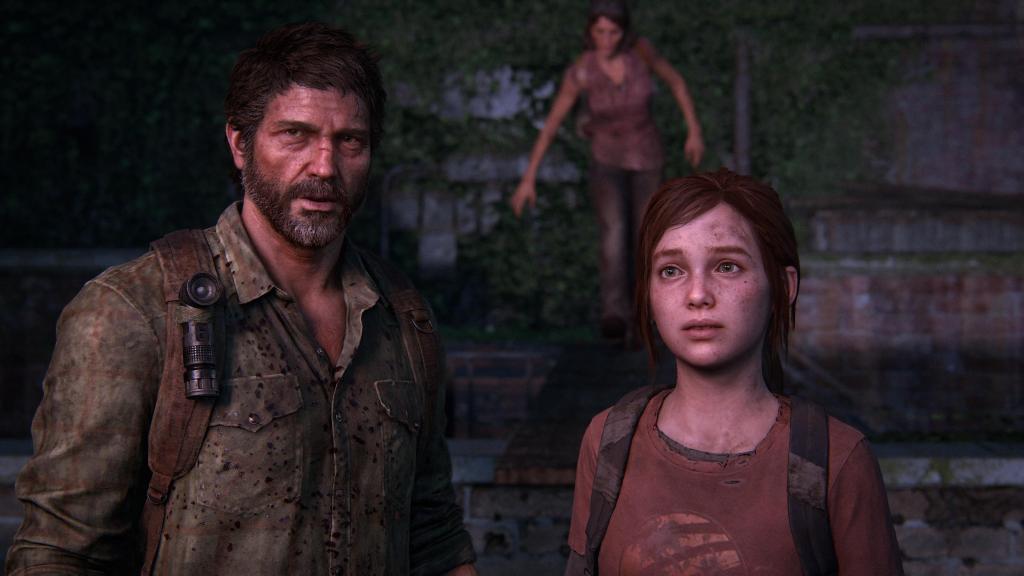
You see, we went from the cheap slasher thrills of the 90s to the zombie-fication of everything by the early 2010s due to the immense popularity of IPs like The Walking Dead, 28 Days Later, and, of course, Resident Evil. For a time, zombies were, effectively, all what horror had to offer. And zombies are…kinda boring. Sure, you could have some deeper conversations about how they are a mirror of death, something we as humans are constantly trying to delay. The Walking Dead had some interesting, albeit a tad shallow, conversations about how, during a zombie apocalypse, the living are the real monsters. And The Last of Us told a more intimate story about a hardened man finding meaning through a rambunctious young girl he saw as a daughter, but the zombies didn’t play a deeper, thematic purpose, instead serving as a backdrop to this character-driven story.
I’m sure there are examples of stories that used zombies to interesting narrative effect, but for someone who wasn’t engaging in the genre there was nothing within the mainstream during this time-period — in movies, television, or games — that I thought was truly compelling to where I’d be willing to fight through my Samara Morgan-induced trauma. That is, until my wife-then-girlfriend pushed me to watch an Australian psychological horror film named The Babadook.
It was the first time where, even though I was scared out of my mind, I was deeply captivated by a horror film. By a horror anything, really. From it’s cinematography to its performances to the way in which it explores its themes, The Babadook made me see the genre through a new lens. It left me feeling curious and wanting more, something that I never thought I’d feel after experiencing anything related to horror. As the years passed, I became more willing to delve into this genre. I went back to watch classics like Hitchcock’s Psycho and Kubrick’s The Shining, the former of which has become one of my all-time favourite films. I was thoroughly riveted by Jordan Peele’s exploration of race and class through Us and Get Out, and Alan Wake 2 was my favourite game of 2023.
Safe to say, my third eye has been opened. And so, I wanted to take some time today to tell you about four titles that I feel tackle the genre in interesting, unique ways within their respective mediums. Using horror that isn’t simply about making your heart race through cheap jump-scares, but in such a manner that makes you think and haunts you for weeks. All through the visual, narrative, and interactive mechanics of their mediums. There are obviously many other games, movies, and shows that, I’m sure, are well-worth diving into alongside these titles, but, alas, there are only so many hours in the day. Furthermore, though I’ll be doing my best to analyze these titles and give my thoughts on how I feel they utilize the genre, this piece will be far from a thorough and complete exploration of each of their themes and lore. Rather, I’m writing this as a way to show love towards titles that allowed me to see what horror can be when it goes beyond the cheap thrills.
The Babadook
Let’s start with the film that started this journey. The Babadook tells the story of Amelia, a widow whose husband passed away in a car crash while driving her to the hospital during labour. She and her now six-year-old son, Sam, live in Adelaide. Sam struggles in school and often displays unpredictable, sometimes aggressive behaviour. Amelia does her best to handle these tantrums, but is often exhausted by them. Sam soon becomes obsessed with a monster within a book titled “Mister Babadook,” trying to convince his mom that the monster is real.
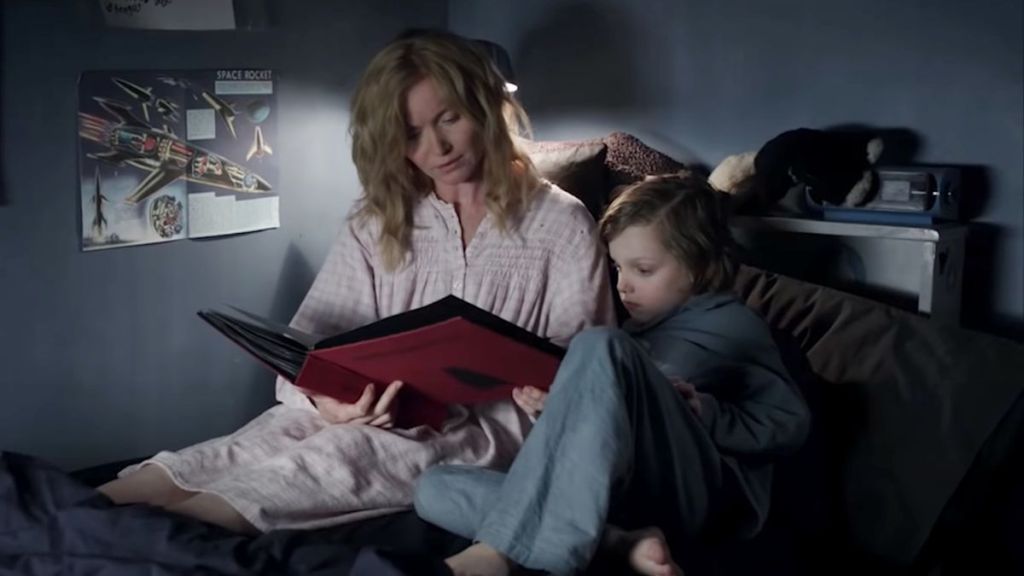
As time passes, Sam’s behaviour becomes more of an issue, causing disturbances in Amelia’s already struggling social life. Her patience for her son’s antics begin to wane and she tears up the “Mister Babadook” book. Bizarre things begin happening around the two, like Sam having seizures after seeing visions of the Babadook, and Amelia finding pieces of broken glass in her food, which she believes is Sam’s doing, but he is convinced it’s Mister Babadook. The book eventually comes back into their lives, reassembled, with new words written inside of it that terrify Amelia.
What follows are harrowing sequences of the monster tormenting the two, both physically and psychologically. The final act unravels with the monster possessing Amelia and trying to kill Sam. It’s only when Sam touches his mother’s face that Amelia expels the monster within her. She saves Sam and confronts the dark being, locking him away in their basement where all of her husband’s things are kept.
Mister Babadook is the manifestation of Amelia’s trauma and the grief she’s been trying to repress all of these years. A repressed grief that her son, Sam, has been affected by — because children are more privy to their parents’ bullsh*t than we give them credit for — and has been building “weapons” to battle against this monster inside of his mother. These contraptions are what finally break the Babadook’s possession of Amelia in the final act in the basement. Herein lies the brilliance of the film. From the get-go, director Jennifer Kent will have you believe that this film is going to be about a troubled child who eventually gets possessed by a demon. Instead, she subverts this trope to tell a story about a mother’s battle with grief. The Babadook isn’t imaginary, it’s the monster Sam has been seeing torment his mother.
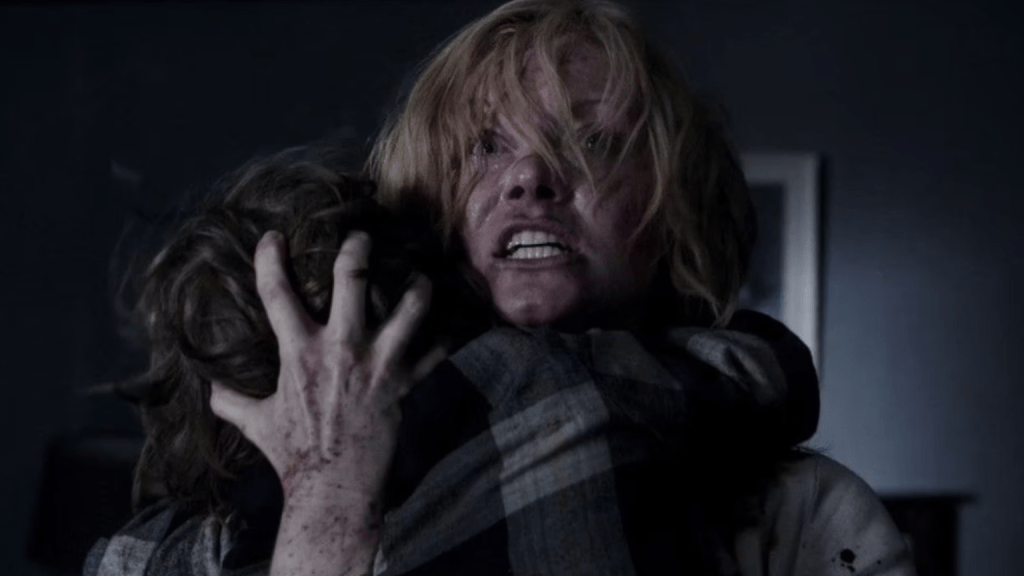
Throughout the movie, we see Amelia avoid talks of her husband; she doesn’t look at pictures of him and rarely even brings up his name. The opening of the Babadook book is, to me, Sam trying to help his mom finally deal with this monster. Her continually attempting to rid of the book is her, once again, avoiding doing so. What I love is that, even by the end, Mister Babadook doesn’t go away. The monster is still there, in Amelia’s life, but it’s kept at bay. Because our traumas don’t ever go away, but with help, we learn to deal and accept them.
The Babadook is one of the only pieces of horror media that I feel tackles mental health in a beautiful, honest, and aptly harrowing way. Another example would be a game called Inmost, which I’ve written about in the past and absolutely love. There’s so much more to talk about in terms of Kent’s use of shadows and silence, the design of the monster and how it’s reminiscent of 1930s surrealism—but, alas, I’ll leave it at that.
Slay the Princess
Before you hit “New Game” in Slay the Princess, you’re met with a screen that tells you, among other things, that this is a love story. Yet, the first line of dialogue you hear is that of a narrator, telling you that you must go into this lone cabin in the woods and slay the princess imprisoned in its basement. Failing to do so would be the end of the world. And so, you venture off into this cabin, with two voices, that of the narrator and one of the Hero, guiding and questioning you through this process, at times at odds with one another. There’s an eeriness that’s present from the very first image of you in the woods. An eeriness that has you questioning everything The Narrator is saying to this world around you. It’s all done through an evocative art-style that instantly makes the hairs on the back of your neck stand up.
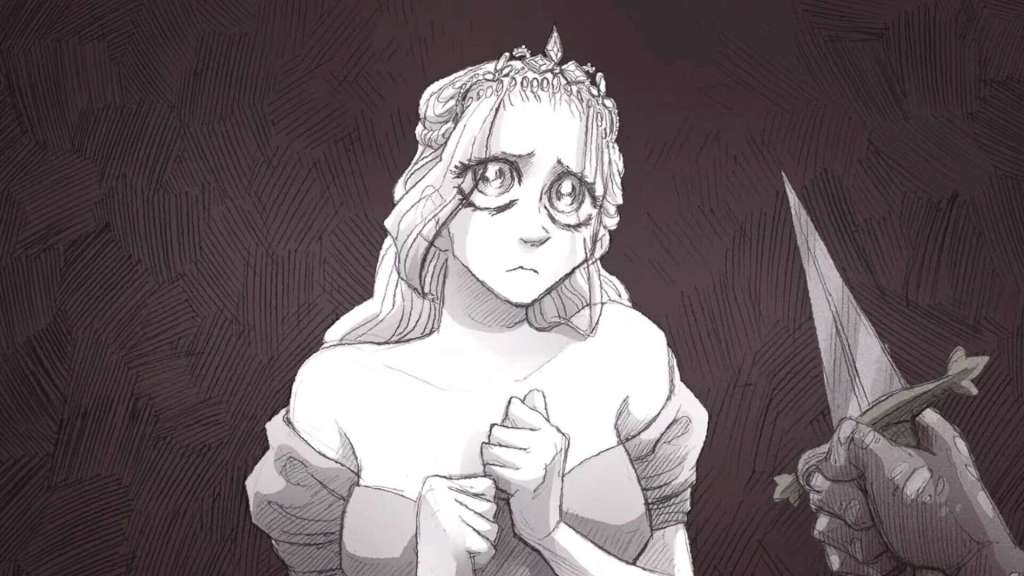
Depending on whether or not you decide to take a blade into the basement, the Princess you meet is either sweet and naive or cold and cunning. From here on, your choices — whether you choose to drop the blade and save the princess, slay her, or leave her locked away in the basement — will determine how your next incarnation plays out. Because, you see, that’s the primary mechanic of Slay the Princess—it is somewhat of a Rogue-like. You die, either willingly, by the Princess, or by narrative forces outside of your control, and are reborn to confront the Princess in a new chapter based on the choices you’ve made in the chapter prior, with new voices accompanying you each time depending on the version of the Princess you’re about to encounter.
You keep this cycle going until, inevitably, this incarnation of the Princess is taken by a writhing multitude of arms and hands to The Long Quiet. The Long Quiet is a place where none of the voices, including the narrator, exist. It’s just you and The Shifting Mound, a being that looks to be a version of the Princess you had just slain or saved. The Shifting Mound tells you, in more poetic language than maybe necessary, that she is a goddess; she is the very concept of change and transformation, and that she requires all of the Princesses, her “vessels,” in order to attain her true form. And so, you return, memory newly erased, to slay the many other Princesses, over and over again.
But, what does it all mean? What is The Long Quiet? Who is The Shifting Mound, really? And how in the absolute f*ck is this a love story? Well, this is where things get very meta and a little narratively intangible, so bear with. The Shifting Mound and The Long Quiet are two godlike entities that were once one in a construct of the universe that dictated the cycle of life and death. The Shifting Mound, as mentioned, represents change and transformation, while The Long Quiet represents everything but—in essence, stasis and stagnation. The two were split by The Narrator, who is, as the official wiki describes him, “A mortal man sought to erase the concept of death and oblivion from the universe. To do so, he roughly tore the concept of change apart into two halves.” One half being The Shifting Mound, the other being you, The Long Quiet. That’s right, you are The Long Quiet, the space, the god, and the player-character, tasked by a man to slay The Shifting Mound to end death itself.
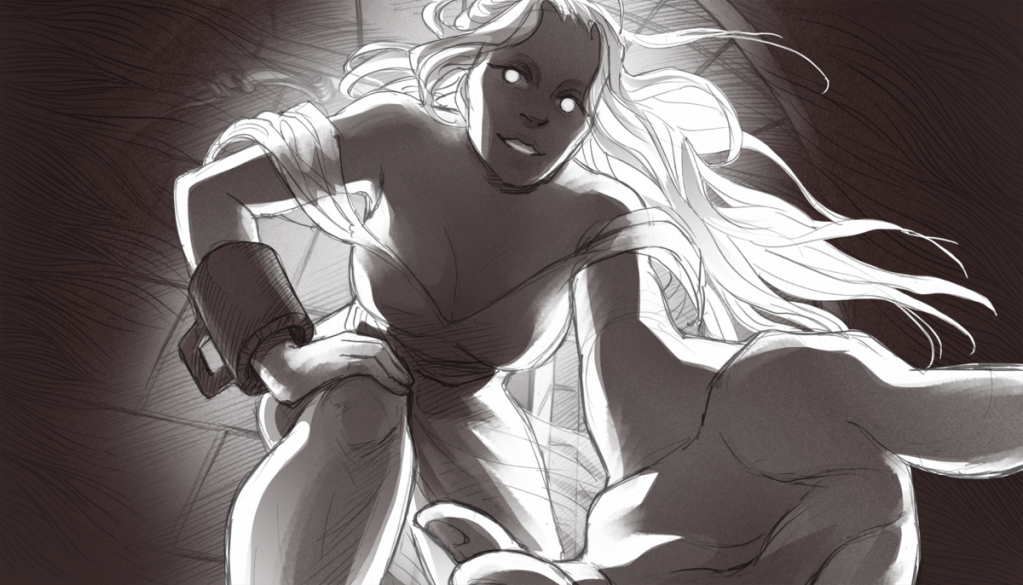
But death, transformation, growth, and decay are a part of life. Without it the universe would be listless and still. There’s a reason why The Shifting Mound and you, The Long Quiet, were once one being. You spend most of the game killing one another due to the push of some fearful narrator who wants nothing but stagnation, where in reality, the both of you need each other to continue the cycle of life and death. To quote Reddit user u/LukaCola, “This is a love story. The princess and you are many things, but a constant is two beings coming together — having some kind of conflict — and simultaneously building something out of each other in the process.” Each Princess vessel you find teaches you something about The Shifting Mound and your relationship with her. Each of them shows you how much these two beings have loved and destroyed, tarnished and rebuilt—again and again. You see the oppressive control of The Tower princess and the manipulations of The Witch, each vessel a part of a larger whole. All of that chaos, destruction, and eventual rebirth is painfully human.
The way in which Black Tabby Games were able to imbue horror elements to bring this visual novel to life makes it all the more powerful. There is some genuinely off-putting artwork and imagery going on here, from body horror to images that play with your primal senses of being hunted. Yet, none of it is done cheaply or horror for the sake of horror. It’s all for a thematic purpose—whether that’s to highlight The Shifting Mounds erratic sense of chaos or to exemplify the contradictions of The Narrator’s words. Slay the Princess is an example of how to bend multiple genres — horror, Rogue-like, and visual novel — to make for an experience quite unlike anything else.
The Haunting of Hill House
Loosely based on the 1959 novel by Shirley Jackson, The Haunting of Hill House follows the Crain family. In 1992, Hugh and Olivia Crain, alongside their five kids, moved into “Hill House,” looking to spend the summer renovating the old mansion in order to sell it and hopefully make a handsome return. As the days go by, each of the family members experiences odd paranormal phenomena, with the children, in particular, seeing less than pleasant images during their stay. Never move into a house built before the Clinton administration—it’s gonna have ghosts in it.
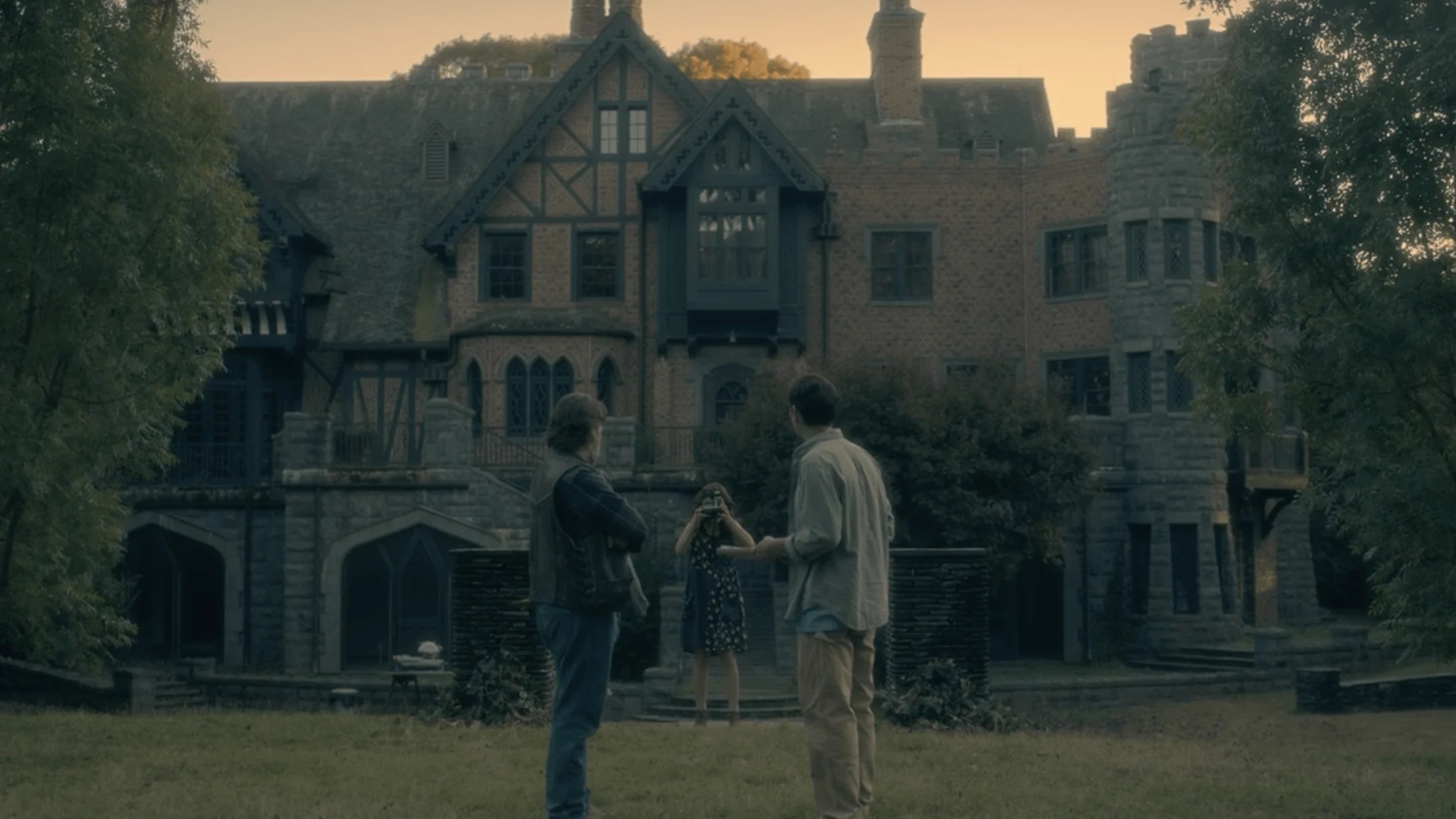
The show flip-flops between two timelines. One that sees the family’s time at Hill House, and the other in the present day, with the kids all grown up. Most of the show revolves around each of the siblings, how their time at Hill House — specifically one fateful and tragic night — has affected their relationships with one another, their now estranged father, and most interestingly, their psyches. While Steven, the eldest sibling, has made a career of novelizing his family’s story of Hill House through a pragmatic lens where all of his answers to the supernatural are turned to simple logic, the twins Nell and Luke continue to struggle, emotionally, with those same stories from their past. This is where this show, to me, becomes something more than just another horror jaunt about a creepy house and its ghosts.
Mike Flanagan wonderfully weaves a character-driven narrative about trauma and letting go that’s shot and directed to perfection. The stories and themes that are explored here are incredibly human and grounded, exploring the ways different people deal with (or not deal with) their trauma. From burying them to commodifying them to numbing them through substances, it’s all real and makes the true horror of the show all the more harrowing. Seeing these actions be taken by different members of a family who’ve all experienced the same trauma, and watching how they affect one another, is incredibly fascinating. The actors do a terrific job in bringing these characters to life, as well; Victoria Pedretti, in particular, is tremendous. Furthermore, for a show with so many characters to deal with, it’s often the case that some get more love than others. That isn’t the case for Hill House. Everyone in this family gets their moment to shine and has enough meat in their writing for me to feel sympathy towards—except Steven; fu*k that dude.
Reanimal
Let me tell you about one of my friends. Let’s call him Rick. Rick loves horror games. Like, loves horror games. The man plays through the Dead Space remake as if he were playing a slap-stick comedy starring Jack Lemmon. When he and I were making our way through the campaign of Halo: Combat Evolved a few weeks ago, he asked if I would be interested in playing another co-op game—a recently released indie horror title named Reanimal. My gut reaction was to say no, obviously, given my hesitance towards horror games; one suggested by a man who is seemingly unfazed by the scariest of titles gave me even more pause. But, seeing as this was a fairly new friendship, I didn’t want to shut the idea down. “Sure man, let’s do it!” I said, feigning an excitement to cover up my nerves. Fast-forward to today, and Reanimal continues to stick with me ever since Rick and I saw through to its end-credits.
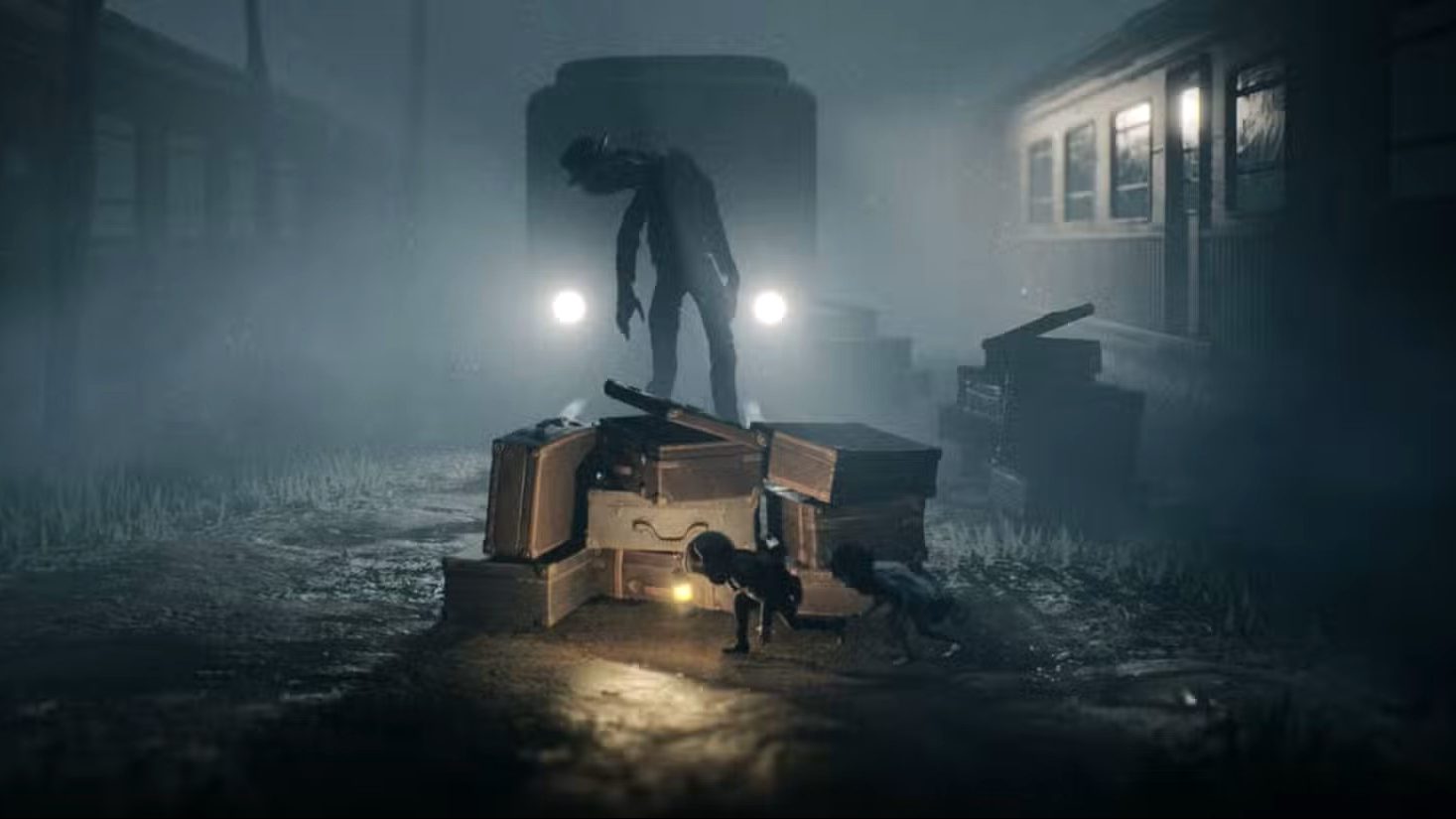
The game opens with a POV shot looking up towards an open well with five children peering down at you. This, supposedly, is a dream. The dream of a boy. A boy who awakens on a boat in the middle of the sea surrounded by ominous fog. The boy finds and rescues his sister, and the two of them make their way to shore—to a decrepit island wrought in the hands of war. As you and a friend make your way through the game — one of you controlling The Boy, the other The Girl — trying to rescue the other children trapped in this island, you come across grotesque beings doing unsightly things. One of them is a creature named Sniffer. A lanky humanoid resembling a man that can be seen performing disturbing operations on bodies—bodies he uses to teleport between. The first act of the game has you sneaking around Sniffer; to say these parts are tense are quite the understatement, as both of you feel helpless both in size and ability when faced against the cruel depravities of this creature.
After beating Sniffer, almost getting blown up in a flooded city surrounded by mines, escaping death numerous times, and rescuing two of our friends, Rick and I found a moment of reprieve at a bus station, wherein we got picked up by a ghostly school bus and taken to an abandoned orphanage. Throughout these events, The Girl has visions of a lamb at the bottom of a well, after which she convulses and coughs up blood. The adventure continues through the orphanage, where we see even more eerie sights, from sacrificial pigs to brittle statues of children made of dust and clay to another harrowing creature that’s made this building its home—a spider-like monster with a gaping hole for a face. After another rescue, the kids hop onto a military vehicle and make their way to the next place, but not before The Girl has yet another vision, though this time that lamb has transformed into a sheep and is making its way out of the well.
But what does it all mean? Well, this is where much of Reanimal can be open to interpretation, seeing as there’s almost no dialogue or exposition throughout the game. The story, symbolism, themes, and horrors are all audiovisual and through interaction. That being said, when paying enough attention you do see much of what Tarsier Studios are trying to convey come to light. These children are all orphans of war, and the creatures are the physical manifestations of the adults who have hurt each of them. The most obvious being the spider-like creature in the orphanage, representing to me the abusive mother/parent these children had during their time in this place. Sniffer, being a creature obsessed with humanoid bodies and skin, could represent how powerful adult men think of bodies as disposable things during war, so as long as those bodies satiate their hunger for profit.
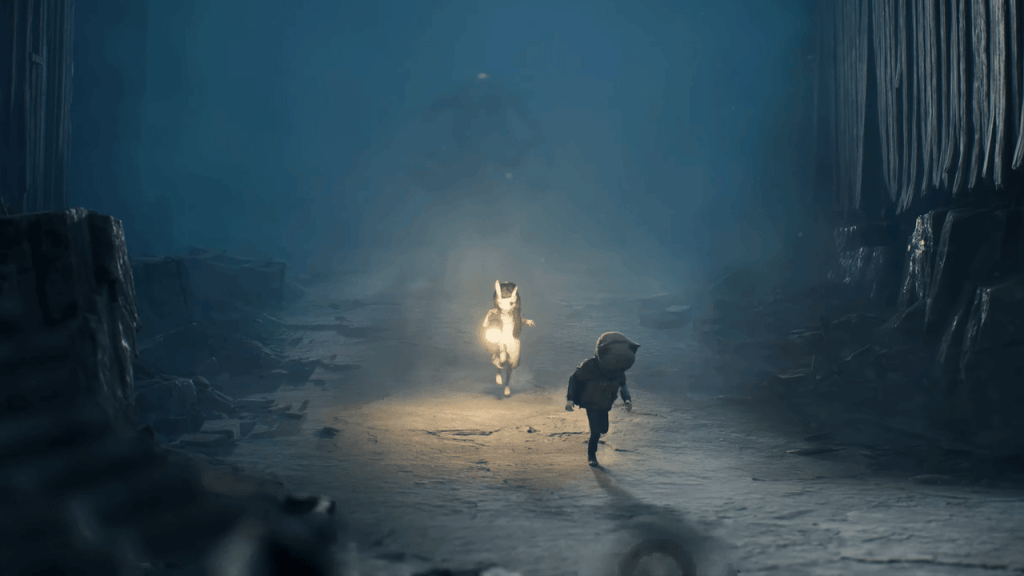
Animal symbolism can be seen throughout Reanimal, more specifically rabbits and sheep. The Girl begins the game wearing a rabbit mask, there are rabbit alters throughout the game, one of the secret coffins you find has a shadowy rabbit jump out when you open it, and, of course, the perpetuating dream of The Girl is that of a demonic lamb-turned-sheep. Rabbits and lambs are in many folklore and religions. As analyzed by The Game Theorists, though usually considered a symbol of good luck in modern times, an all-white rabbit in both Nordic and Celtic folklore are oftentimes a symbol of death and witchcraft. Lambs, on the other hand, as seen in many religions, are symbols of sacrifice.
What we see at the end of the game is that these children, the ones we’ve been saving, saw The Girl (the “rabbit”) as a bad omen, the one who caused this war. Or, maybe that’s what they were told by the adults around them. Adults who were a part of a religious cult. Religious cults, as often depicted in modern media, have sheep as a recurring symbol within their rituals. As such, these kids killed The Girl and tossed her in the well with the hopes of ending the war—a sacrificial lamb, if you will. This lamb is what haunts The Girl, and, in turn, the rest of the kids throughout their journey. She represents the cycle of war, death, and sacrifice.
There’s a lot more I could try and analyze about each of these titles, but I’ve already gone on longer than expected, so I’ll leave it there. Safe to say, I’ve come to appreciate the genre of horror for its ability to tell intriguing stories in intriguing ways. I have a ton of respect for directors like Jordan Peele and Jennifer Kent, and studios like Tarsier and Remedy, all of whom use both the genre of horror and their respective creative mediums to tell stories that touch upon a variety of interesting subjects, in ways that other genres wouldn’t be able to. Horror can be so much more than just cheap thrills. Sure, a fun, campy summer slasher filled with dumb teens making dumb decisions is all well and good, but when a creative team actually takes the time to do something different, explore the breadth of the genre to its fullest, the results are often something truly special.


Leave a comment