
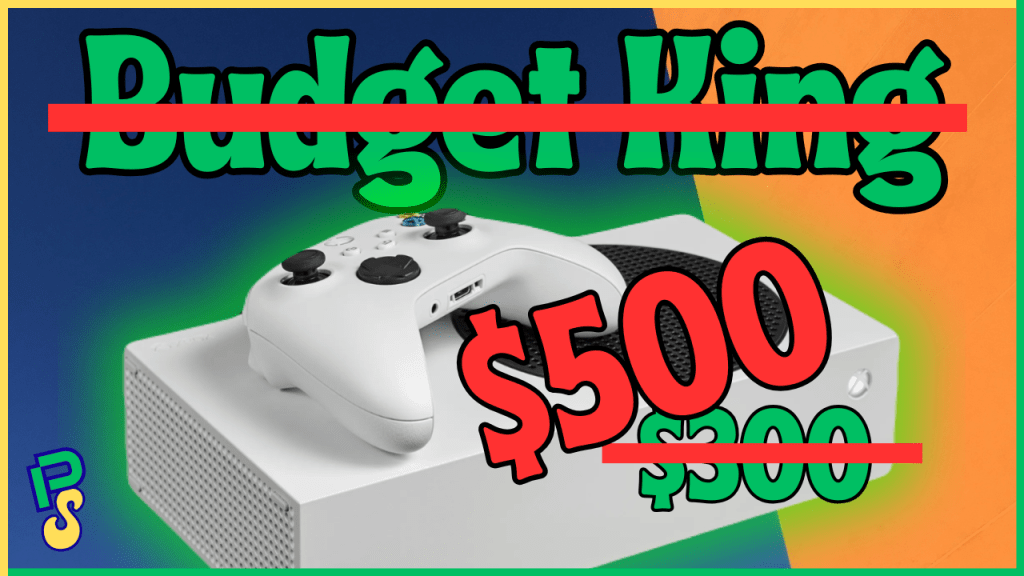
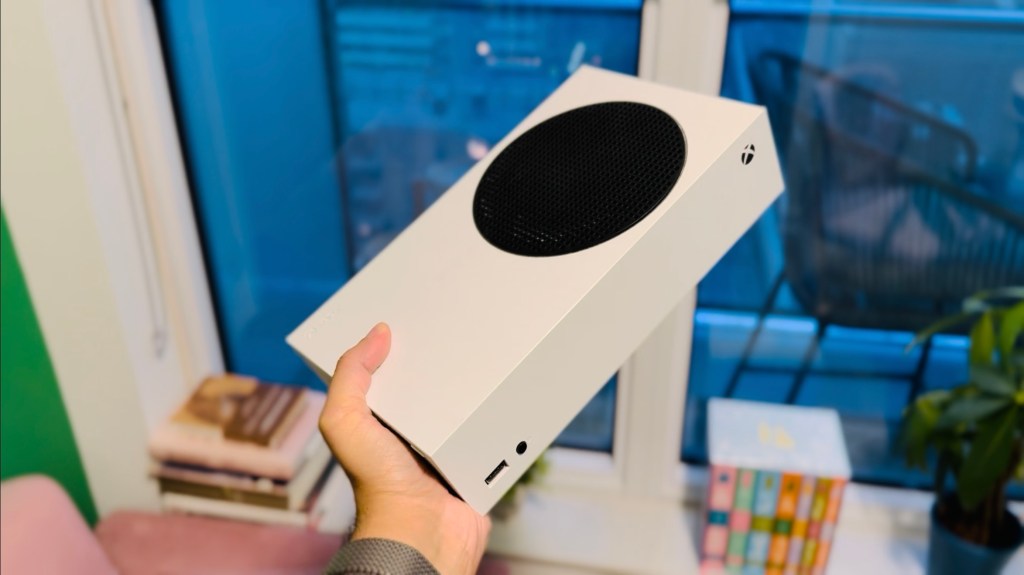
About three years ago, my uncle gave me a call. He told me that he was thinking of buying my little cousin his first gaming console for his fifth birthday. Being a non-gamer, he had questions and wanted to know what the simplest and most cost-effective way was to get his son into the hobby. Without hesitation, I told him to get the Xbox Series S. I told him that it was one of Xbox’s latest generation of consoles, came with a controller, could play pretty much every modern game, and coupled with an annual subscription to Game Pass his son would get access to a vast library of games, including all of the latest Xbox exclusives—all for less than $400.
That final point was the biggest selling point for him. Understandably so. The cost of living has risen exponentially over the years for the working class, and for someone like my uncle it’s hard to justify spending more than a few Benjamins on a piece of tech. As such, I gave Microsoft and Team Xbox a lot of credit back in the day for the Xbox Series S. A console that launched at a relatively accessible price of $299, while keeping feature parity with its higher-end brother, the Series X. Sure, it’s far less powerful, which means you’re relegated to playing most triple-A titles at 30fps with inferior visuals. But so what? It’s $299. And say what you will about Game Pass, but it did (and still does, albeit with more caveats now) offer a cost-effective way to get access to first-party Xbox titles and a slew of solid indies. This combination was, for the longest time, the greatest deal in gaming.
Unfortunately, if my uncle called me today, I wouldn’t be able to unflinchingly recommend the Xbox Series S. Because the Xbox Series S is no longer the greatest deal in gaming. What was once a $300 console is now a $500 one. A near doubling in price for a “budget” console that is now nearly six years old. Problem is, we’re living in a time where there is no “greatest deal in gaming.” Heck, there isn’t even a deal in gaming. Due to the billionaire parasites gobbling up the world’s RAM for their precious data centers, which offer nothing aside from artificially pumping up their stock prices, RAM vendors like Micron hold all the power and can charge tech companies whatever they want.
This is much of the reason why Valve’s recently released Steam Machine — a “console” with performance akin to the base PS5 — costs over $1000. That’s a whole band, for which you’re not even getting a controller. This wasn’t initially going to be the case, however. Reports suggest that Valve were planning on launching the Steam Machine starting at around $750, but as one of their top engineers illustrated in an interview with GamerNexus, “Look, there’s no contracts. There’s nothing. [The RAM vendors] give us a price every month and they say ‘You can buy that many’ and it’s yes or no. And if we say no, then they never talk to us again.”
Listen, far be it from me to have sympathy for a corporation, but even I can admit that that’s a tough position to be in, especially for a relatively smaller company like Valve. It seems the curse of the Steam Machine continues, and Valve are, once again, struggling to bring the Steam experience to the living room.
The Switch 2
I often wonder what my answer would be if someone like my uncle were to ask me today what the best and most cost-effective way was to get into gaming. Now, I understand “cost-effective” means something different to different people. From my perspective, when it comes to gaming, as soon as the cost of entry crosses that $500 mark, you begin to veer over the edge of what I would consider to be a budget-friendly price. Unfortunately, as things currently stand, the only console that (barely) makes that cutoff is the Nintendo Switch 2—coming in at $499 after its forthcoming price hike, which is slated to take effect this September. (The Series S still, technically, counts but the hardware is simply not worth it at $499, in my opinion).
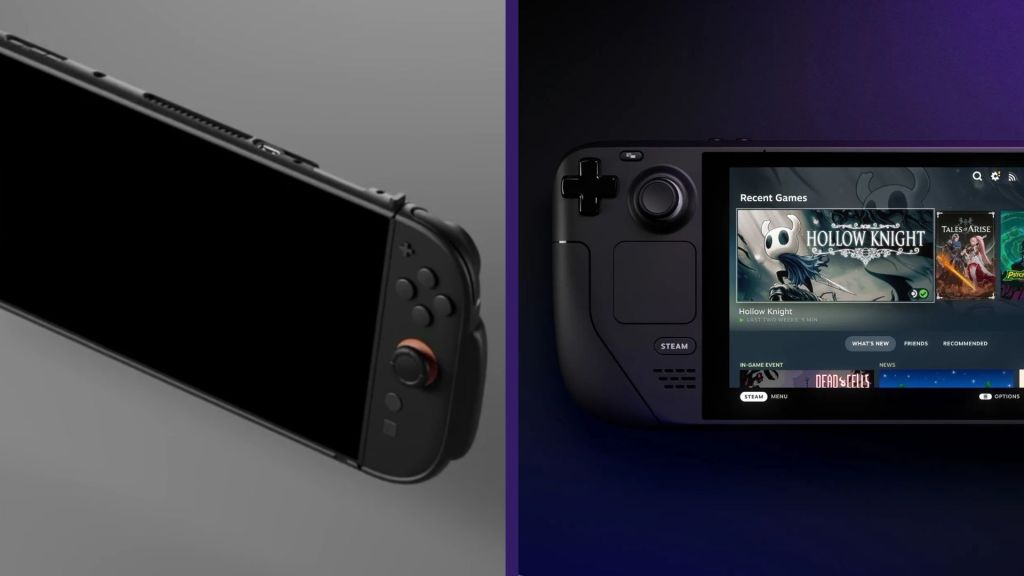
The Switch 2, from everything I’ve seen, watched, and read, is a solid console. Unfortunately, it’s lineup of exclusive titles is a tad scant, and third-party support — as per usual with Nintendo consoles — is also a little underwhelming. Nintendo also rarely puts their games on sale, meaning you’re going to be paying $70 for most Nintendo games. Still, it supports most of the Switch 1’s library, which has some generational titles, there are plenty of indies to enjoy, and Nintendo Online, although has its annoyances, gives you access to a ton of amazing classics from Nintendo’s past. Given the price hikes of handhelds across every manufacturer, including Valve and their Steam Deck, the Switch 2 is arguably the best offering amongst modern hardware—for the time being, at least.
Cloud Gaming
If you’re someone who’s not interested in the mustachioed plumber’s handheld and would prefer to play Steam’s library of triple-A games without having to sell a kidney, then, unfortunately, you’re sh*it outta luck. That is, unless you’re willing to dive into the world of cloud gaming. If you’ve followed my work for a while, you’ll know that I started my PC gaming journey via the cloud, through services like Nvidia GeForce NOW, Boosteroid, and Amazon Luna. Now, I am of the mind that every trillion-dollar company that’s trying to sell you their streaming service can shove it, and we should all, collectively, refuse the practice and instead preserve some iota of media ownership.

That being said, given the state of the world and the premise of this piece being to find budget alternatives, I’ll allow some leeway. Still, I’m not going to recommend services like GeForce NOW and Amazon Luna—the latter of which because it’s simply a bad service with barely a library to speak of, and the former because…well…f*ck Jensen. Boosteroid is a very similar service to GeForce NOW, offering players the ability to rent a cloud computer for a monthly fee in order to play their already owned games from their Steam or Epic libraries, so as long as those games are available on Boosteroid’s service.
Back when I was ping-ponging between the two services, Boosteroid’s library of cloud-accessible games was much wider compared to Nvidia’s. This is due to some legal murkiness that I won’t get into (mainly because I’m not entirely sure of how all of it works) but just know that if Sony randomly decide to not allow God of War be available on Boosteroid, they may or may not have the right to do so. As a service, Boosteroid has gotten a lot better of the years. It’s still not perfect, and the last time I tested both, GeForce NOW’s “Ultimate” tier was considerably better in terms of latency and reliability. However, with no monthly hour cap, half the subscription price, and a wider selection of games, Boosteroid is solid option for those looking to game on a budget. Paired with a $200 mini-PC with an Ethernet port and a wired controller, coupled with Windows FSE, and the experience could potentially rival that of a locally played console, especially if you live near one of Boosteroid’s servers.
Patience & Retro Gaming
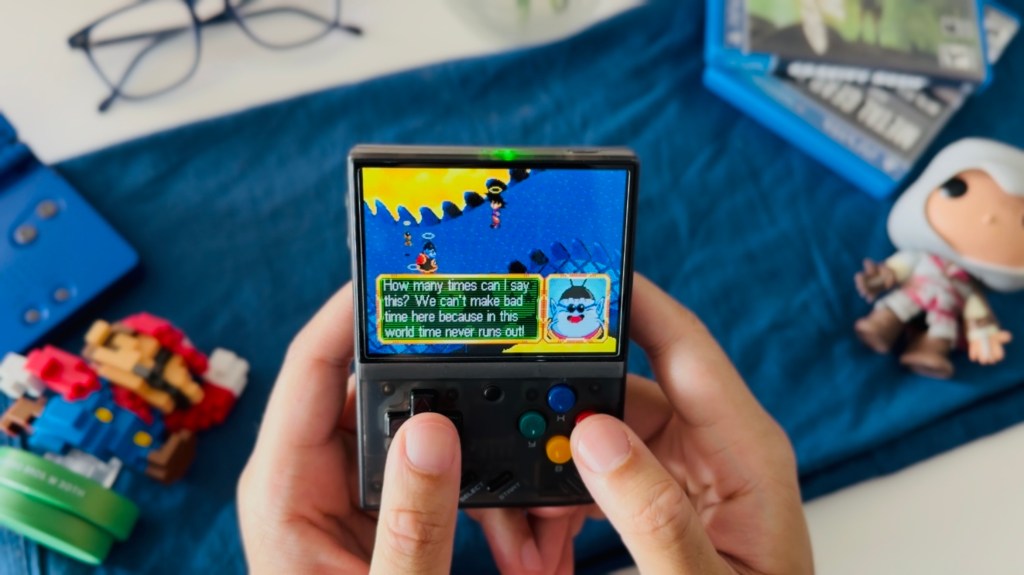
Lastly, if neither of those options are suitable, my suggestion to anyone looking to get into gaming on a budget would be to wait. Wait for all this RAM craziness to subside, and play retro games in the meantime. Portable handhelds like the Miyoo Mini Plus are fantastic and have introduced me to titles from the 90s and early 2000s otherwise unavailable on modern systems. But you don’t even need to go back the far, the PS4 can often be found second-hand for a couple of hundred dollars and is still perfectly viable. Many first-party titles like Forbidden West are backwards compatible, as are many of the most popular games people are playing online.
We’re in pretty dire circumstances when it comes to the cost of enjoying this hobby. Circumstances that are manufactured by those at the top to solely benefit the ones at the top. Things don’t look to be changing any time soon, but until they do, we can still find ways to enjoy video games without going into debt, all the while continuing to fight the good fight to get things back to some sense of normalcy. As soon as Jensen stops wearing those leather jackets, we’ll know we’ve made it.


Leave a comment