
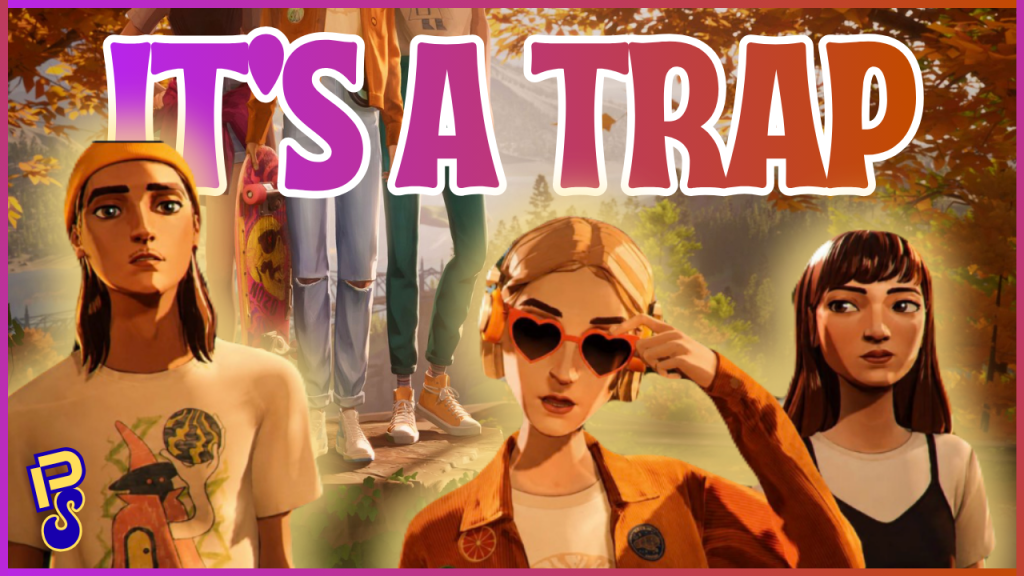
When the end-credits rolled on Beethoven & Dinosaur’s latest narrative adventure game, Mixtape, I was in tears. I thought I had just experienced a wonderful, 4-hour coming-of-age story about a trio of teenagers that beautifully explored the twilight of youth. As such, I was prepared to give this game a glowing review. However, after taking some time to reflect on my feelings towards this game, to explore what I’d actually experienced, I came to realize that my love wasn’t necessarily for the game itself, but for the memories of my own youth.
I remembered my teenage years in Dhaka, a city with none of the suburban charm of Mixtape‘s fictional northern Californian town of Blue Moon Lagoon (but all of the traffic and pollution of downtown L.A.). I remembered hopping on a rickshaw after school and meeting my friends at a hookah lounge, where we’d spend way too many hours ingesting mint-flavoured smoke and half-assedly doing algebra homework. I remembered going to Fahim’s, which was our local bootleg DVD store, and asking for the “master print” of Iron Man 2. “Master Print” meant the bootleg copy was “legit” and close to DVD-quality, instead of footage of some dude in Thailand recording the movie in the theatre with his late-90s camcorder. I remembered when political tensions would be very high and my country would instill nation-wide curfews, during which my dumbass friends and I would make schemes to sneak out and meet—Rapid Action Battalion soldiers be damned.
Safe to say, my experiences as a teenager were quite different than those of Stacy Rockford, Van Slater, and Cassandra Morino, the trio of American teenagers whose stories we experience in Mixtape as they go through their last days of high school together. But it’s not their memories or their stories that made me feel the way I did when I got to the game’s end-credits. Because, frankly, Mixtape‘s story isn’t anything new. It’s a fairly common coming-of-age story we’ve seen numerous times in films, television shows, and books. Actually, I’d say much of its writing lacks the depth that we’ve seen from stories past. It being a video game isn’t novel, either, mainly because its gameplay is shallow and, though the interactivity can be creative at times, removes player agency in a way that feels cheap.
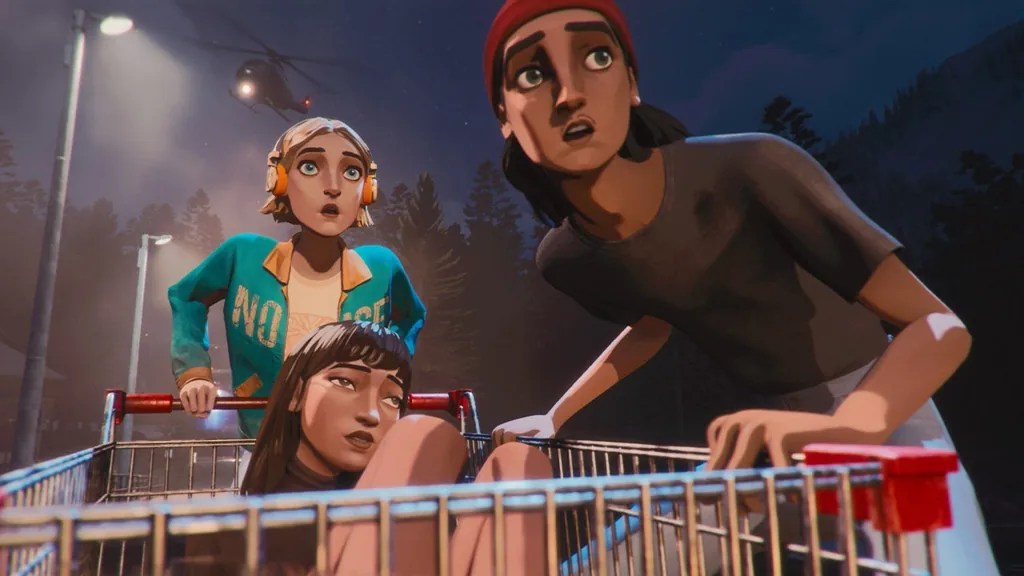
Yet, what Mixtape does do tremendously well, is make you feel nostalgic, irrespective of whether or not you relate to its time or place. The way in which developers Beethoven & Dinosaur tell this story, their cinematic sensibilities and purposeful direction, and the clever ways in which they bring you into the narrative, makes for a nostalgic experience that’s hard not to get caught up by. Mixtape isn’t about skateboards and 90s-inspired Americana. It isn’t about shopping malls and beer pong. It’s about that moment in time we’ve all, collectively, experienced—the moment that marks the final days of our youth. And therein lies the problem, because Mixtape rides the coattales of that universal emotion, vibing off the highs of nostalgia rather than doing something deeper of its own merit.
The Heart & The Controller
Now, usually I separate gameplay and narrative into two segments in my reviews, but I can’t do that with Mixtape. Because the two are intertwined with one another into one, linear 4-hour experience. Some may call it an “interactive movie,” others may label it yet another “walking simulator.” Personally, though I can somewhat get on board with the former, I think labeling Mixtape with the latter is a bit of a misnomer. Mainly because, well, there’s not a lot of walking. The story unfolds cinematically, and the game brings you into that cinematic experience through mini-games and interactive cutscenes, doing so in a manner that’s either kooky and outlandish, or filled with heart and nostalgia, but never in ways that’s mechanically robust.
You play as Stacy Rockford, an aspiring music supervisor who is leaving her fictional town of Blue Moon Lagoon to go to New York City to pursue her dreams. To commemorate her last day in town, she decides to create a mixtape, with each event of the day tying in with one of the tape’s tracks. As Stacy puts it during the game’s intro, “It’s a retrospective, a ‘greatest hits’ to accompany our last night together in The Big Suck.” Then, as is usually the case with rambunctious teenagers (trust me, I would know), things don’t go quite as planned for Stacy’s “greatest hits.”
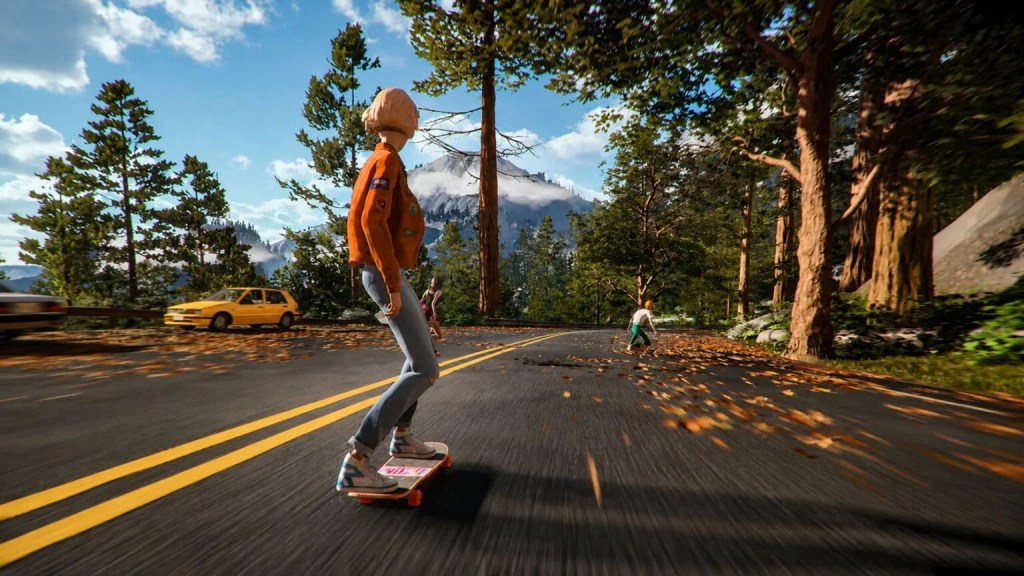
The game is split into chapters, or “tracks.” After the intro sequence, you, as Stacy, begin in Stacy’s house, going through her room, clicking on knickknacks she’s packed away as Slater and Cassandra comment on them. Key items prompt flashbacks to memories, giving details about Stacy and her friends’ past. Most of these flashbacks have fun little mini-games within them, or play out as an interactive cutscene that looks somewhat like a music video. While some of the mini-games, like the one with Slater and Stacy making custom slushies, are short and silly, others are more elaborate, like the one where the trio visit an abandoned, dinosaur-themed amusement park, while you go around taking pictures with what I can only describe as a doohickey. However, neither of these types of memories do anything all that deep on either a narrative or thematic level, and their mechanics are jarringly shallow.
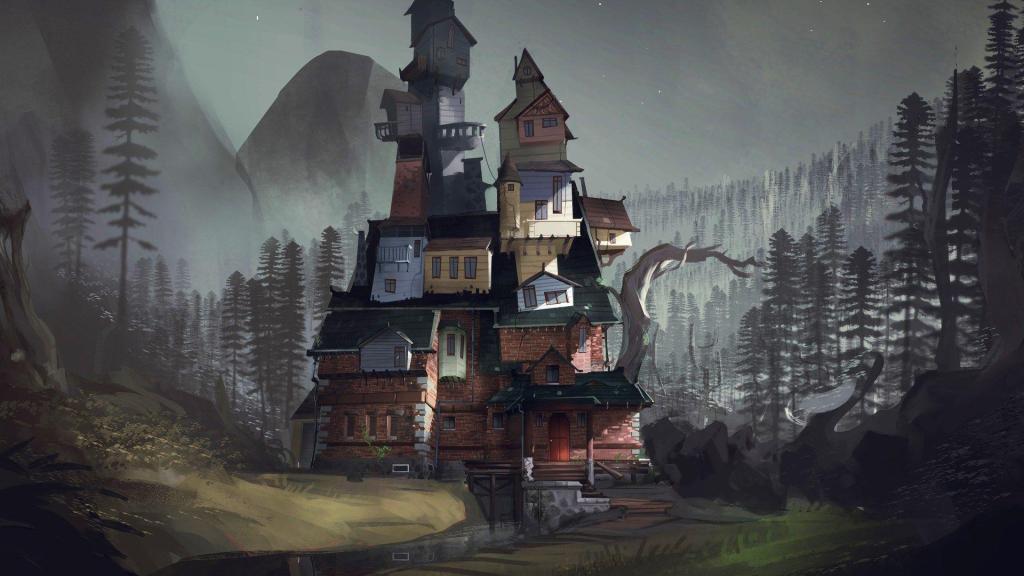
The mechanic of having memories be tied to mini-games reminds me a little of What Remains of Edith Finch, another one of Annapurna Interactive’s published games. Although the mini-games in Mixtape are presented in a unique visual fashion, they aren’t as thematically powerful in comparison. I also think the game takes away player agency too often, hence the comparison to it being an interactive movie. I wanted to explore Blue Moon Lagoon, click on more things around the trio’s houses, and have more agency in the memories. Still, there were a couple of moments that made my heart swell and my eyes tear up, and the way those moments interweave with the silly and wacky ones does adequately encapsulate the roller-coaster of teenage friendships.
Speaking of which, the game does a decent enough job of making these friendships feel real, with the dialogue aptly making Stacy, Slater, and Cassandra sound like real kids having conversations that a bunch of angsty teens would. With that said, I do wish we delved more into their pasts and had some more character development. By the time I got to the end credits, I felt I hadn’t truly gotten an understanding of who these kids were as people. At least, not more than what was presented on the surface. When I sat down to think about the game after some time, I realized that I was so enraptured by its aesthetic, direction, and its ability to invoke nostalgia, that I didn’t notice the lack of a deeper narrative with more fleshed out characters and themes.
Furthermore, some of the writing can, at times, lead these characters to sound somewhat obnoxious. Stacy, in particular, can come across as self-indulgent and pretentious, someone who thinks she’s better than everybody because of her eclectic taste in music. Then again, that is the character, so I guess it makes sense. Still, there’s a way to write insufferable, angsty teens with nuance and depth that makes us, the audience, feel for them as people. Though some nuance with moments of genuine heart exists, nothing is ever explored on a deeper level.
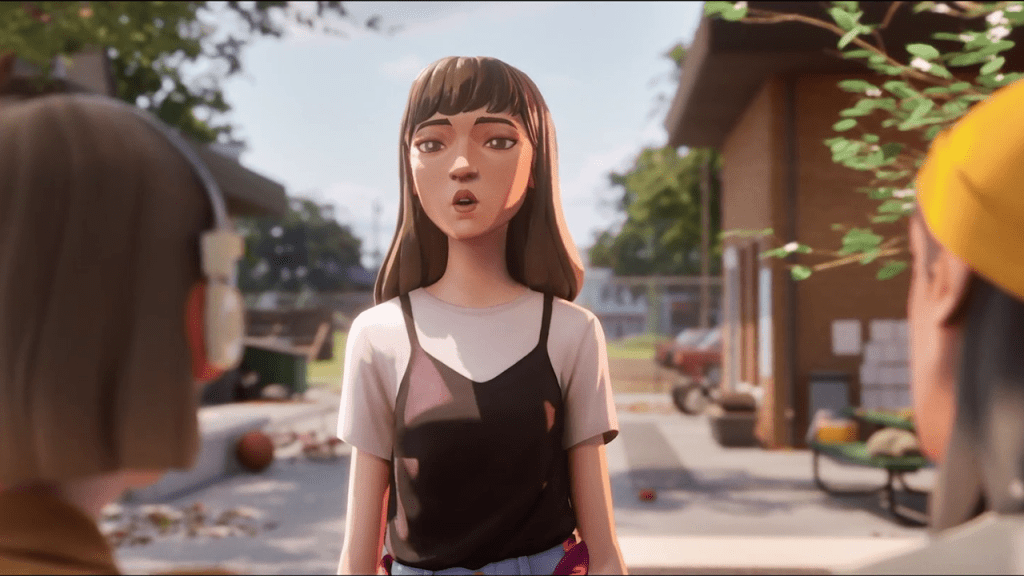
I won’t say Mixtape is all style over substance as far as its narrative is concerned. There is some substance here, and enough to be emotionally impacted by. But that impact comes more by the way of presentation and music than actual narrative depth and character writing. It’s interesting, because I had a similar feeling after completing The Artful Escape, Beethoven & Dinosaur’s last game. A game that also had phenomenal audiovisual presentation, but its narrative left much to be desired. Though things are more robust on the narrative front in Mixtape, I wish some more time could have been taken to truly get into the nooks and crannies of these characters.
The Eyes & Ears
From the moment I hit “New Game” and the opening cutscene played with Stacy monologuing about the compact disc, which was then followed by a wonderfully stylized opening credit sequence that introduced her two friends, I knew I was about to experience an audiovisual spectacle. It’s rare to play a game that has such purposeful direction. It’s not just about the art style, which is a beautiful, Spiderverse-esque stop-motion affair, but the cinematic sensibilities director Johnny Galvatron and cinematographer Lily Pagalis-Jackson imbue into the game. From its story-boarding and shot selection to the fun and wacky set-pieces that ooze 90s Americana charm, Mixtape has a wonderful sense of identity and isn’t afraid of dipping into the surreal and absurd.
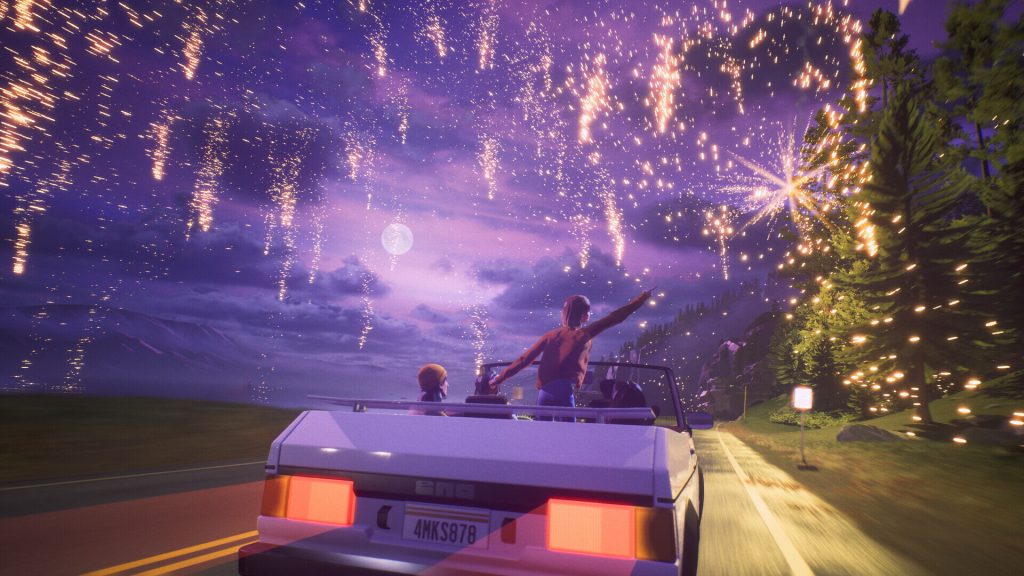
Unfortunately, for as great as the game does look, it is an Unreal Engine 5 game. As such, the performance on PC is far from optimal. Now, I did play this game, as I do most of my modern games, on my MSI Claw 8 AI+ handheld. A very powerful handheld PC, but a handheld PC nevertheless. At 25 watts, 1080p on high settings, I was getting between 40-45fps. I also saw some pretty jarring dips in more demanding, outdoor areas. A little ridiculous, considering I’m able to play big, triple-A titles that don’t use UE5 with far less hiccups. Alas, that is the current state of the engine. That being said, this isn’t a fast-paced action game. It’s a cinematic, narrative adventure game with stop-motion animation. As such, locking things at 30fps is more than fine.
With a game titled “Mixtape,” you’d be right to expect big things from the audio department. Thankfully, Beethoven & Dinosaur don’t disappoint. For practically the entire 4-hour runtime, Mixtape hits you with banger after banger. From Iggy Pop’s 1990 hit, Candy, to the headbanging thrill of Love by The Smashing Pumpkins, Mixtape more than earns its title and showcases a love for music that’s captivating. It’s astonishing, really, because I have no idea how an indie studio like Beethoven & Dinosaur were able to snag all of these licensed tracks. Usually licensing even a couple of songs can be expensive, but to have practically your entire game’s soundtrack be licensed music is unheard of. Either Annapurna Interactive threw boatloads of cash to get these licenses or some seriously nefarious stuff is going on behind the scenes. Then again, given that Annapurna’s founder is Megan Ellison, daughter of billionaire Larry Ellison, I’m sure neither are off the table. Regardless, the music, sound design, and voice acting in Mixtape are all pretty great.
The Verdict
Mixtape does a tremendous job of capturing the essence of youth and invoking 90s nostalgia, doing so with an audiovisual flair that looks and sounds distinct. It’s easy to get caught up by the wonderfully directed spectacle and the memories of youth, but when looking past those rose-tinted glasses, what’s left is an adventure game that, though looks and sounds spectacular, is bereft of mechanical or narrative depth. Mixtape, instead, hopes that the vibes of nostalgia will carry you through to a deeper meaning than what it’s actually presenting.
Shaz played Mixtape on PC with a copy he purchased from Steam.


Leave a comment