

One of my favourite genres in video games is the linear, narrative-driven, third-person action-adventure. A 15-20-hour jaunt through a tightly-written story with personable characters, a fascinating world, memorable set-pieces, and a gameplay loop that’s simple but effective—basically Uncharted. But also Alan Wake, Mafia, the modern Tomb Raider trilogy, and Gears of War. These are the types of games I grew up with, and are an archetype I feel we severely lack in the modern era. It’s why I randomly decided to pick up Remember Me and make a whole video about it. And it’s why French developer Asobo Studio are one of the developers whose games I always look forward to, because their franchise, A Plague Tale, is one of the best when it comes to executing this type of game.
So, when it was announced last year that they were working on a third game in the series — a prequel to the story and one that was going to be action-forward — you can imagine my excitement. Well, a year later, and that game is officially here, and I’ve spent the past week playing it through to its end-credits. I spent around 15 hours in the shoes of Sophia, and have a lot of thoughts about her adventure.
A couple of quick notes before I begin. One, I will do my best to keep this review spoiler-free, both in regards to gameplay and narrative, though I will need to talk around certain narrative elements to illustrate my thoughts. And two, I played this game on PC via Game Pass after its launch—no review code was sent. Thanks for being here, now, let’s get into my review of Resonance: A Plague Tale Legacy.
The Heart
Set in 1334, 15 years before the events of A Plague Tale: Requiem, Resonance has you play as Sophia, a girl whose mother’s family had sent to a convent at the age of six. There, the nuns performed horrific experiments on her, wherein they’d inject her with a mysterious fluid, causing her to have visions. One fateful day, Sophia’s father, the leader of a pirate gang, comes to save her from the convent and take her back. Growing up now as a plunderer, Sophia learns to fight, smuggle, and do all of the other things befit of one taking on a life of piracy. All the while working with her father to understand her visions, believing they may be the secret to some long lost treasures. By the way, if Sophia looks familiar, it’s because she was a key side character in Requiem.
After some harrowing events, Sophia, now an adult, with her friend Leni, must go on the run from the army chasing them, and find the treasure held within the mysterious Minotaur Island. However, what she’ll soon learn is that this island doesn’t simply hold treasure, but a secret far more terrifying—a secret that’s connected to Sophia and her visions.
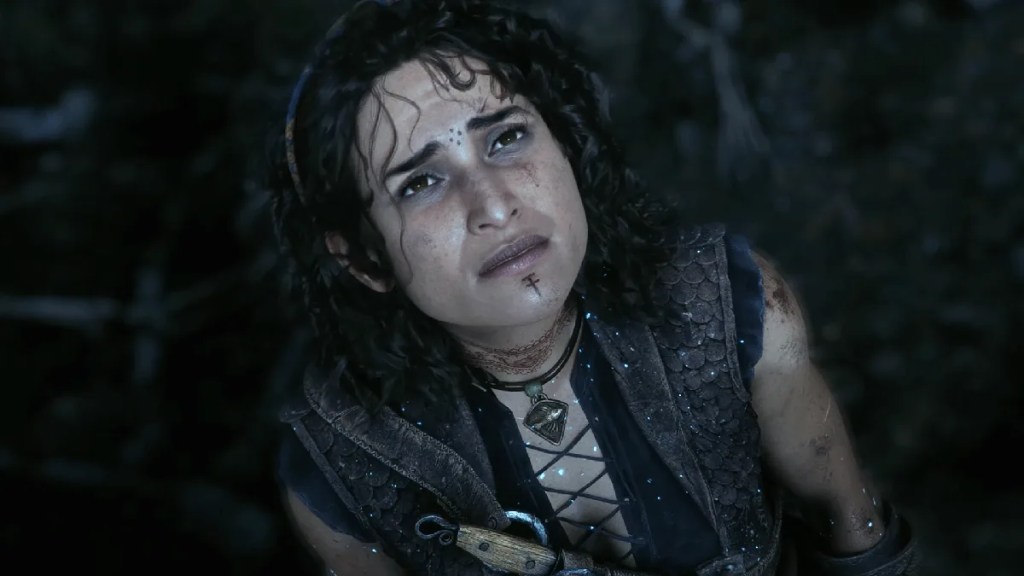
I’ve said it before and I’ll say it again: for me, story is king. Especially for a game like this. A Plague Tale: Requiem was one of my favourite games of 2022, and a large part of that was because of its wonderful, emotional story. The story here in Resonance is good, at times great, but not without flaws. Its emotional highs were enough to bring me to tears by the end, and its cinematic sensibilities coupled with some tremendous voice acting — Anna Demetriou, who plays Sophia, especially — all provided that narrative polish, emotional heft, and overall production value I would expect from Asobo. It also interestingly establishes the origins of the Prima Macula curse, using (and aptly twisting) Greek mythology, while managing to tie it with Sophia’s story effectively. However, in so doing, by the end, I felt as though the mythological side of the narrative took precedence over Sophia’s character arc, but I’ll get to that in a bit.
To start, I’ll say that the story definitely has some pacing issues. I wasn’t all that connected to the gang of plunderers in the opening chapter of the game. Characters were swiftly introduced and passed on by without any real time to get to know them, which caused some of the major plot beats to not hit as hard as I would’ve liked. Inversely, when tensions seem like they should be at their highest, the game meanders a tad with its gameplay, extending chapters to where much of that narrative tension peters out. Also, Sophia’s relationship with Leni, though good, could have used a bit more fleshing out. Furthermore, though I often prefer when villains aren’t mustache-twirly-idly evil and are written with nuance, the motivations and dialogue surrounding the antagonists here never felt as though they were sufficiently explored. The twists and switches in character motivations didn’t feel fully earned, though the story-boarding, cinematic presentation, and voice acting do a good job of convincing you otherwise. Lastly, the armies of soldiers you fight against throughout the game serve no real narrative purpose aside from the opening chapters.
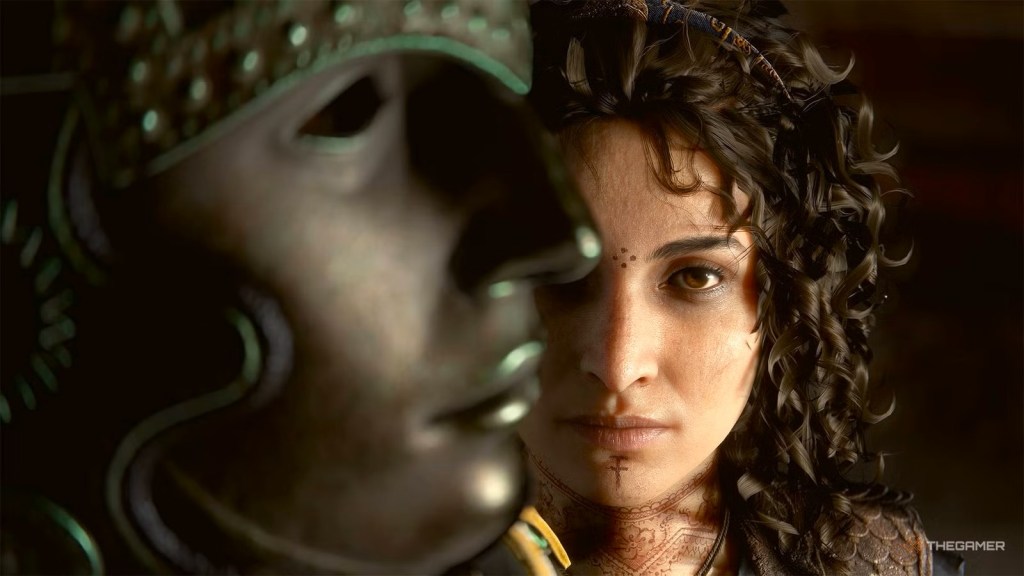
Now, back to Sophia. Honestly, by the end, I felt as though all this character had become was a vessel for endless suffering. And suffering that didn’t end with a satisfying completion of an arc. All the trials and tribulations she went through didn’t feel as if they ended with some kind of cathartic resolution for her as a character. Rather, it was to end the suffering of those in her visions, which I won’t touch more upon on due to spoilers. Her story, her personal journey, felt like it took a back seat to the adjacent story of this mythology she had become intertwined in. Uncovering the mysteries and learning more about this mythology and history was, admittedly, very intriguing and done quite well, but I did feel Sophia’s motivations and overall characterization got the short end of the stick by the end.
Still, I can’t say I wasn’t thoroughly riveted by the overall narrative experience here. It is very dark; very grim, exhaustively heart-wrenching, and nearly bereft of any levity, but it’s a story that bolsters the wider lore of this world, and is presented with a tremendous amount of care and filmic gravitas.
The Eyes & Ears
I’ll keep this section short, because not much needs to be said here. Resonance: A Plague Tale Legacy is an absolute treat for the eyes and ears. You know how there are times when you boot up a game and are smacked in the face with title screen music so good you get completely transfixed and need a moment before you hit “New Game”? Yeah, such was the case for me when starting this game. Composer Olivier Derivière went absolutely ham in the studio with this OST, with his arrangements utilizing ancient instruments like the Carnyx and goat horns, while adding some Mediterranean flair with traditional Turkish instruments like the Yayli Tambur. Couple that with his — very Nier and Expedition 33-like — use of an operatic choir and a female lead vocalist, and it all makes for a varied OST that’s rhythmic, haunting, and beautifully emotive. Seriously, if this man doesn’t win, or at the very least be nominated for Best Music at this year’s Game Awards, I’m sharpening my pitchfork.
Now, not all is perfect with the audio. Though the sound design is great, from the clangs of swords to the rumble of ancient doors opening, there does seem to be some audio glitches—on PC, at least. As soon as things got a little busy during combat, I had some awful audio crackling. At first, I thought it was because things were getting too intense for my PC to handle, but this happened every time I entered combat, even in far less intensive areas with a stable FPS. Things got a little better after I’d updated some drivers, and I did notice it happening less while using speakers rather than headphones, but it persisted in some form or another throughout my playthrough. Still, I’m going to chop it up to being a Windows/PC-related bug rather than the game itself.
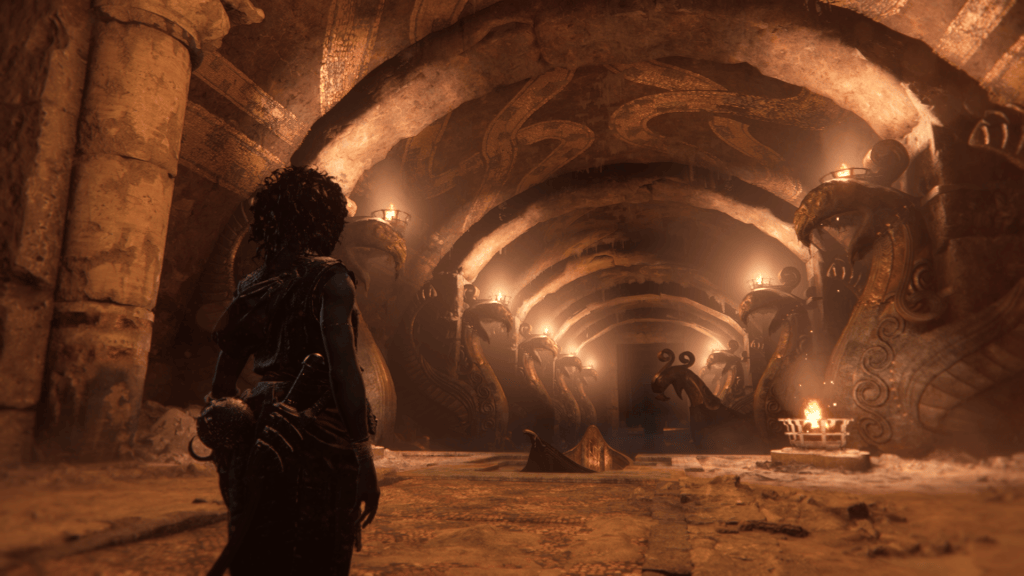
On the visual front, Resonance is stunning. It’s technically impressive, yes, but the art style is what truly makes it shine. There are some breathtaking vistas, gorgeous interior architecture that brings these ancient ruins to life, and solid character designs with great motion and facial capture. The ping-ponging between Sophia’s visions, which take you back to the ancient time-period of this island where its structures and architecture stood grand and firm, and Sophia’s present day where we see those same structures having decayed through the passage of time, is a beautifully melancholic sight to behold. Asobo’s use of colours was something I took notice, too. Environments are vibrant and striking. Even during the darker, eerie sections, the game isn’t afraid to utilize blues and purples to make for a compelling visual experience.
Asobo’s Zouna engine has matured greatly over the years, and it’s always nice to see developers fully explore and unlock the potential of their proprietary engines instead of simply using Unreal Engine 5. I should mention, too, that the game runs pretty well on PC. I played on the MSI Claw 8AI+, which is a high-end handheld PC, docked at my desk connected to an external monitor. I had no issues hitting 60+ fps while playing at 1080p, medium settings, with FSR set to “balanced.” I did have to use frame generation, but the implementation here was good enough to where I didn’t mind doing so. I did have some stuttering on and off, and things did dip during intense combat sections, but overall, this was a great experience on PC.
The Controller
As mentioned, Asobo switched gears to make Resonance more of an action affair rather than the stealth one we’ve been accustomed to in previous Plague Tale games. A switch that might be concerning when considering Asobo don’t have much experience making modern action games. However, what they’ve accomplished here is very commendable. The combat in Resonance takes inspiration from a few different action titles, namely From Software’s Sekiro. Or, at least, what I know of Sekiro—I haven’t played the game, because I don’t think a hole in our living room wall would go nicely with our decor. As a swashbuckling pirate, Sophia wields a sword and a dagger, with the former performing your standard attacks, and the latter your finishers. Dodging is key, but parrying is essential. Each enemy has a stamina gauge that fills up with each successful parry. Once full, enemies stagger, leaving them open for a brutal finisher.
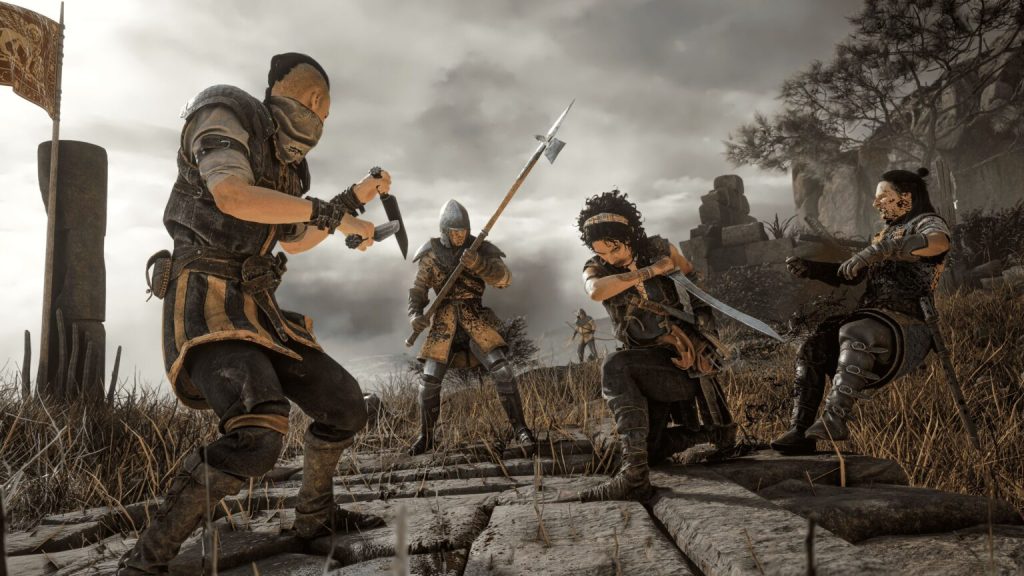
Honestly, I wasn’t expecting to love the combat as much as I did. It’s crunchy with a satisfying heft, enemies aren’t spongy or annoying to fight, and the timing and animations for parries and dodges are mostly manageable. There were a handful of times where I felt the game was a bit cheap, with one of the boss fights, in particular. But, for the most part, I always felt each of my deaths during combat were on me rather than the game. The combat never got repetitive or dull, either, as the game keeps things fresh with a decent variety of mechanics. In addition to your sword and dagger, you have a grapnel that can make enemies “come over here!” You can kick them to break their guard or 300-them over a ledge. And you can pick up bottles and knives around the combat area to throw and stagger them. All of these mechanics can be upgraded with Resonance Points, which you receive after each fight or find hidden throughout the world. The skill tree isn’t anything comprehensive, but does add some light RPG elements to the combat experience.
Combat is only half the game, though. The other half consists of exploration and puzzle solving—a lot of puzzle solving. From turning levers to shining lights at ancient doors to solving mysterious glyphs, all of the types of puzzles you might imagine from a game about unearthing the mysteries of an ancient civilization is here. And, it’s all a joy to figure out. Particularly because of how the game doesn’t hold your hand through any of it. Unless, of course, you prompt it to do so, which, thankfully, I never needed to do so (Oh, look at the big brain on Brian!). All you’re given is Sophia’s book, which includes her sketches of the area. Click on one of the pages and Sophia will give a vague description about the puzzle and area—the rest is up to you. Some of the puzzle mechanics are repeated, but their implementations were varied enough to where I didn’t feel they became boring. In terms of exploration, things are a little more linear, but you will often be rewarded for going off the beaten path with either a Resonance Point, an optional puzzle that leads to a new sword, or a Charm, which are artifacts or souvenirs from your gang that give you small perks during combat.
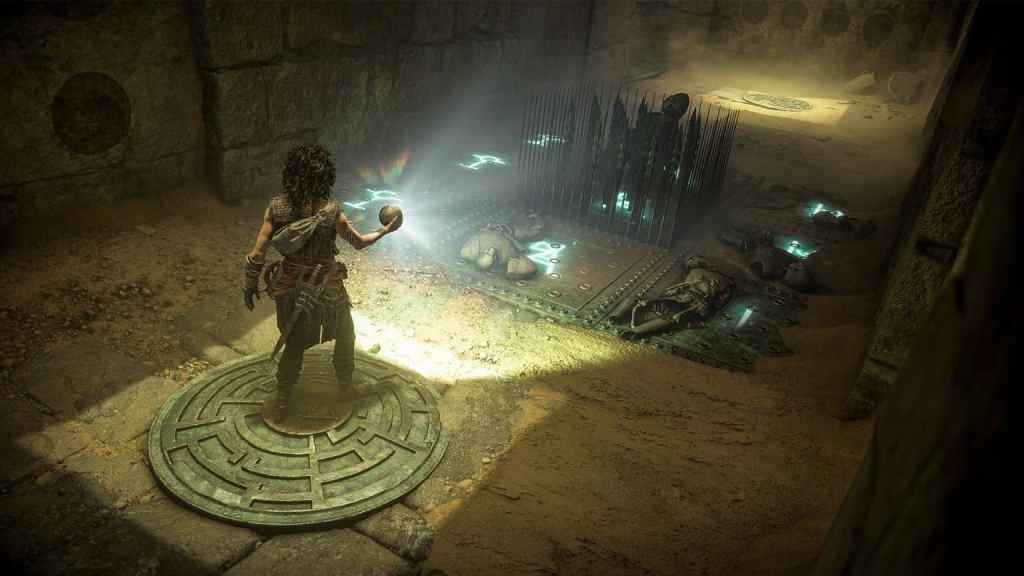
If all of this sounds like Uncharted, that’s because it really is. Seriously, make Sophia a bog-standard white dude and give her a wisecrack every now and again, and this is basically another Nathan Drake adventure—just way, way more depressing. And just like Uncharted, there is a supernatural/horror twist towards the end of the game. I won’t spoil anything, but one particular mechanic during these sections is genuinely creepy. Unfortunately, whereas this aforementioned mechanic is great, it’s also around these sections where you’ll encounter what I think is, ironically, the weakest part of the game: stealth. Without going into spoilers, the game has you hide and run away from this creature. Now, the first time this happened was genuinely thrilling and a great set-piece. But it’s a mechanic that’s repeated over and over again, with the game then implementing some forced stealth elements that didn’t work as well as I would’ve liked. What was a thrilling encounter the first time, became an annoying one by the twelfth time.
Still, these sections didn’t sully the overall gameplay experience. Resonance managed to keep things fresh and engaging to where I kept saying “alright, just one more chapter” throughout all of its 14 chapters.
The Verdict
Resonance: A Plague Tale Legacy is some of Asobo Studios’ finest work. It’s a mesmerizing audiovisual action-adventure with surprisingly punchy and satisfying combat mechanics, an array of puzzles that don’t hold your hand, and an evocative, emotional story that, although is somewhat exhaustively grim with side characters and antagonists that don’t feel fully fleshed out, is carried by a tremendous lead performance and an overall brilliant cinematic presentation. Some of its horror elements, though are done well from a narrative and visual front, become tedious and dull in terms of gameplay. Nevertheless, Resonance succeeds at expanding the lore of the series in intriguing ways, and does so by wearing its Uncharted inspirations on its sleeve while still keeping a sense of identity. This is easily one of the best games I’ve played in 2026.


Leave a comment